Getting started with us used to take longer than it should
The slowest part of joining Samera was rarely anything we were doing. It was waiting on records from a client’s previous accountant. Some handovers were quick. Plenty were not, and in a fair number of cases the delay traced back to something outside anyone’s immediate control, a final invoice still owed to the old firm, which meant the old firm had little incentive to move fast.
From the client’s side, none of that context was visible. All they saw was silence, and a new accountant who seemed to be doing nothing while a decision that was not theirs to make sat unresolved.
We could not make another firm release records any faster. So, we changed what we could control. A dedicated team now chases that handover directly, rather than leaving it to sit. Engagement letters go through Ignition instead of an inbox, and identity checks that used to take days now clear through Firm Check in a fraction of the time. Every new client also gets one named accountant from the first conversation, someone who owns the onboarding through to the first set of accounts.
The wait has not vanished entirely, because part of it still depends on someone outside Samera. What has changed is how much of it the client actually has to sit through.
“The right team with the right technology has significantly improved the onboarding experience for all clients now, which enables us to hit the road running much faster and more efficiently”
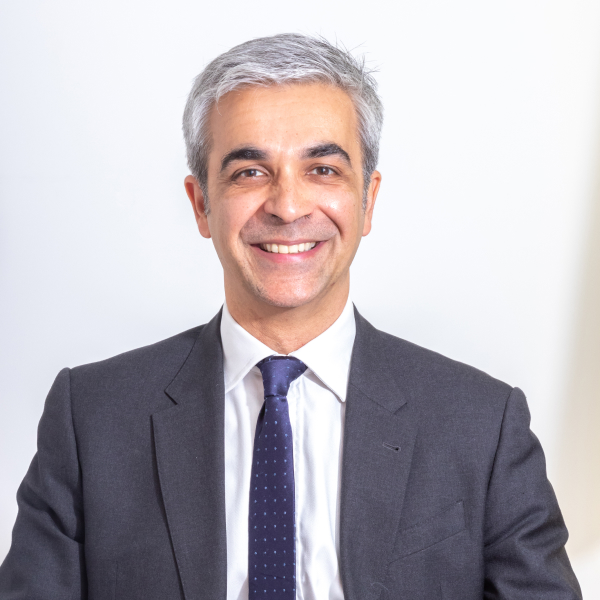
Arun Mehra Samera CEO
“We recognised that clients feel most comfortable dealing with one accountant. If they have different people managing different things for them, that trust is lost. That’s why every new client is introduced early to their account manager, their CRM and the senior operations team, so they know exactly who they’re working with from the first conversation.”
Natasha Gnanapragasam Director of Operations
When a client’s main point of contact changed, things could slip
A few years ago, a large number of client relationships sat with one or two accountants in the UK. When one of them left, the handover was not always clean, and the more serious mistakes on record trace back to exactly that kind of moment, a departure that was not managed as carefully as it should have been.
The problem was never really about any individual. It was structural. A model built around one or two people will always be fragile when one of them goes, so the fix had to change the structure itself, not just ask people to try harder.
Every client is now assigned a dedicated relationship lead within a defined team. That person owns their calls and communication day to day, backed by a wider group who know the file just as well.
If a lead moves on, the client is given around two to three months’ notice. A documented handover takes place before that happens, including a recorded session between the outgoing and incoming lead and the senior team, checked off against a formal checklist before the outgoing lead signs off. A new point of contact is then introduced by email and on a call, alongside the wider team, before the transition is complete.
Records themselves do not depend on any one person’s memory either. Every client has a structured folder and a documented process behind it, so a colleague can pick up a file without having to reconstruct it from scratch. And nothing is filed with HMRC without the client’s written confirmation and a formal signed approval first, on every file, without exception.
We cannot point to one specific case the current process has caught, because the structure exists precisely so nothing gets far enough to need catching. What has genuinely changed is that no client’s accounts now rest on a single person’s availability. A handover always carries some risk. What is different is how much of that risk now actually reaches the client, which today is very little.
“Single point of failure has now reduced significantly by having a supportive team and process that does not relay on one single person”
Arun Mehra Samera CEO
“No client’s file sits with just one person anymore. If someone moves on, the next person already knows the account before they take it over.
In the past, we had 1 or 2 accountants in the team handling all of our clients. If they left, having so many clients meant things could quite easily slip through the cracks. Unless every issue was brought up in the handover, something was bound to be missed.
So, what we did was implement a Client Relationship Management model. We identified the members of our team who we felt were best suited to the communication and relationship building we required. They have a small portfolio of clients that they help manage and help with overseeing all communication and operations. This has been a huge success. We have had great feedback from our clients who feel very comfortable with this model in general and their CRM in particular.
Since we built our team out into a GCC, those handover mistakes can’t really happen anymore. Not only do each of our clients have a dedicated accountant, there is also a CRM manager, as well as the senior team overseeing it all. If a team member leaves, there are 2 other layers of oversight to help with the handover.”
Natasha Gnanapragasam Director of Operations
We tried outsourcing. It did not work
The same instinct that reshaped how client relationships work, fix the thing we can control, is behind the biggest change to how we deliver work day to day. For a period, some client work went through third party providers based in India. It looked sensible on paper. In practice, quality moved around from one file to the next, and when something fell short, we had limited ability to put it right because the people doing the work were not ours to direct.
That experience taught us something simple. If quality has to be consistent, it has to be owned, not contracted out. So we stopped using third parties and built our own team. Samera India is a permanent, salaried, directly employed part of the business, held to the same standard as the UK office because it reports through the same structure. The Indian business is a 100% subsidiary of our UK business.
Owning that team changed what we could do about the original complaint. We hire for it and train for it ourselves. When something needs to improve, the decision sits with us, not with a supplier we would otherwise have to negotiate with.
Clients also speak directly with the person handling their file, wherever that person is based. That has cut down the miscommunication that used to creep in when instructions passed through extra hands, and has generally meant queries get answered faster.
The first delivery centre opened in Delhi, and a development team followed in Coimbatore. The wider team today also includes colleagues in Spain, alongside the UK.
We introduce clients to the people working on their accounts, rather than keeping that part of the business out of sight. We also run regular visits between the UK and India offices, so the working relationship stays a real one rather than a name on an email.
“We are often asked during onboarding is ‘who will be doing the work’. What we’re really keen to explain to our clients is that we do not use any outsourcing models. We have our own dedicated, offshored, subsidiary team in India working directly for and under Samera – there is no third-party involved at any stage.
Building our very own 100% India team has drastically changed the performance of the business. Client satisfaction has risen significantly, and having a truly global team has been enjoyable for all team members to build relationships with colleagues across the globe”
Arun Mehra Samera CEO
“Like many accountants, we tried outsourcing work to help our team with the workload. Also like many accountants, we found it didn’t work. Clients don’t like it, we didn’t like it.
So, instead what we did is build our own offshored Global Capability Centre. This is absolutely not the same as outsourcing. What we’ve done is build our own team, operating completely for Samera using our standard operating procedures, our processes, our quality control and working directly for us and our clients.
Since we made that change, we’ve seen a huge uptick in quality of work, efficiency and most importantly – client satisfaction. Now, our clients have a dedicated accountant, not one over-burdened accountant trying to handle every client. They also have a Client Relationship Manager as well as the Senior Management team, meaning our clients have 3 points of contact anytime they need us.”
Natasha Gnanapragasam Director of Operations
Why fees have gone up, and what that pays for
For a period, fee increases arrived without much explanation attached, a new number on an invoice rather than a reason. The increase was genuinely necessary. The clarity around why was not always there at the time, and clients were often left to draw their own conclusions.
One of the clearest drivers of that pressure was a change in UK tax regulation requiring far more digital processing than before. That genuinely increased the cost of the work behind the scenes, and fees had to reflect it. Not every client understood that at the time, and it is fair to say the reasoning should have been communicated more clearly from the outset.
What has changed since is twofold. Every fee increase now comes with the reason behind it explained directly, rather than left for the client to guess.
The structure of fees themselves has changed too. Rather than sending separate proposals for every individual piece of work, bookkeeping, tax returns, software, we introduced fixed packages around a year ago, built around the stage a dentist is actually at in their career, whether that is a self-employed associate, a limited company, or a growing group of practices. The response has been strongly positive, largely because a client now knows upfront what is covered rather than piecing it together from several separate quotes.
We have never tried to be the cheapest option on the market, and that has not changed. What has changed is that a client should never be left wondering why the number moved.
“Our fee rises are always supported with a breakdown of why, and we invest heavily into the development of all our global teams and technology so we can always be ready to provide the client satisfaction our clients are growing accustomed to”
Arun Mehra Samera CEO
“Before we introduced the fixed-fee packages, we would send a client three or four separate quotes for one relationship. Now they get one package that actually matches where they are in their career.
We feel the introduction of the packages has been a great success. Most of our clients have been very happy with the simplification of the model. Before, we would send engagement proposals covering really granular services and scopes of work and it became frustrating for everyone involved with so many proposals to check.
By packaging our services, it’s also allowed us to provide far more in value-added services to our clients. If clients want the basic accounts and tax set ups, they have that option. However, if they want to dive deeper into the finances with growth, advisory and finance management services, they have that option too.”
Natasha Gnanapragasam Director of Operations
Looking after existing clients as carefully as new ones
Client relationships in the past leaned more on goodwill than on a defined process. Existing clients were not chased for feedback in any structured way, and it was easy for a quiet client to stay quiet, which meant a small frustration could sit unnoticed until it became a reason to leave rather than something we caught early.
What we learned is that clients, dentists especially, are busy, and will rarely raise a problem unprompted. Waiting to be told usually means the moment to fix it has already passed.
So, the approach changed from reactive to proactive. Every client now sits within a dedicated tracking system inside our own software, which flags when a relationship needs more attention. Higher touch clients are called at least quarterly, and every other client is checked in with two to four times a year, and we actively push for those calls rather than waiting for a client to request one. Each client also has a documented internal profile covering how they prefer to communicate and what their specific needs are, so the team is not relying on memory to get that right.
That feedback loop is not just a formality. When a client recently had trouble using one of our checklists, we did not just resolve the individual case, we revised the checklist itself so the same friction would not repeat for the next client.
Honestly, the clients we lose today are rarely lost over the quality of the work. Fee is the most common reason, particularly when a client finds a cheaper option elsewhere, and most of the rest comes down to personal circumstance, a client retiring or changing direction, rather than anything Samera did or did not do. That does not mean the job is finished. It means the reasons we lose clients today look different to the ones raised in the past, which is worth being honest about either way.
“We have found our fees are not for everyone, but for anyone wanting a team that now always delivers swiftly and accurately with a friendly smile, the Samera team are ready to serve!”
Arun Mehra Samera CEO
“ All of our clients’ accounts and work are regularly reviewed both internally and directly with the client. We really encourage our clients to have regular review calls with us to communicate everything they need. We aim to do these at a minimum 2, 3 or 4 times a year.
We have really upped our game with client management in recent years. We have detailed internal documents and procedures for each client. This way the team knows the best way to communicate with each client and what their specific needs are.
If a client goes quiet, that is not a good sign. We would rather chase a call nobody asked for than wait for a complaint that could have been avoided.
Building our team out, however, has made communication so much easier. Now they have at least 3 points of contact per client, it’s never been easier to maintain that relationship.
Of course there is still client turnover, but nowadays it’s almost always clients finding a cheaper option (which is very rarely the better option), or it’s simply that they are retiring.
We encourage client feedback regularly so we can improve our processes constantly. A perfect example is the packages format itself. Clients were getting frustrated with the proposals, so we simplified the system hugely, so they choose one package, not have to sift through a dozen different proposals”
Natasha Gnanapragasam Director of Operations
Samera holds a 4.8-star rating on Google at the time of writing. These sections address genuine, recurring feedback rather than the general run of client experience.
With almost twenty years of commercial experience and knowledge in Dentistry, Arun’s expertise is valued by hundreds of businesses across the UK. His financial acumen and know-how, along with his hands-on commercial expertise have helped clients, large and small, new and established to achieve great things.
Arun is the founder of the Samera Group, starting the business with just one client sitting at his father’s dining table. Fifteen years on, Team Samera now service hundreds of Dental clients, run exciting events, help clients raise finance, and are very active in helping clients buy or sell Dental practices.
Natasha specialises in accounting and tax for dental and healthcare businesses, helping clients improve tax efficiency, streamline financial systems, and build scalable processes for long-term growth.