How AI will Change Running a Dental Practice

Unlocking the Power of AI: Revolutionising Dental Practice Management

Artificial intelligence (AI) is changing the way we live, work, and do business. It’s having a big impact on various industries like education, healthcare, and finance. One field that is benefiting from AI is dental practice management. AI is helping dental practices streamline their operations and enhance patient care. It’s changing the way dental practices work by automating administrative tasks and predicting patient needs. In this post, we’ll explore how AI is used to manage dental practices and how it can improve patient outcomes, increase efficiency, and generate more revenue. If you’re a dentist looking to enhance your practice management, keep reading to discover how AI can create new opportunities for your dental practice.
The role of AI in revolutionising dental practice management

Artificial Intelligence (AI) is changing the field of dentistry too. It can handle lots of information and do complex tasks, which is why it’s being used to manage dental practices. AI offers dentists and their teams opportunities to be more efficient, accurate, and provide better patient care.

Traditionally, managing dental practices required a lot of manual work and human judgement. But AI has become a valuable tool that streamlines operations, improves diagnosis and treatment planning, enhances patient communication, and overall improves the dental experience.

AI is great at automating administrative tasks like scheduling appointments, reminding patients, handling billing and insurance claims. It does these tasks quickly and accurately, freeing up valuable time for dental professionals to focus on giving the best care.

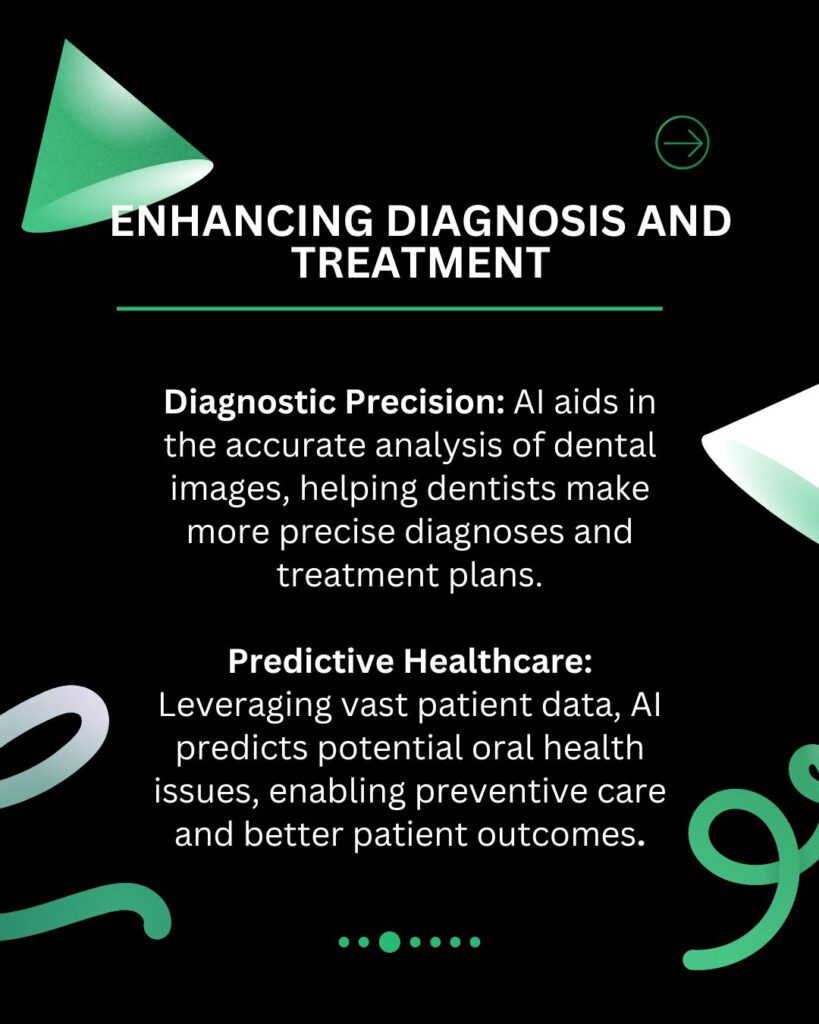
AI algorithms can analyse huge amounts of patient data like medical history, X-rays, and treatment outcomes. By finding patterns and insights, dentists can make more accurate diagnoses, create personalised treatment plans, and predict potential oral health issues before they become serious. With AI technology, dentists can provide proactive and preventive care, leading to better patient outcomes and satisfaction.

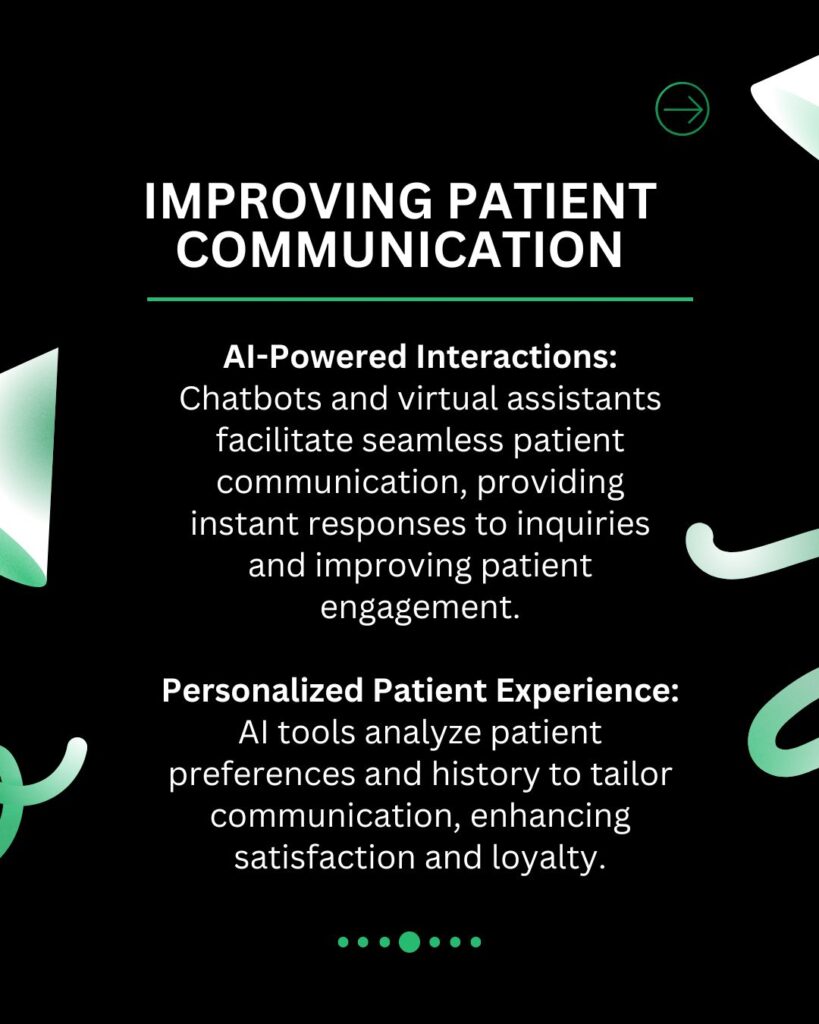
AI is also improving patient communication and engagement. Chatbots and virtual assistants powered by AI can answer common questions, provide educational materials, and even schedule appointments. This not only increases patient satisfaction but also reduces the workload on dental staff, allowing them to focus on more critical tasks.

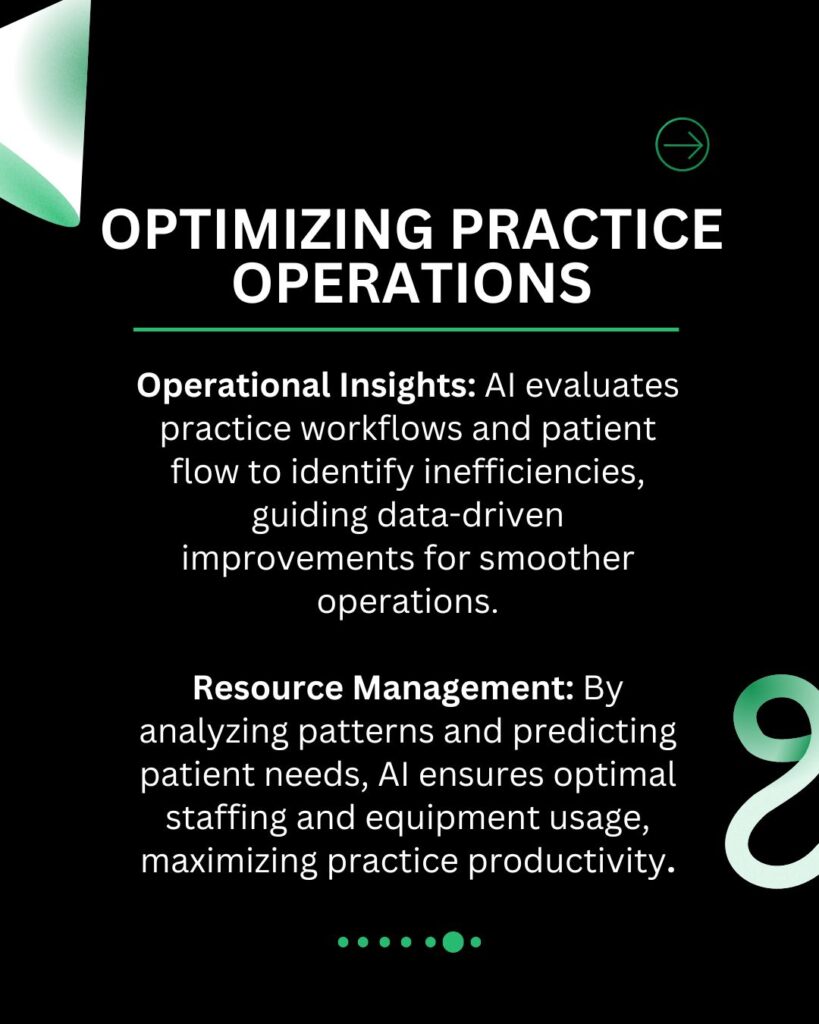
Furthermore, AI helps dental practices optimize their operations and resource allocation. By analyzing patient flow, appointment patterns, and staff efficiency, AI algorithms can identify bottlenecks and inefficiencies. Practice managers can then make data-driven decisions to improve workflow and staff schedules. This leads to increased productivity, shorter wait times, and a smoother patient experience.

Understanding the challenges faced by dental practices

Running a dental practice comes with its own set of challenges that can hinder efficiency and growth. Understanding these obstacles is crucial for utilizing the potential of AI and improving dental practice management.

One major challenge faced by dental practices is appointment scheduling. It can be difficult to keep track of a full schedule with multiple patients and different types of appointments. Manual planning processes often lead to errors, double bookings, and significant delays for patients.

Patient engagement and communication are also problematic for dental practices. It can be inefficient and time-consuming to keep patients informed about their appointments, treatment plans, and preventive care. Lack of effective communication can result in missed appointments, low patient satisfaction, and ultimately, loss of revenue.

Managing dental records and information presents another obstacle. Traditional paper-based systems are not only cumbersome but also prone to errors and data loss. Retrieving patient records becomes a time-consuming process, affecting the overall efficiency of the practice.

In addition, efficient management of dental supplies and equipment is essential. Lack of proper equipment or supply shortages can lead to disruptions in patient care and unnecessary delays.

These challenges highlight the need for innovative approaches to simplify dental practice management. AI-powered technologies can revolutionize the way dental practices operate by addressing these challenges and improving overall efficiency and patient satisfaction. AI has the potential to automate appointment scheduling, send automated reminders to patients, implement electronic health record systems, and optimize inventory management. Embracing AI in dental practice management can result in improved efficiency, increased revenue, and enhanced patient experiences.
AI-in-dental-practice-2

Contact us to find out more

The potential of AI in solving dental practice management issues

It’s amazing how artificial intelligence (AI) can revolutionize dental practice management. With advancements in technology, AI has become a powerful tool that can address various challenges faced by dental professionals and streamline their daily tasks.

One significant challenge that AI can tackle is appointment booking. Traditionally, dental practices have handled appointments manually, which can be time-consuming and prone to errors. However, AI-powered systems can automate this process by intelligently analyzing patient information, dentist availability, and other factors to schedule appointments efficiently. This not only saves time but also ensures optimal use of resources and improves patient satisfaction.

AI can also play a crucial role in enhancing treatment planning and diagnosis. AI algorithms can assist dentists in making more accurate and well-informed decisions by analyzing a large amount of patient data, such as X-rays, dental records, and medical history. This can result in better patient care, fewer mistakes, and improved treatment outcomes.

Moreover, AI can improve patient communication and engagement. AI-powered chatbots can instantly answer common questions, schedule appointments, and make personalized recommendations. This enhances the patient experience, reduces wait times, and increases customer loyalty.

Additionally, AI can streamline administrative tasks like billing, inventory management, and insurance claims processing. By automating these processes, dental practices can save time and resources, allowing their staff to focus on more critical aspects of patient care.

While AI in dental practice management is still in its early stages, its potential is immense. We can expect AI to become increasingly important in transforming dental practices, increasing efficiency, and providing improved oral healthcare to patients as technology continues to advance. By incorporating AI into practice management, dental professionals can enter a new era of innovation and productivity.

Streamlining appointment scheduling and patient management with AI

Managing a dental practice can be complex and time-consuming in today’s fast-paced world. Dental professionals face numerous challenges, including patient management and appointment scheduling. However, with the advancements in artificial intelligence (AI), these challenges can now be overcome more efficiently and effectively than ever before.

One area where AI is transforming dental practice management is appointment booking. In the past, dental practices relied on manual scheduling, which often led to double bookings, missed appointments, and unhappy patients. AI-powered scheduling systems have eliminated these issues.

AI algorithms analyse various factors, such as dentist availability, patient preferences, and treatment durations, to automatically schedule appointments in a way that maximises efficiency and minimises conflicts. This reduces wait times and ensures smooth appointment experiences, saving time for dental professionals and increasing patient satisfaction.

Furthermore, AI can assist in patient management by organising and analysing large amounts of patient data. By using AI algorithms, AI systems can identify patterns and trends in patient data, allowing dental professionals to make more informed decisions regarding treatment plans and personalised care.

For example, AI can help identify patients at higher risk for certain dental conditions based on their medical history, lifestyle factors, and genetic predispositions. By proactively addressing potential issues and providing individualised preventive care, overall oral health outcomes for patients improve.

Additionally, AI-powered chatbots can enhance patient communication and support. These virtual assistants can provide instant responses to common inquiries, such as information about treatment options, post-operative care instructions, and appointment availability. By automating these interactions, dental practices can free up staff resources and improve patient engagement, even outside of office hours.

In conclusion, AI has the potential to transform dental practice management by streamlining appointment booking, optimizing patient management, and enhancing communication. By harnessing the power of AI, dental professionals can unlock new levels of efficiency, productivity, and patient satisfaction, ultimately revolutionizing the way dental practices operate in the modern era.

Enhancing patient communication and engagement through AI-powered tools

Artificial intelligence (AI) is transforming various industries, including dental practice management. One area where AI is making a significant impact is in improving patient communication and engagement.

In the past, dental practices relied on phone calls, emails, and face-to-face interactions to communicate with patients. However, these methods often proved to be time-consuming and inefficient. AI-powered tools are changing the game by streamlining communication processes and providing a seamless experience for patients.

One way AI is enhancing patient communication is through the use of chatbots. By integrating intelligent virtual assistants into dental practice websites or mobile apps, patients can easily ask questions, schedule appointments, or get immediate support. Chatbots offer quick and accurate responses, reducing the need for patients to wait on hold or wait for a reply to their messages.

Moreover, AI-powered tools can analyse patient data and preferences to personalise communication. For instance, dental practices can utilise AI to automatically send appointment reminders, follow-up messages after treatments, or even oral health tips tailored to each patient’s specific needs. This level of personalised communication improves patient satisfaction and fosters a stronger relationship between the patient and the dental practice.

Additionally, AI enables dental practices to engage with patients through voice-controlled assistants. Using smart speakers, patients can access educational content, receive guidance on post-treatment care, and ask questions about oral hygiene. These voice-activated assistants allow patients to stay connected with their dental office in a convenient and interactive manner, ultimately leading to improved oral health outcomes.

By utilising AI-powered tools for patient communication and engagement, dental practices can enjoy several benefits. These include increased patient satisfaction, personalised experiences, and improved efficiency. As the dental industry embraces the potential of AI, it becomes evident that it is reshaping how dental practices manage patient interactions and prepare for a technologically advanced and patient-centred future.
AI-in-dental-practice-3

Leveraging AI for accurate diagnosis and treatment planning

In the field of dentistry, the use of artificial intelligence (AI) has brought about a significant breakthrough in diagnosis and treatment planning. By harnessing the power of AI, dentists can now achieve more precise and effective results than ever before.

AI algorithms have the ability to analyse large amounts of patient data, such as medical history, X-rays, and clinical notes, with impressive accuracy and speed. This allows dentists to detect even the smallest dental conditions or abnormalities that might be missed by human observation alone.

Furthermore, AI-powered software can provide valuable insights and recommendations based on the analysed data to assist in treatment planning. By considering factors like patient preferences, clinical guidelines, and best practices, AI algorithms can create customised treatment plans that improve both patient outcomes and practice efficiency.

The ability of AI to learn and adapt over time is one of its greatest advantages in dental practice management. As more data is fed into the system, the algorithms continuously improve their diagnostic accuracy and treatment planning capabilities. This enhances patient care and allows dentists to stay at the forefront of their field by leveraging the latest advancements in AI technology.

Additionally, incorporating AI into dental practice management can streamline workflows and reduce human error. By automating routine tasks and integrating AI-powered systems into existing practice management software, dentists can save valuable time and resources while ensuring consistent and reliable results.

It is important to note that while AI is revolutionising dental practice management, it is not meant to replace the expertise and skill of dental professionals. Instead, it serves as a powerful tool that complements their knowledge and experience, assisting them in providing superior patient care and achieving improved outcomes.

By embracing the power of AI, dental professionals have the potential to usher in a new era of innovation, precision, and efficiency in diagnosis and treatment planning. With the help of AI, dentists can elevate their practice to new heights, benefiting both their patients and their own professional growth.
Automating administrative tasks and improving efficiency with AI

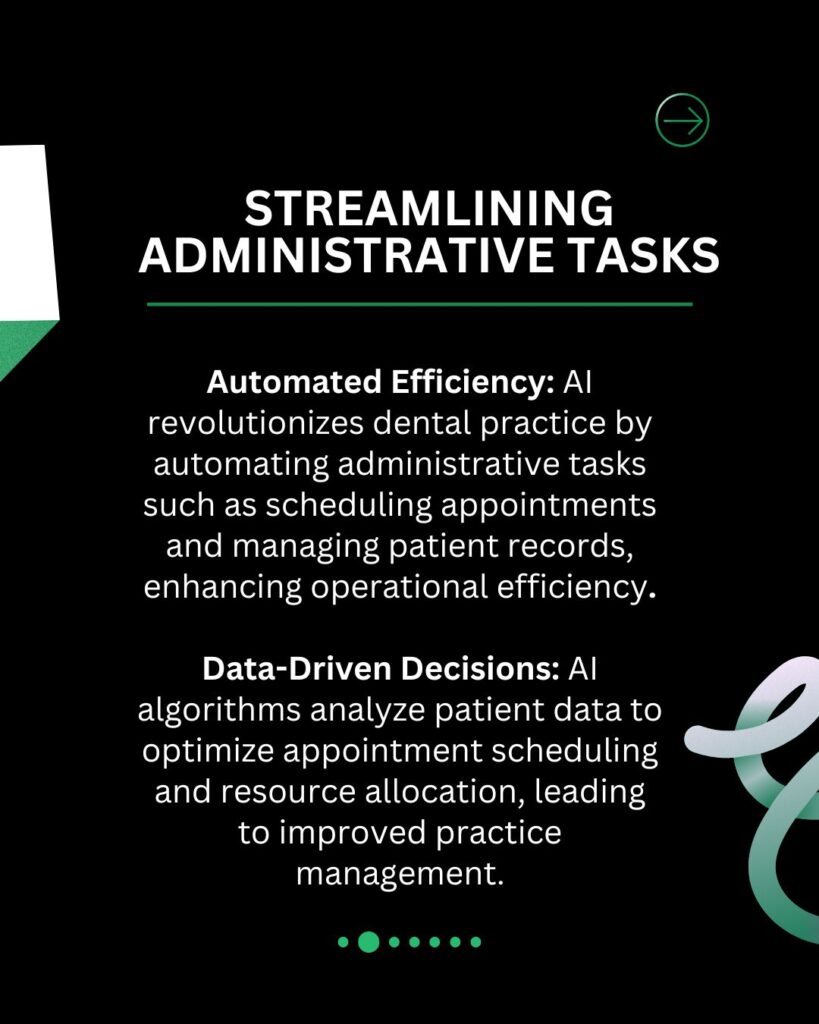
Artificial intelligence (AI) is a game-changer in many industries, including dental practice management. One of the great advantages of AI in this context is its ability to automate administrative tasks, streamlining operations and improving overall efficiency.

Traditionally, dental practices have had to deal with tasks like appointment scheduling, patient record management, and billing. These tasks are not only time-consuming but also prone to human errors. However, with the power of AI, these processes can be automated, allowing dental professionals to focus more on patient care.

AI-powered systems can intelligently handle appointment scheduling by analysing the availability of both the dentist and the patient. AI algorithms optimise scheduling by considering various factors, such as treatment duration and required equipment, to maximise efficiency and minimise patient wait times.

Another area where AI can revolutionise dental practice management is patient record management. With AI-powered systems, patient records can be digitised and organised in a structured manner. This enables quick access to patient information, including medical history, treatment plans, and progress. AI algorithms can analyse this data to provide personalised treatment recommendations based on patient-specific factors, ultimately improving the quality of care provided.

Moreover, AI can simplify the billing process by automating tasks such as insurance checks, claims processing, and payment reminders. This not only makes it easier for dental staff to perform their jobs but also reduces the likelihood of payment processing errors or delays.

By automating these administrative tasks, dental practices can achieve significant time and cost savings. This allows dental professionals to focus on providing exceptional patient care and enhancing the overall dental experience, as resources can be allocated more effectively.

In conclusion, the impact of AI in dental practice management cannot be underestimated. By automating administrative tasks and improving efficiency, AI empowers dental professionals to streamline operations, provide better patient care, and ultimately revolutionise the way dental practices operate. Embracing AI technology can usher in a new era of efficiency and effectiveness in dental practice management.
AI-in-dental-practice-1

Addressing concerns and misconceptions about AI in dental practice management

Like any new technology, there are often misunderstandings and concerns when it comes to AI in dental practice management. However, it’s important to address these concerns and provide accurate information in order to fully understand the potential benefits and capabilities of AI in this field.

One common concern is the fear that AI will replace human dental professionals. While AI can automate certain tasks and streamline processes, it is not meant to replace the expertise and judgement of dental professionals. Instead, AI serves as a powerful tool to assist and enhance their work, allowing them to focus more on patient care and complex procedures.

Another misconception is the belief that AI is too complex or expensive to implement in dental practices. However, thanks to advancements in technology, AI is now more accessible and user-friendly than ever before. Many dental practice management software now incorporate AI features that are specifically designed to improve workflows, enhance efficiency, and provide valuable insights for better guidance.

Additionally, some may have concerns about the security and privacy of patient data when using AI in dental practice management. It is crucial to select reputable software vendors that prioritise data security and comply with industry regulations. Strong security measures, such as encryption and access controls, can help protect patient data and maintain confidentiality.

Lastly, the accuracy of AI in diagnosis and treatment planning may raise questions. While AI algorithms are constantly improving, they are not meant to replace the diagnostic skills and experience of dental professionals. Instead, AI can assist in analysing large datasets, identifying patterns, and providing insights to support more informed decision-making.

By addressing these concerns and misconceptions, dental professionals can embrace the potential of AI in practice management. It allows for more efficient operations, better patient care, and staying at the forefront of technological advancements in the field. AI has the potential to transform dental practice management, empowering dentists and practitioners to provide exceptional care in an increasingly digital world.

Embracing the future: Steps to incorporate AI in your dental practice

Incorporating artificial intelligence (AI) into your dental practice can completely transform the way you manage and treat patients. AI has become a powerful tool that can improve various aspects of your practice, from patient scheduling to treatment planning, thanks to advancements in technology. Here are some steps to help you embrace the future and successfully integrate AI into your dental practice.

Identify areas for AI integration: Start by assessing your current workflows and identifying areas where AI can make a significant impact. This could include automating appointment scheduling, streamlining administrative tasks, analysing scans or X-rays, or enhancing patient communication.

Explore AI solutions: Once you have identified the areas for AI integration, research different AI solutions available on the market. Look for reputable companies that specialise in AI for dental practice management and have a proven track record of successful implementations. Consider factors like ease of use, compatibility with your existing systems, and the level of support provided.

Implement AI gradually: Introducing AI to your practice doesn’t have to be an all-or-nothing approach. Start by implementing AI in one area of your practice, such as automated appointment reminders or improving patient communication. This way, you can gradually familiarise yourself and your team with the technology and assess its impact on your workflow.

Train and support your team: As you bring AI into your practice, it’s important to provide adequate training and support to your team. Ensure that everyone understands how to use the AI tools effectively and how it can enhance their daily tasks. This will help maximise the benefits of AI and ensure a smooth transition for everyone involved.

Click here to read our article on building a dental team.

Evaluate and monitor performance: Regularly monitor and evaluate the effectiveness of the AI tools you have implemented. Assess whether they are improving the patient experience, increasing efficiency, and achieving the desired outcomes. Make any necessary adjustments and stay updated on new AI technology updates.

By embracing the future of AI and carefully planning, implementing, and evaluating its integration, you can unlock its potential to streamline operations, enhance patient care, and take your dental practice to new heights. It has the power to transform the way you manage your practice and provide exceptional dental care.

Contact us to find out more

AI can play a significant role in enhancing marketing efforts in a dental practice

Using AI can greatly improve the marketing efforts of a dental practice. Here are a few examples of how AI can enhance marketing strategies:

Data analysis and customer segmentation: AI can analyze large amounts of data from sources like patient records, website analytics, and social media. By finding patterns, AI can segment the target audience more effectively. It can identify potential leads and create personalized marketing campaigns based on patient preferences, behaviors, and demographics.

Personalized marketing campaigns: AI-powered algorithms can generate customized marketing content, such as emails, social media posts, and ads. By using patient data and preferences, AI can create personalized messages and offers, leading to higher engagement and conversion rates.

Click here to read our article on email marketing for dentists.

Chatbots and assistants: AI-powered chatbots can provide instant responses to patient inquiries on websites, social media platforms, or messaging apps. They can answer frequently asked questions, schedule appointments, provide basic dental information, and even offer personalized oral health recommendations. This improves customer satisfaction and streamlines administrative tasks.

Click here to read more about growing a dental practice with social media.

Predictive analytics: AI can analyse historical patient data to predict future behaviours and outcomes. By identifying trends and patterns, AI can anticipate patient needs and preferences. This allows dental practices to anticipate demand and adjust marketing strategies accordingly.

Image analysis and treatment planning: AI can analyse dental X-rays, scans, and images to assist in treatment planning and diagnosis. By providing accurate and efficient analysis, AI can enhance the patient experience, contribute to better treatment outcomes, and even be used for patient education and case presentations.

Online reputation monitoring and sentiment analysis: AI can track brand reputation and monitor patient sentiment through online reviews and social media platforms. This data helps dental practices identify areas for improvement, address customer concerns promptly, and leverage positive feedback for marketing purposes.

Optimization of marketing campaigns: AI can analyse real-time performance of marketing campaigns, enabling dental practices to make data-driven decisions. By monitoring key metrics such as click-through rates, conversion rates, and engagement levels, AI can provide insights and suggestions to optimise marketing efforts for improved results.

Click here to read our article on how to market your dental practice online.

It’s important to remember that while AI can enhance dental practice marketing, it should be used in conjunction with human expertise. Dental professionals and marketing experts should collaborate to develop effective strategies and ensure that AI applications align with ethical considerations and patient privacy regulations.
AI-in-dental-practice-5

Click here to read more about Marketing to Millennials for Dentists.

How AI tools (like ChatGPT plugins) can help analyse and suggest solutions for SEO or website issues for dental practise

In a dental practice, AI tools like ChatGPT plugins can help analyse and suggest solutions for SEO or website issues. Here’s how they can be useful:

Website analysis: AI tools can analyse the structure, content, and performance of a dental practice’s website. They can identify issues like broken links, missing meta tags, duplicate content, slow page loading times, and other SEO-related problems. By examining the website, AI can create a comprehensive report highlighting areas that need improvement.

Keyword research: AI tools can help identify relevant keywords and search terms that potential patients might use when looking for dental services. By analysing search patterns and user behaviour, AI can suggest optimal keywords to target in website content, blog posts, or meta tags, thereby improving the website’s search engine visibility.

Click here to read our article on how to create a website for dentists.

Content optimization: AI tools can assist in optimising website content for search engines. They can analyse existing content, suggest improvements to enhance keyword usage, recommend formatting changes, and provide insights to improve readability and user experience. Additionally, AI can suggest topics for blog posts or articles to increase traffic and help identify content gaps.

Competitor analysis: AI tools can analyse SEO strategies and competitor websites. They can identify keywords, backlinks, or content strategies that competitors are using successfully. Dental practices can use this information to gain a better understanding of their industry’s competitive landscape and make well-informed decisions regarding their own SEO strategies.

SEO performance tracking: AI tools can monitor the SEO performance of a dental practice’s website over time. They can track key metrics like search rankings, organic traffic, and conversion rates. AI can assist dentists and marketers in understanding the impact of their SEO efforts and making data-driven decisions to enhance performance by providing regular reports and insights.

On-page optimization tips: AI tools can provide real-time suggestions for on-page optimization while creating or editing website content. For example, as a dentist writes a blog post, an AI module can analyse the content in real-time and suggest improvements to optimise headings, meta descriptions, or internal linking to ensure best SEO practices are followed.

Voice search optimization: AI tools can help dental practices optimise their websites for voice search queries. With the rise of voice assistants like Siri, Alexa, or Google Assistant, AI can analyse conversational search patterns and suggest content improvements to align with voice search queries and provide answers to common dental questions.

Click here to read more about SEO for dental websites in 5 steps.

It’s important to remember that AI tools can provide valuable insights and suggestions, but they should be used in conjunction with human expertise. Dentists and marketers should interpret the insights provided by AI tools, apply their industry knowledge, and make informed decisions to truly enhance their SEO strategies.

We hope you found our blog post on using AI for dental practice management helpful and inspiring. Embracing AI can revolutionise how dental practices operate as technology continues to advance. By automating administrative tasks, streamlining patient management, and enhancing diagnostic capabilities, AI has the potential to greatly improve efficiency, accuracy, and patient satisfaction. We encourage you to stay informed about the latest developments and collaborate with experts in the field as you consider implementing AI solutions in your dental practice.

How AI will Change Running a Dental Practice FAQ

How will AI impact dental practices?

AI will enhance dental practices by improving diagnostics, streamlining administrative tasks, personalizing patient care, and optimizing treatment planning, making operations more efficient and patient-centric.

Can AI help with diagnosing dental issues?

Yes, AI can assist in diagnosing dental issues by analyzing X-rays, 3D scans, and patient data to identify early signs of problems like cavities, gum disease, and oral cancers with greater accuracy.

How can AI improve patient care in a dental practice?

AI can personalize treatment plans based on individual patient data, enhance appointment scheduling, and provide predictive analytics for more proactive and customized care.

What administrative tasks can AI automate in a dental practice?

AI can automate administrative tasks like appointment scheduling, patient reminders, billing, and data entry, freeing up staff to focus more on patient care.

Will AI reduce errors in dental practices?

Yes, AI will help reduce errors in dental practices by improving accuracy and efficiency across various processes. Here’s how:

  • Accurate Diagnoses: AI can analyze dental images such as X-rays and 3D scans with greater precision, identifying issues like cavities, gum disease, and other oral health problems earlier and more accurately than manual methods.
  • Automated Data Entry: AI can automate administrative tasks such as data entry, reducing human errors related to patient records, billing, and appointment scheduling.
  • Consistent Treatment Plans: AI-based systems can standardize treatment plans by analyzing patient data and providing evidence-based recommendations, minimizing variability in treatment decisions.
  • Reduced Human Error: By automating routine and repetitive tasks, AI reduces the risk of mistakes caused by manual input or oversight, ensuring better patient care and safety.

Incorporating AI into dental practices can significantly enhance precision, reduce costly errors, and improve overall operational efficiency.

Can AI improve the patient experience in dental practices?

AI can enhance the patient experience by offering faster diagnosis, more personalized care, and efficient appointment scheduling, leading to shorter wait times and improved patient satisfaction.

How does AI assist in treatment planning for dental procedures?

AI can analyze large datasets to recommend the best treatment options, predict outcomes, and assist dentists in creating more precise and effective treatment plans for procedures like implants, orthodontics, and restorations.

Can AI help manage dental practice finances?

Yes, AI tools can help manage finances by tracking expenses, optimizing billing processes, and providing financial insights that enable better decision-making and profitability.

Is AI in dentistry safe?

Yes, AI in dentistry is safe when implemented and used correctly. AI technologies undergo rigorous testing and adhere to strict healthcare regulations to ensure patient safety and accurate results. Here’s why AI is considered safe in dental practices:

  • Regulatory Compliance: AI tools used in dentistry must comply with healthcare standards like HIPAA (in the U.S.) or GDPR (in the EU), ensuring data privacy and secure handling of patient information.
  • Thorough Testing: AI algorithms are thoroughly tested and validated before being used in clinical settings, ensuring their accuracy in diagnosing dental conditions and planning treatments.
  • Assistive Role: AI enhances a dentist’s ability to diagnose and treat by providing data-driven insights, but the final decision is always made by a qualified professional, reducing the risk of misdiagnosis.
  • Continuous Learning: AI systems improve over time by learning from vast datasets, making them increasingly reliable in identifying dental issues and suggesting treatment options.

Overall, AI is a safe, reliable tool that supports dentists in delivering accurate, personalized care, while adhering to strict medical and ethical standards.

How can AI improve patient communication?

AI-powered chatbots and virtual assistants can handle patient inquiries, provide appointment reminders, and assist with post-treatment follow-up, improving communication and patient engagement.

Will AI replace dentists in the future?

No, AI is not expected to replace dentists. Instead, it will augment their capabilities by offering advanced tools for diagnostics, treatment planning, and patient management, allowing dentists to focus on more complex clinical work.

How will AI affect dental staff roles?

AI will likely change dental staff roles by automating repetitive tasks, allowing staff to focus more on patient care, improving workflow, and increasing overall efficiency within the practice.

How can AI help with patient retention?

AI can analyze patient data to identify trends and preferences, allowing practices to offer personalized services, reminders, and targeted follow-ups, which improve patient satisfaction and retention.

Is AI affordable for small dental practices?

Yes, as AI technology becomes more advanced, affordable solutions tailored to small and medium-sized dental practices are emerging, making AI integration accessible for practices of all sizes.

What are the long-term benefits of using AI in dental practices?

The long-term benefits of AI in dental practices include improved efficiency, better patient outcomes, cost savings, enhanced diagnostic accuracy, and the ability to offer more personalized, data-driven care.

Learn more: Related Articles

5 Ways AI-Powered Chatbots are Changing Accounting

In this article, we will explore the disruptive impact of AI-powered chatbots in the accounting industry, revolutionising customer support, enhancing client experiences, and delivering personalised services that drive success.

Learn more

4 Ways AI can Unlock Better Data Security for Accounting Firms

In this blog, we will discuss 4 ways AI helps accounting firms strengthen data security.

Learn more

4 Ways AI is Revolutionising Forensic Accounting

In this piece, we give an in-depth account of how emerging technologies such as AI&ML can prove to be particularly effective in guarding businesses against accounting discrepancies which can potentially lead to massive financial fraud and corporate scams.

Learn more

How to keep your dental practice protected online

In this article, we discuss that without the right training, software and contingency plans, your business records and your patient or client data are at risk. 

Learn more

About the Author

Neha Jain Author

Neha Jain

Neha Jain is a skilled content writer with a rich background in business and financial knowledge. With a bachelor’s degree in English Literature and Psychology, Neha has honed her writing skills, furthering her expertise with the Content Writing Master Course (CWMC) at IIM SKILLS and a Content Marketing Certification from HubSpot Academy.

Working alongside our business development experts, Neha specialises in helping accountants, dentists and other healthcare professionals start, scale and sell their businesses.

Reviewed By:

Arun Mehra

Arun Mehra

Samera Founder & CEO

Arun, founder and CEO of Samera, is an experienced accountant and dental practice owner. He specialises in accountancy, building businesses, financial directorship, squat practices and practice management.

Follow Arun on LinkedIn

Grow Your Dental Practice with Samera

Join the Samera Alliance buying group today for free to save money on your consumables and assets, increase your profits and grow your dental practice.

You’ll get access to exclusive discounts on the consumables, products and equipment you need to build and grow your dental practice. You’ll also get exclusive discounts from our Alliance Partners, covering everything from HR, IT and legal services to utilities, compliance and dental technology.

Join for free. Save money. Grow your dental practice.

More on Growing a Dental Practice

For more information on growing a dental practice, check out the articles and webinars in our Learning Centre, like our guide on How to Grow a Dental Practice.

Make sure you never miss any of our articles, webinars, videos or events by following us on Facebook, LinkedIn, YouTube and Instagram.

How to Create a Website for Dentists

Dentists can make websites themselves fairly easy using platforms like WordPress and Wix. These platforms make it fairly straightforward for anyone to build a simple website without any knowledge of coding. They’ll even make it easy for you to host the website on their servers without any real training or specialised knowledge.

But how do you make the website stand out? How do you make it rank highly in Google?

Keep Your Website Simple

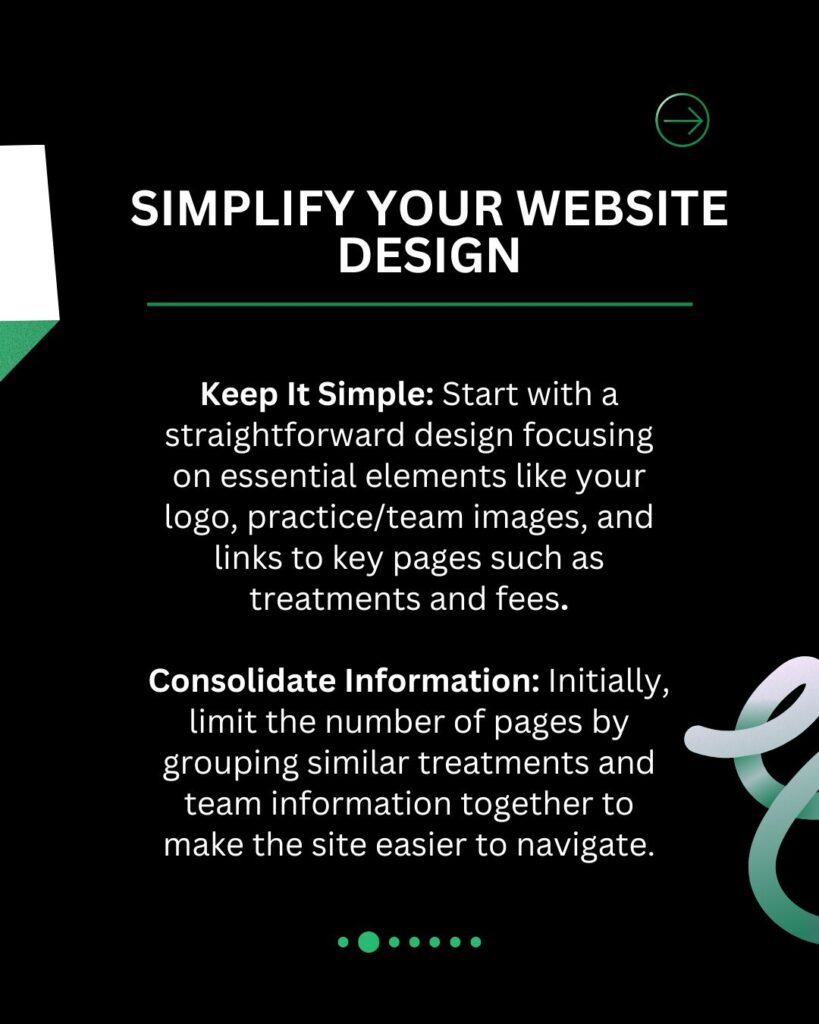
If you’re going to create your own website, it may be best to keep things simple at first.

Your homepage should take the most time to create since it is the first thing most visitors will see, it’s your first impression. Make sure you have your logo and branding, images of the practice and the team and links to all your most important pages. These will usually be your treatment pages and your fees page.

Try to keep the number of pages low at first – around a dozen to start off. Instead of a page for each treatment, have a page for all of your orthodontic services, another for all of your cosmetic services and another for all of your general treatments. Instead of a page for each team member, just have a page for the whole team.

Once you get more confident in your design and SEO abilities, create individual pages for each treatment and team member and see how highly you can rank them in Google.

The website also needs to be easily navigable. Keep the menus simple and clearly labeled. A good task is to show the website to a friend and ask them to find something specific. If it’s hard for them to find, it’s hard for patients to find. If it’s hard for patients to find, they will give up looking.

Action Plan

When designing your website, focus on simplicity. Prioritize your homepage with essential elements like your logo, practice/team images, and key page links. Initially, keep the number of pages low, grouping similar treatments and team members together. Ensure easy navigation with clear menus. Test usability by asking someone to find specific information. Simplifying your website enhances user experience and engagement.

Building-a-website-for-dentist-1

Use Call to Actions

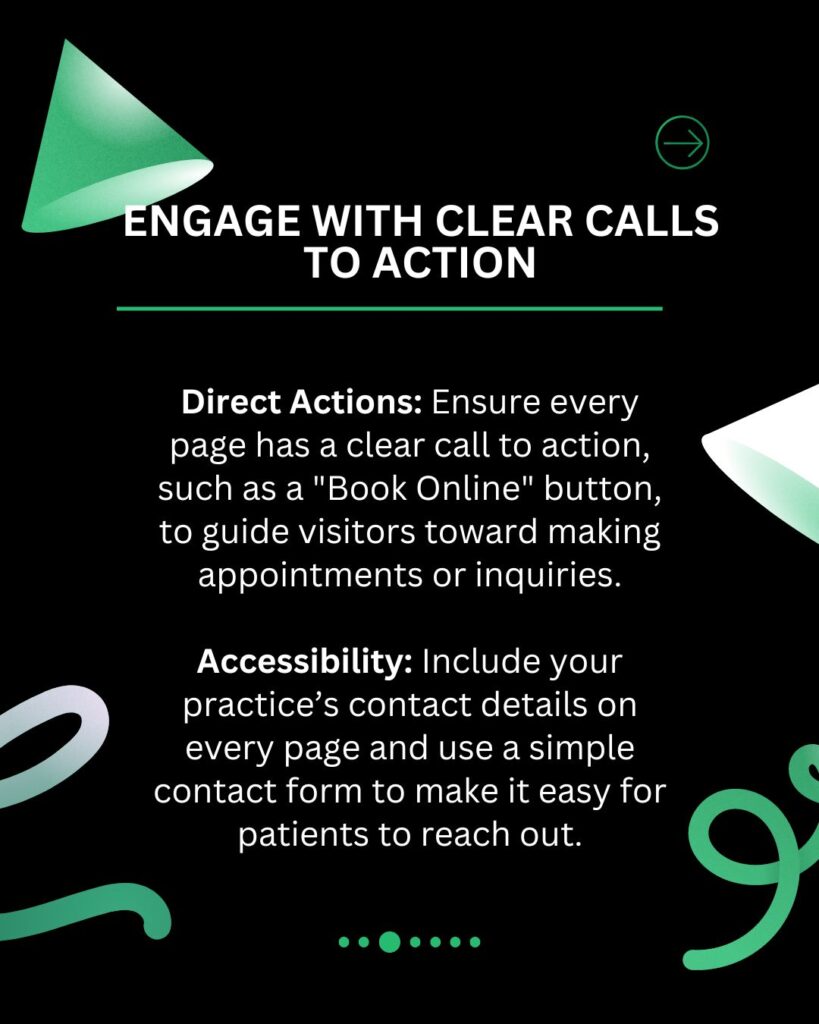
If your website could only have one element on it, it should be a call to action. In simple terms, the job of a website is to get customers and patients to click a certain button, fill in a certain form or phone a certain number.

Set up an online booking portal like Software of Excellence for your website as soon as you can and put a big, clear ‘book online’ button on each page.

Get your practice’s telephone number and email address onto every page as well. A good way to do this is to include them in the header or footer of your website so they automatically appear everywhere.

Next, you want to include a contact form on every page. Keep them simple – the more information you ask for, the fewer patients will send a contact form! Ask for their name, a way to contact them and their query. You can then set yourself a notification anytime it is filled in so you can contact the lead immediately.

Action Point

Ensure your website features prominent call-to-action buttons, such as “Book Online” for appointment scheduling. Display your practice’s contact information, including telephone number and email address, prominently on every page, typically in the header or footer. Additionally, include a simple contact form on each page to capture visitor inquiries efficiently. Simplifying the form fields encourages more submissions. Set up notifications to promptly respond to inquiries, optimizing lead conversion.

Building-a-website-for-dentist-2

Using Images on a Dental Website

The next step is to make it visually appealing. Remember that speed is essential to a good website so keep the image size and resolution small. Don’t start adding huge 500Mb HD images to each page, you’ll only hamstring your speed. You can find free tools to shrink and compress images online so make sure they are only as big as they need to be. 300/600px on each side is enough for most screen sizes.

Get your best images of the team, the practice and the local area together and pepper them throughout the site. It’s fine to use stock images from websites like unsplash and shutterstock if you do not have any, in fact, some designers prefer it. However, you might run the risk of your website looking like many others – there’s only so many stock photos of dentists out there!

Action Points

Optimize image size and resolution for fast loading times, aiming for around 300/600px on each side. Incorporate high-quality images of your team, practice, and local area to personalize the site. Balance authentic imagery with stock photos to maintain uniqueness.

Building-a-website-for-dentist-3

Make Your Dental Practice’s Website Fast

Speed has become the key to a great website. Google has been putting more and more emphasis on the speed of a website in recent years and it is now one of the key metrics they use to rank websites. In other words, the fast your website, the higher it will rank.

There are lots of ways to keep load times down and the website fast. We often find the worst culprits are images on the page. However, any widget can slow a website down so play around with different layouts and functionalities until you find the balance between user experience and speed.

Plugins like Lazy Loader can help with your website’s speed by prioritizing what images and videos are loaded in what order. Make sure you do regular speed checks on your website to ensure it doesn’t start slowing down and costing you SEO!

Action Points

Ensuring fast load times is crucial for website performance and SEO ranking. Prioritize optimization techniques such as image compression and lazy loading plugins to maintain speed without compromising user experience. Regular speed checks are essential to prevent slowdowns and maintain SEO effectiveness.

Building-a-website-for-dentist-4

Check the speed of your website here.

Local SEO and Dental Websites

Creating a website for a dental practice is not quite the same as building a website for an e-commerce business that can ship products far and wide. You main customer base is going to be your local area and the surrounding regions. This is where your local SEO becomes important.

Google ‘dentist near me’ and you’ll see a selection of dental practices within about a mile or 2 of your location. That is local SEO at work.

Register your website on Google My Business, which allows a practice to be listed for free, with information such as opening times, directions, services and images. This is the directory Google uses to store your information and match it up to local searches like ‘dentist near me’.

You then want to find other local business directories online and get your practice registered on them. Independent online business directories like Yelp and local councils will let you list your business and boost your local SEO. Make sure your name, address, phone number and website are listed on as many local and national business directories as you can find.

You also want to make sure you pepper your location throughout the text on your website. If you’re a dentist in York, make sure you’ve got ‘dentist in York’, ‘York Dental Practice’ and other, similar variations mentioned in the text of your website.

Action Points

Local SEO is crucial for dental practices aiming to attract patients from their immediate vicinity. Registering your practice on Google My Business and other local business directories enhances visibility in local searches like “dentist near me.” Ensure consistent NAP (name, address, phone number) listings across directories to reinforce local SEO efforts. Integrate location-specific keywords throughout your website’s content to optimize for local searches and attract potential patients in your area.

Building-a-website-for-dentist-5

Make it Mobile-friendly

Mobile internet usage now accounts for over 50% of all online activity. This has huge implications for the way your website needs to be designed. What looks great on a desktop might not (and probably won’t) look good on a mobile phone or a tablet. In fact, there’s a good chance it doesn’t even function properly if you haven’t tested it.

Test and preview your website on mobile. In fact, you should be building your website with a mobile-first attitude. Your links, buttons forms and multimedia all need to look and work just as well as they do on desktops. Most of your traffic is going to be coming from mobile phones and that is only going to increase.

Action Points

Optimizing your website for mobile is crucial as over 50% of online activity now occurs on mobile devices. Ensure seamless functionality and a great user experience on smartphones and tablets by testing and previewing your site on various devices. Prioritize mobile-first design by ensuring all elements like links, buttons, forms, and multimedia work effectively on mobile. With mobile traffic on the rise, optimizing your website for mobile usage is essential for engaging users and driving conversions.

Building-a-website-for-dentist-6

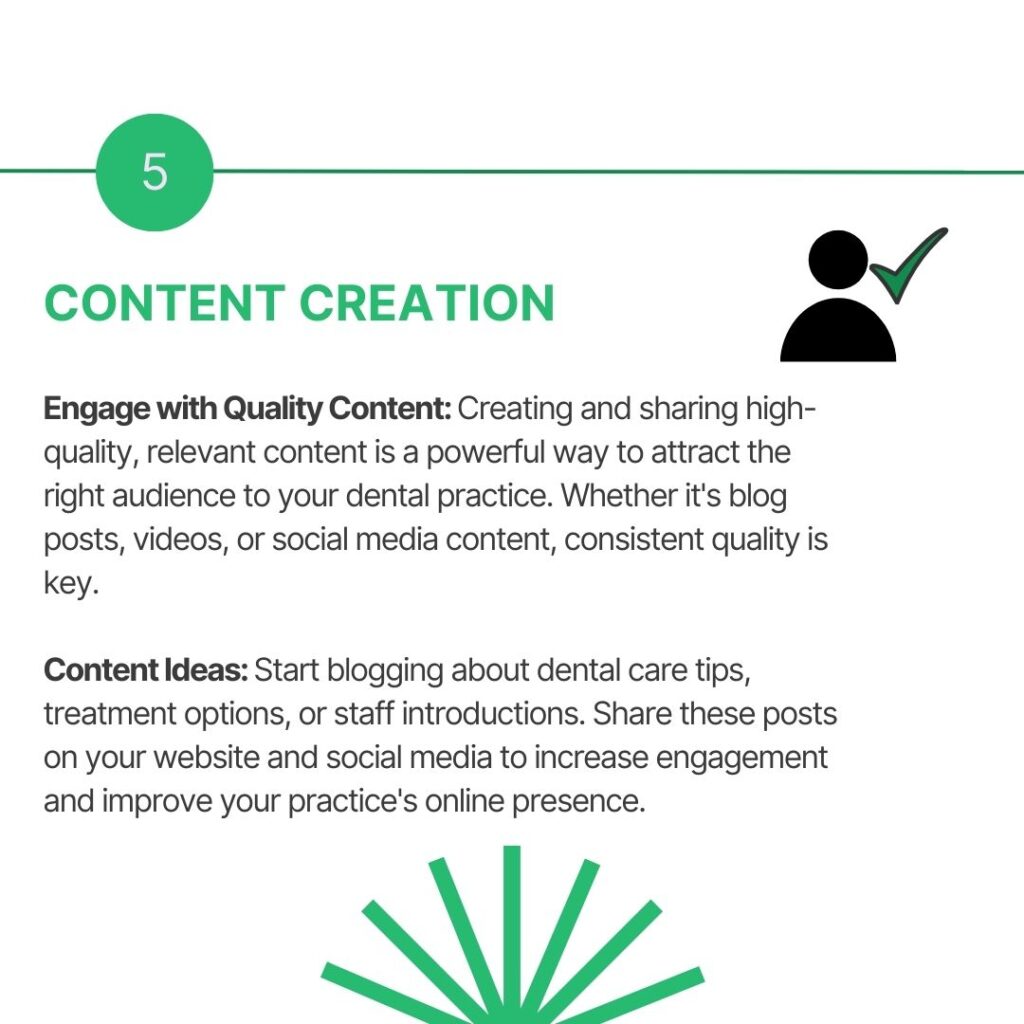
Make Use Of SEO Techniques

Search Engine Optimisation (SEO) is one of the most important aspects of building a dental website that converts patients. Most people access your online content by using a search engine like Google. This means that you want your dental practice to feature highly in search results – higher than your competitors at least! Making good use of SEO techniques helps you to make this happen. These are aspects you need to effectively digitally market your practice. You need to:

  • Make sure that all online content is easy to read.
  • Think about the keywords that you use, include long-tail keywords, use keywords in titles and sub headings and use locations in your keywords.
  • Keep all of your online content fresh.
  • Include internal links and make sure external links are relevant and to reputable websites.

Action Points

To improve your dental website’s visibility and attract more patients, prioritize SEO techniques such as optimizing readability, incorporating relevant keywords, updating content regularly, and using internal and external linking effectively.

Building-a-website-for-dentist-7

You can learn more about SEO for dental websites here.

If you want to see how we built our dental practice’s website, check out The Neem Tree website.

How to Create a Website for Dentists FAQ

Why is having a website important for a dental practice?

A website is essential for a dental practice to build credibility, attract new patients, provide important information, and offer online appointment scheduling. It helps improve visibility and patient engagement.

What are the key features a dental website should have?

A dental website should include the following key features to ensure it is functional, user-friendly, and effective in attracting and retaining patients:

  • Online Appointment Booking: Allow patients to easily schedule appointments through an integrated booking system.
  • Service Pages: Detailed descriptions of the dental services offered, such as cleanings, cosmetic dentistry, orthodontics, and more.
  • Contact Information: Clearly display the practice’s address, phone number, email, and hours of operation, with an embedded Google Maps location.
  • Patient Testimonials: Showcase reviews and testimonials from satisfied patients to build trust and credibility.
  • About Us Section: Provide information about the dental team, including staff bios and qualifications, to create a personal connection with potential patients.
  • Blog: Regularly updated content on dental health tips, FAQs, and news that can improve SEO and patient engagement.
  • Mobile-Friendly Design: Ensure the website is responsive and easily accessible on mobile devices.
  • Secure Patient Portal: Offer a secure, password-protected area where patients can access their records, treatment plans, and billing information.
  • SEO Optimization: Use search engine optimization (SEO) techniques, including relevant keywords, meta tags, and fast loading speeds, to improve search engine rankings.
  • Social Media Integration: Links to your practice’s social media profiles to encourage engagement and patient interaction.

These features help create a professional, patient-centric website that enhances the online presence and efficiency of your dental practice.

How can I create a website for my dental practice?

You can create a website by hiring a professional web designer or using a website builder platform. Ensure it’s optimized for SEO, mobile-friendly, and includes essential features like appointment scheduling and patient resources.

Should I hire a web designer or use a website builder for my dental website?

Hiring a professional web designer can give your website a customized, professional look, while a website builder offers an easier, more affordable option for smaller practices. The choice depends on your budget and design needs.

What is the cost of creating a dental website?

The cost varies depending on whether you hire a designer or use a website builder. Professional designers may charge between £1,000 and £5,000, while website builders can cost £10 to £50 per month.

How can SEO help my dental website attract more patients?

SEO (Search Engine Optimization) helps your dental website rank higher on search engines like Google, increasing visibility. Optimizing your website with relevant keywords, meta tags, and quality content can attract more potential patients.

What kind of content should I include on my dental website?

Your website should include detailed information about your services, staff bios, patient testimonials, FAQs, a blog with dental health tips, and clear contact information.

How do I make my dental website mobile-friendly?

To make your website mobile-friendly, use a responsive design that adapts to different screen sizes, ensure fast loading times, and simplify navigation for mobile users.

How can I offer online booking on my dental website?

You can integrate online booking software or plugins into your website that allow patients to schedule appointments, check availability, and receive confirmation instantly.

How can I use patient testimonials on my dental website?

Displaying patient testimonials on your website builds trust and credibility. Place testimonials on your homepage or service pages to showcase positive experiences and attract new patients.

Should my dental website have a blog?

Yes, having a blog can improve your SEO, provide valuable dental health information, and engage patients. Regularly posting content can position your practice as an authority in dental care.

What are the best practices for designing a dental website?

Best practices include using a clean and professional layout, making navigation simple, optimizing for SEO, ensuring mobile responsiveness, and providing easy access to contact details and online booking.

How do I secure my dental website?

Securing your website involves using SSL certificates, keeping software updated, and ensuring patient data is encrypted. This is crucial for protecting sensitive patient information and complying with regulations like GDPR.

How can social media integration benefit my dental website?

Integrating social media on your website allows patients to easily follow your practice, share content, and leave reviews, enhancing engagement and driving traffic back to your site.

Can I manage my dental website after it’s built?

Yes, with content management systems (CMS) like WordPress or Wix, you can easily update content, manage patient information, and keep your website current without needing extensive technical knowledge.

Our Expert Opinion

“Your website is your main weapon when it comes to getting patients (speaking as a marketer). Your website is one of those things that I will always say it’s worth paying more for. Ads, content, social media, that can all be done very effectively on the cheap. Your website cannot be done cheaply and it’s not something I’d recommend keeping in-house.

Pay a professional to make a really fast, well-built, effective website that ranks on Google. I promise it will be worth it. Keep in mind that there are a lot of developers out there who really aren’t that good and will charge through the nose. Get several quotes, get their testimonials and I can’t stress enough how important it is to get examples of other websites they’ve made first.

Make your website mobile-first, check it regularly and work as hard as you can on the SEO to get it to the top of Google.”

Chris O’Shea
Head of Digital Marketing

Marketing a Dental Practice: Further Information

For further information on how to effectively market a dental practice, check out our Learning Centre here, where you can find articles and webinars like our guide How to Market a Dental Practice.

Make sure you never miss any of our articles, webinars, videos or events by following us on Facebook, LinkedIn, YouTube and Instagram.
Reviewed By:

Arun Mehra

Arun Mehra

Samera Founder & CEO

Arun, founder and CEO of Samera, is an experienced accountant and dental practice owner. He specialises in accountancy, building businesses, financial directorship, squat practices and practice management.

Follow Arun on LinkedIn

Email marketing for dentists

By now, most businesses have made the transfer to online communications. However, healthcare is one sector that is often still going through the process of learning how to communicate online. Patients will obviously eventually need to meet their dentist face-to-face, but their search for the right dentist starts online.

Email marketing is a highly effective digital marketing strategy, no matter what type of business you are. It is a very powerful tool that any business in any field and of any scale can use to acquire, engage and retain clientele. You need to understand, however, that there is an art to email marketing. With everyone being able to unsubscribe with the touch of a button, you need to find the fine line between marketing interesting, informative and insightful and bombarding and hassling your clientele. 

Email marketing helps you connect with your audience to promote your brand and increase traffic to your dental practice. You can actually do a lot of things with emails. Not only are they a great way to market your business, they are also a great way to sell products and drive traffic to your website and clients to your actual practice. 

Click here to read more about content writing for dentists.

Most people also try to fix their problems at home or attempt to avoid them and doing that also starts online. This is where quality content comes in. Your content needs to be good quality so that when you start your email marketing campaigns, your patients have good content to read when your emails direct them there. 

Email marketing for dentists helps practitioners to: 

  • Provide quality and helpful content 
  • Engage existing and potential patients 
  • Increase revenue 
  • Prove personalised experiences
  • Advertise discounts, deals and promotions
  • Increase brand awareness

Click here to read more about marketing a dental practice.

Does email marketing work?

While email marketing has a lot of competition in the marketing department, it is undoubtedly a marketing method that still works, while still being very cost effective. Companies that utilise email, and do it well, can reap the benefits that come from that market technique.

Sending mass emails to your marketing list can increase your brand awareness, keep existing patients engaged, help retain patients and promote your special offers. 

Action Plan

Email marketing is a powerful tool for dental practices to engage with patients, provide quality content, increase revenue, and promote brand awareness in a cost-effective manner, leveraging the online platform to reach and retain clientele effectively.

Contact us to find out more

4 types of marketing emails 

We have outlined the main four types of popular email marketing campaigns and how you can use them effectively to help your business grow: 

Email newsletters

One of the most popular and common forms of email marketing are regular email newsletters. As a dental practice, you can use an email newsletter to provide your patients with helpful knowledge and updates. 

It is important to add value to all your patients’ inboxes. 

To do this, you must create engaging content, including new blogs, how-tos and announcements of new services or deals and prices. 

Send a few articles, blogs or videos out in a newsletter once a month. Maybe include a promotion or two. Behind-the-scenes stories of your team and the practice will also help build a relationship with your patients. 

Acquisition Emails

Acquisition emails can help your dental practice acquire more patients by reaching out to those who have opted to receive your emails but have not yet converted into consistent patients. 

By creating attractive offers, discounts and deals, as well as informative content, you can show all those in your email list that perhaps have missed their routine checkups or have been avoiding the dentist. Or, perhaps simply showing those who are unsure of which local dentist they should go to, the value of becoming an active patient at your dental practice. 

Acquisition emails are a great way to move all potential leads through the conversion funnel a lot faster and grow your patient base as well as drive additional revenue and target users who have expressed some interest at some point in what your practice has to offer. 

Promotional Emails 

Promotional emails are one of the greatest ways to drive new signups, sales and new service offerings for your dental practice. Promotional emails include offers that both entice and encourage your target clients to buy a new service. Use promotional emails to reward engaged subscribers with exclusive email only offers, drive new products you are selling or any new services you are offering. Cosmetic procedures that are hot and trending, such as Invisalign, are always procedures that many potential patients are always on the fence about. Therefore, offering promotions on services like this helps entice those patients into buying into that service.

Action Points

  • Email newsletters: Provide valuable content to engage patients and keep them informed about updates and services.
  • Acquisition emails: Offer deals and discounts to encourage potential patients to schedule appointments and become active patients.
  • Promotional emails: Drive signups and sales by offering exclusive deals on services like cosmetic procedures.
  • Retention emails: Maintain relationships with existing patients through personalized messages and loyalty rewards to encourage repeat visits.

Benefits of email marketing for dentists

Email marketing is a powerful tool that can be used to engage, acquire and retain patients for your dental practice. By implementing a successful email marketing campaign, your dental practice can benefit greatly. It is important to select the correct email marketing campaign to achieve your goals with this type of marketing. 

Build brand awareness

Before you email your patient list, take some time to design your email template. You need to make sure your emails are consistent in style, reflect your brand and look professional. A poorly formatted, plain email may be worse than no email at all.

Include your brand colours and logo, make your email reflect the design and look of your website. Create a consistent brand and get it out there via email.

Drive traffic to your website

Remember, when your target audience finds your email content interesting or valuable, they are a lot more likely to share it, forward it on or click on your links (make sure to always include your social media links and share buttons).

By emailing a blog, or even just a section of it, and encouraging audiences to click the link, you drive more traffic to your website. You can also increase your social media following and engagement by encouraging them to share and link them on your profiles.

Click here to read more about creating a website for dentists.

Build a relationship

As your business is a dental practice, it often means that interactions with your patients can be very limited in the sense that they will only ever see you for scheduled visits. However, this does not mean that you can’t build impactful and lasting relationships with these patients outside of these appointments.

Keep in touch 

Being a dental practice, is it quite easy to overlook the importance of keeping in touch with your patients when at best, you will only ever see them every 6-12 months. However, with the use of email marketing, you can fill the void in between those routine visits and build trust and relationships with your patients. 

In doing so, you are providing a bigger service than simply taking care of their teeth every appointment. Depending on your email campaign, you can provide patients with various helpful tricks tips, and information that is useful to them, which will make them want to stay subscribed to you. Email marketing will help you create a community of patients.

Action Points

  • Build brand awareness: Design professional and branded emails to ensure consistency and professionalism, which helps in establishing your practice’s identity and recognition among patients.
  • Drive traffic to your website: Share valuable content in your emails and encourage recipients to click on links to visit your website, which boosts traffic and engagement.
  • Build relationships: Email marketing allows you to stay connected with patients even between appointments, fostering relationships and enhancing patient loyalty.

Top tips on email marketing for dentists and dental practices. 

Building a subscriber list 

The only way to make full use of email marketing is to have a subscriber list. You need to build a list of contacts that you can start sending emails to. 

Create a simple contact form on your homepage, called something like ‘Sign up to our newsletter’, or ‘Special offers’. Keep the form as simple as possible, all you need is a name and an email address. You will get more sign-ups that way. 

Include requests to sign up for marketing emails in your communication with new and existing patients. Add these to your email marketing list as well. 

email-marketing-for-dentist-1

Maintain relationships with current patients 

Now you have your patients emails, you are able to contact your patients and you are given an opportunity to build their trust. You need to prove that you are using their contact information to send them useful and insightful emails, not useless junk or constant emails bombarding them. To keep the patients you already have, you need to keep in frequent contact with them while establishing a regular and personal connection with them. 

It is an absolute game changer for your dental business if you begin to reach out to your customers and provide them with the relevant information they need before they even realise they need it. 

While it is imperative to make a routine for when your marketing emails go out to your patients, you need to make sure that you are not overwhelming your subscribers with too many emails. That’s when you will start to lose your following!

Keep your newsletters monthly, keep your promotions spaced out, don’t make yourself blend in with the other emails. 

Targeted and personalised emails 

The content of your emails are what matters the most. The way you choose to personalise them will help you build relationships with your existing and potential patients. Segmented emails work the best, so your emails appeal to both types of patients. This ensures that each patient on your subscribers list receives content that is both relevant and useful to them. 

A great example of this is age-appropriate content. This may not mean what you think it means. For example, patients over the age of 50 are less likely to be interested in receiving information about braces like Invsalign. They may be more interested in reading about how their gums change over time and your services on dental implants. 

Offering content to your patients of all ages will make each patient feel as if you as a business cares about all of them individually and you are working to build on that relationship and trust.

Sloppy or irrelevant content can have an adverse effect as this will push your patients to unsubscribe. If they are subscribed to your email listing, it needs to be because you are providing them with something of value to them. The last thing you want is for your emails to be marked as spam. 

Personalising your emails is a must. Feeling valued is what you want your patients to feel when they receive your emails. Your goal is to make your patients feel like they matter. Your second goal is for your emails to help build your name and dental practice as a brand. Make sure your content reflects you as a business. 

Personalising your emails can consist of small things such as addressing each contact by their name instead of the vague ‘sir/madam’, sending birthday messages with offers or seasonal offers. This can be done quite simply in all mass email platforms once you link it to your contact lists. 

You can even create automated emails to specific categories of patients. For instance, you could send information on children’s dentistry automatically to only patients with children. You could also send information on gum disease and dental care to all patients who have seen the hygienist. 

All these can make an immense difference to how your patients feel about your practice and also how they view their dentist (as many are terrified). 

What is the most important about the content of your emails and all other content that you post, is your tone. It is important that you convey the appropriate tone that reflects your practice while you are addressing your patients. These details are what can leave a lasting impression on your patients. 

email-marketing-for-dentist-2

Click here to listen to our podcast episode about marketing to millennials.

Contact us to find out more

Keep patients up to date

Your emails can often consist of special events, offers or discounts you are offering at your practice. This is the main reason why many of your patients will be interested in your emails. Lets face it, dental work is not cheap and everyone loves a good discount!

Providing updates on anything new happening in your practice, such as new equipment, new services or any new staff, anything to get your patients attention and keep your patients informed. Newsletters are a great way of doing this. 

Let patients know about life events in the team as well. This creates a sense of community and will bring you closer to your patients. Birthdays, engagements, weddings, these are all great little additions to liven up an existing newsletter.

Educate your patients

You can use your email marketing to educate your subscribers. This can be through concisely worded emails or short descriptions with links to blogs and articles on your website. Linking your blog and website content can also be personalised to specific patients and you can align them to blog posts that are most relevant to them. 

For instance, send that blog you wrote on top tips for looking after your braces to all your orthodontic patients. 

Think about what questions you get asked a lot in the practice. What problems do you keep seeing in oral health? What are the little tips and tricks you know about brushing and flossing that patients probably don’t? Tell them about it!  

Optimise for all devices 

No matter what sector your business is, you need to be up-to-date with how you promote your services online. This includes ensuring that your email marketing campaign is optimised for mobile devices. Over half of emails that are sent are opened on mobile phones, therefore, it would make sense (and be in your best interest) to have the emails you send optimised for people that are accessing their emails from either a smartphone or tablet. 

The recipients are more likely to open and actually read the content of the email if the email is formatted in the right way for them to view it. 

While doing this, there are a few things to consider. Be sure to understand that the screen sizes are different. A laptop screen and a smartphone have very different screen sizes which is what you need to consider. You need to make sure that the content of your emails are clear and visible and not cut off around the screen. 

email-marketing-for-dentist-3

Include Call-to-actions (CTAs)

With any content that you write, at some point you need to encourage a call-to-action. A call-to-action (CTA) is simply a button like ‘call now’ or ‘further information’. Calls-to-action are a great way to create a relationship with your audience and get them to take an action you want. 

They are also a great way of pushing traffic to your website.

The point of your email marketing campaigns are to get your subscribers to come to you in some way to get you more business. This is why calls to action are so important. It allows your message to be read, then it gives your clients a way to come to you and create some form of contact. In essence, it is a technique that can make your patients become more responsive and engaged with your practice. 

Calls-to-actions can be a very useful technique helping customers along the purchase process and it can also be helpful in attracting new patients to your practice. 

Having a CTA, like a referral system, in place alongside the emails that you send will be helpful in monitoring how well the emails are doing and how effectively they are working. 

email-marketing-for-dentist-4

Monitor progress

There are various ways to monitor and track the progress of your email campaigns. These powerful analytics are able to track how many of your patients are actually opening your emails and clicking through the links. 

Monitoring the progress of your email marketing allows you to make any necessary tweaks and changes if they are necessary. This ensures that you are getting the most that you can from using email marketing for marketing your dental practice. 

There are some great ways to measure the effectiveness of your newsletter. You need to analyse whether your content helps build a relationship with your patients and subscribers, increases retention and engagement and strengthens patient loyalty. 

Does your content (like blogs and videos) get shared or liked on social media? Does your engagement on social media or your website traffic see a noticeable uptick after sending out a newsletter? Are recipients opening the email and clicking the link within? 

email-marketing-for-dentist-5

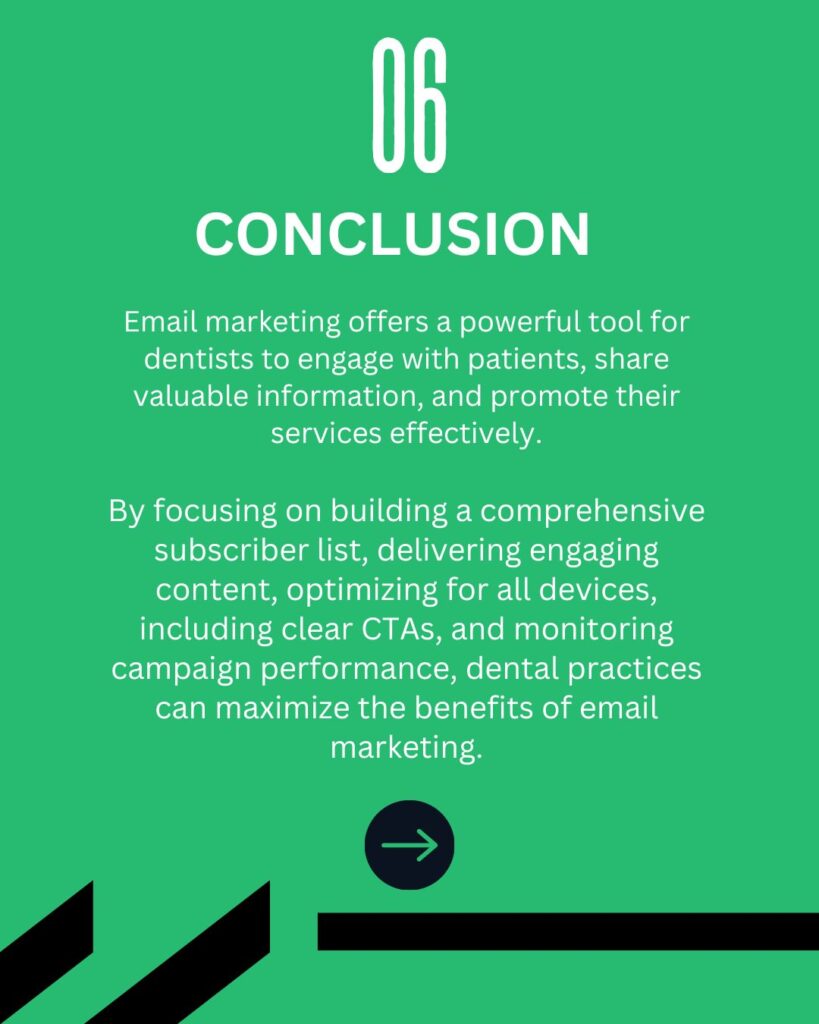
Action Point

  • Build a subscriber list: Create simple sign-up forms on your website and encourage patients to subscribe to your newsletters or special offers.
  • Maintain relationships with current patients: Send useful and insightful emails to build trust and keep patients engaged, but avoid overwhelming them with too many emails.
  • Targeted and personalized emails: Segment your email list and personalize content to appeal to different patient demographics, ensuring relevance and usefulness.
  • Keep patients up to date: Share updates about your practice, special events, offers, and any new services to keep patients informed and engaged.
  • Educate your patients: Use email marketing to provide valuable information and tips on oral health care, linking to relevant blog posts or articles on your website.
  • Optimize for all devices: Ensure your emails are optimized for mobile devices to accommodate the increasing number of users accessing emails on smartphones and tablets.
  • Include Call-to-actions (CTAs): Encourage patient engagement and interaction with clear CTAs, such as ‘call now’ or ‘learn more’, to drive traffic to your website or encourage bookings.
  • Monitor progress: Track the effectiveness of your email campaigns through analytics to measure open rates, click-through rates, and engagement, making necessary adjustments to improve performance.
email-marketing-for-dentist-6

Email marketing for dentists FAQ

What is email marketing for dentists?

Email marketing for dentists is a targeted communication strategy that involves sending emails to current and prospective patients to promote dental services, share educational content, offer promotions, and maintain regular engagement. It helps dental practices build stronger relationships with patients, improve retention, remind them of appointments, and encourage them to take advantage of special offers or new services. Email marketing also serves as an effective tool for increasing patient loyalty and attracting new patients by keeping the practice top-of-mind.

Why is email marketing important for dental practices?

Email marketing helps build relationships with patients, improve retention, promote services, and increase appointments. It’s a cost-effective way to stay connected and enhance patient loyalty.

How can email marketing attract more patients to my dental practice?

By sending regular newsletters, promotions, and educational content, you can engage current patients and attract new ones by showcasing your expertise and encouraging referrals.

What types of emails should dental practices send?

Dental practices can send various types of emails to engage patients and improve retention. Here are some effective options:

  • Appointment Reminders: Automated reminders to help patients remember their upcoming dental appointments.
  • Newsletters: Regular updates that include dental health tips, practice news, and information about new services or technology.
  • Promotional Emails: Offers, discounts, or special promotions to encourage patients to book treatments or refer friends and family.
  • Post-Treatment Follow-Ups: Emails to check in with patients after a procedure and ensure their recovery is going smoothly.
  • Educational Emails: Content that provides insights into oral health, preventive care tips, and information on specific dental treatments.
  • Birthday or Holiday Greetings: Personalized messages that build rapport and strengthen patient relationships.

Sending these types of emails helps keep patients engaged, improves communication, and encourages repeat visits.

How often should I send emails to my patients?

It’s best to send emails once or twice a month. This keeps patients engaged without overwhelming their inbox. Special promotions or important updates can be sent more frequently.

How can email marketing increase patient retention?

By sending personalized content, appointment reminders, and follow-ups, email marketing keeps your practice top-of-mind and encourages regular visits, boosting patient retention.

Can I automate email marketing for my dental practice?

Yes, automation tools can help you send scheduled emails like appointment reminders, birthday greetings, and follow-up emails, saving time while maintaining patient engagement.

What are some email marketing best practices for dentists?

Best practices include personalizing emails, using engaging subject lines, including a clear call to action, optimizing for mobile devices, and ensuring compliance with data protection regulations.

How can I build an email list for my dental practice?

You can build an email list by collecting patient emails during registration, offering incentives like discounts for signing up, and adding email opt-ins to your website and social media.

How can I track the success of my email marketing campaigns?

Use email marketing tools to track open rates, click-through rates, and conversion rates. These metrics help you understand which emails are effective and improve future campaigns.

How can I personalize email marketing for my dental patients?

You can personalize emails by addressing patients by name, sending birthday messages, offering personalized treatment reminders, and recommending services based on patient history.

What regulations should I follow when sending marketing emails?

Ensure your emails comply with GDPR (UK/EU) or CAN-SPAM (US) regulations by obtaining patient consent, including an easy opt-out option, and protecting patient data.

Can email marketing improve appointment bookings?

Yes, email marketing can boost appointment bookings by sending reminders, offering promotions, and including easy-to-click links for online scheduling.

How can I avoid my emails being marked as spam?

To avoid spam filters, use a professional email marketing platform, include a recognizable sender name, avoid excessive use of promotional language, and always provide an easy opt-out option.

Should my dental practice offer promotions through email marketing?

Yes, offering exclusive promotions or discounts via email can incentivize patients to book appointments, increasing engagement and practice revenue.

Our Expert Opinion

“We don’t use email marketing as much for the Neem Tree Dental Practices as we do for Samera. However, whenever we have a special offer or important news we always rely on emails. We also often send emails out at Christmas, Eid and Diwali to our patients just to wish them the best and keep us in their minds.

We also use email marketing whenever we have an special offer like the Invisalign open days we sometimes hold. They’ve always worked well and Front of House + Emails usually = patients through the door.

Just make sure you have all your GDPR ducks in a row and don’t send emails out to your entire database – only those who have given the green light for you to contact them!”

Chris O’Shea
Head of Digital Marketing

Learn more: Related Articles

Should You Use Social Media in a Dental Practice?

In this webinar, Arun and George discuss several cyber security issues which pose a threat to your healthcare business online.

Learn more

New Ransomware Targeting Dentists

In this quick update, we take a look at a new ransomware which is specifically targeting dentists.

Learn more

Gootkit Malware Update

In this video, Uros takes a look at Gootkit Malware and how it can affect your business.

Learn more

What the Google Experience Update Means for Dentists

Google updated their SEO algorithm to focus on user experience. This article looks at how those changes affect our SEO.

Learn more

About the Author

Chris O’Shea

With nearly 10 years experience in marketing and communications, Chris is the Head of Marketing at the Samera Group.

Chris oversees all of our marketing efforts for Samera Global, Samera UK and our dental practices.

He specialises in search engine optimisation, getting to the top of Google and content marketing strategy.

Reviewed By:

Arun Mehra

Arun Mehra

Samera Founder & CEO

Arun, founder and CEO of Samera, is an experienced accountant and dental practice owner. He specialises in accountancy, building businesses, financial directorship, squat practices and practice management.

Follow Arun on LinkedIn

Marketing a Dental Practice: Further Information

For further information on how to effectively market a dental practice, check out our Learning Centre here, where you can find articles and webinars like our guide How to Market a Dental Practice.

Make sure you never miss any of our articles, webinars, videos or events by following us on Facebook, LinkedIn, YouTube and Instagram.
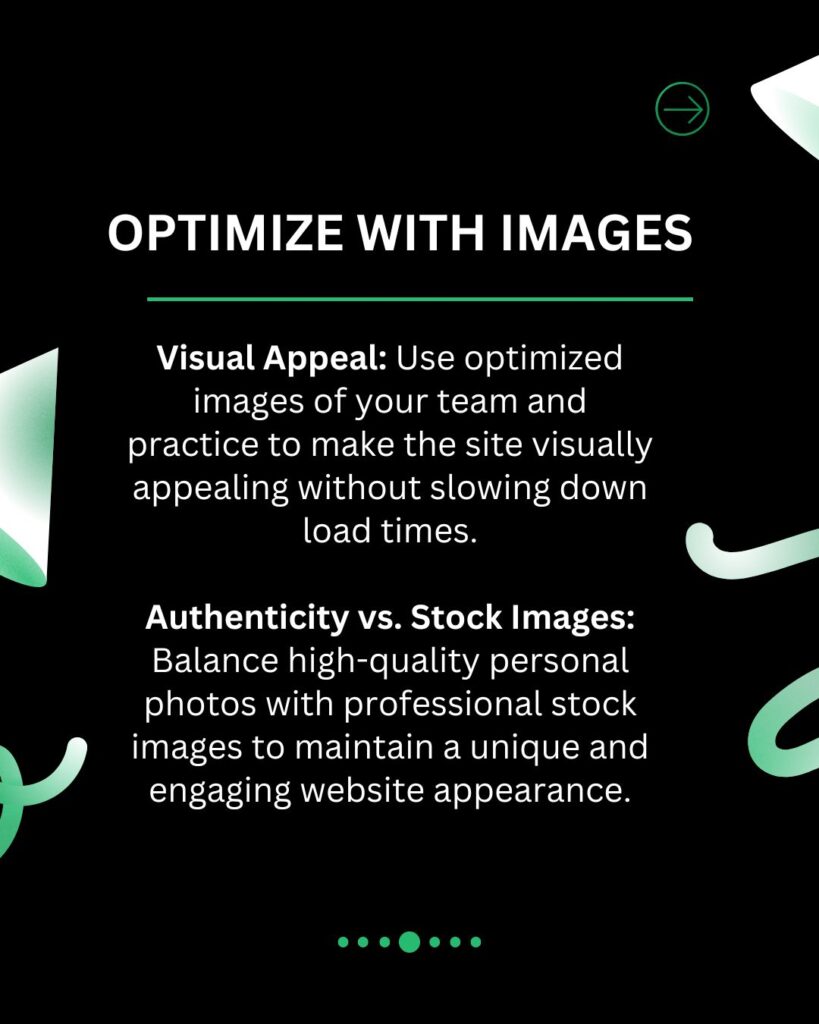
How To Market A Dental Practice

Paying attention to marketing is essential if you want to appeal to new patients, build your brand awareness and grow your dental practice. It provides you with an opportunity to attract new patients as well as to keep current patients engaged and connected.

Making use of techniques such as website optimisation, SEO, social media, PPC and email marketing helps you grow your dental practice and make sure that it continues to flourish as you want it to.

The basis of your dental practice should begin with getting the right team in place. However, growing your business and getting that attention that you need for your dental practice to succeed, is where your efforts need to be drawn to next. This is where marketing comes in.

After nearly 20 years in the business, it has been a shame to see many dental practices who have the potential to thrive, fail due to the inability to get people through the door. This is why marketing is paramount to growing your business.  Marketing a dental practice effectively can make all the difference when it comes to getting new patients in and retaining current ones.

Click here to watch our webinar on using marketing to grow a dental practice.

Action Points

  • Start by creating a user-friendly website for your dental practice, keeping it simple initially, possibly even with just a homepage that includes all essential information.
  • Ensure the website is easy to navigate without using complex jargon or categorizing treatments in a way that might confuse potential patients.
  • Incorporate multiple contact options, making phone numbers clickable for direct calling, including contact forms on every page, setting up online booking systems, and adding a chat feature or WhatsApp number for ease of communication.
  • Prioritize making your website mobile-friendly, ensuring it not only looks good on desktops but also provides an optimal experience on mobile devices, where the majority of your traffic is likely to come from.

You can read more about creating websites for dentists here.

Search Engine Optimisation

Theoretically, you can have the best dental practice in the world in terms of patient care, and it will still fail to thrive if people do not know that it exists. Gone are the days when word of mouth was the way most people found a dentist. Today, people go straight to Google and search for a dentist in their area. This is why it’s so important to use SEO for dentists, to attract patients to your practice.

SEO helps you to optimise your search engine rankings. So that your practice features at the top of the results list when people carry out a search. For this to happen, it’s important that SEO is done well. There are several things to think about to successfully grow your dental practice with SEO.

Make sure you are using the proper keywords on the relevant pages. For instance, if you’re a dentist in Baker Street, you need to make sure your dental implants page uses phrases like ‘dental implants in Baker Street’ in the body of the text and preferably in the headers.

Start a blog right now if you haven’t already – it’s the perfect excuse to create content around any keyword. Write about the top tips for getting white teeth, the 5 reasons to use Invisalign, the best ways to avoid bleeding gums and so on.

Action Points

  • Implement SEO strategies to enhance the online visibility of your dental practice, ensuring it appears at the top of search results when potential patients search for local dentists.
  • Focus on using relevant keywords throughout your website, especially on service pages, incorporating specific phrases like ‘dental implants in Baker Street’ to match local search queries.
  • Start and consistently update a blog on your dental practice’s website, using it as a platform to create keyword-rich content on various dental topics, tips, and treatments to attract and engage potential patients.
Effective-marketing-strategies-for-dentist-1.

Read our article on SEO for dental websites here.

Pay-Per-Click Advertising

Pay-per-click (PPC) advertising can be one of the most effective way of getting your adverts seen by potential patients. By using platforms such as Google Ads and Facebook Ads, businesses can pay to have their adverts shown to the exact audiences they want. With PPC, you pay every time a user clicks on your advert.

Read our blog on using Google PPC to grow a practice.

Google and Facebook both allow you to use narrowly defined target audiences, meaning you are not paying for your adverts to be shown to audiences with no intention of becoming a patient. With Google and Facebook by far being the largest search engine and social media platform, the advertising potential with these two services are enormous.

Start advertising on Google right now for simple keyword searches like ‘dentist in [your area]’. Set up ads for emergency patients especially, they are a great way to grow a practice and find new patients. You can target specific audiences but you can also simply target everyone within a certain radius of your practice.

Facebook can be great for PPC when used correctly. We recommend using Facebook ads for cheap brand awareness campaigns, just to get your name out there to people within your area. You should also use Facebook (and Instagram) ads for one-off offers and discounts. Target the people who have visited your website, your followers on Facebook and Instagram and also upload your patients’ emails. This means your adverts will go to more qualified leads who you know are at least somewhat interested in your services (since they have already interacted with you in the past.)

Set up a Facebook Pixel on your website – this allows Facebook and Instagram to track their users when they use your website. This then allows you to send adverts to people who have visited specific pages on your website. For instance you could send Invisalign adverts ONLY to people who have been on your Invisalign page.

Action Points

  • Leverage Pay-Per-Click (PPC) advertising on platforms like Google Ads and Facebook Ads to target potential patients directly, paying only when your ad is clicked.
  • Utilize the targeting capabilities of these platforms to ensure your ads reach specific, relevant audiences, such as those searching for a ‘dentist in [your area]’ or requiring emergency dental services.
  • Consider using Facebook for brand awareness campaigns to familiarize your local community with your dental practice and for promoting special offers or discounts to a more engaged audience.
  • Implement a Facebook Pixel on your website to track visitor interactions, enabling more precise ad targeting, such as showing Invisalign ads to visitors who have shown interest in that specific service on your site.
Effective-marketing-strategies-for-dentist-2

Watch our webinar on using Facebook and Instagram ads for dentists.

Creating Content

Creating great content is key to digital marketing, it’s your ammunition! If you haven’t already – you need to start blogging and writing articles. These are some of the main things that search engines like Google will use to analyse and rank your website.

Write about top tips, give guides to different treatments, do top 10 lists, there are so many options to choose from and so many topics to write about! It takes time, but it will pay dividends in the long run in terms of SEO. Google notices when your website is constantly updating itself with new content and it prefers websites that do.

Read our article on content writing for dentists here.

But blogs aren’t the end of it. The most successful and engaging form of media on any website is video. It attracts customers, it engages them and it converts. Get yourself in front of the camera and talk about your services, dentistry in general, your team and your mission & values.

You can create a short video for each treatment page explaining the procedure. You could also have a video for each team member on their profile page. Video is more engaging for audiences and also performs better than simple text or images.

Effective-marketing-strategies-for-dentist-3

You can read more about video marketing for dentists here.

Social Media

There is no doubt that social media plays a larger than ever role in dental marketing. Using social media gives you the opportunity to interact with people in the local community who are patients or potential patients. You can post updates about the practice, including details of your community work and of any new treatments that are being provided.

You can also interact with your patients, by encouraging them to provide reviews of your practice, or ask questions. Do not forget that it is not sufficient to simply set up social media accounts; you need to make sure that they are managed effectively and regularly updated.

At the very least, you need to be on Facebook and Instagram. Not only can you keep in contact with your patients, keep them engaged and send them updates, offers and news. You can also advertise very effectively straight from these platforms.

Social media is essential to growing and marketing a practice. Even if you do not use Facebook or Instagram in your personal life, you need to be using it for your dental practice. Post about once a day. Post things like blogs, articles, behind the scenes videos, even content that isn’t directly related to the practice like motivational pictures!

Action Points

  • Actively use social media platforms, especially Facebook and Instagram, to engage with the local community, patients, and potential patients by sharing updates, community involvement, and new treatments.
  • Encourage patient interaction through reviews and Q&A sessions to foster a community around your practice.
  • Maintain a consistent and effective social media management strategy to ensure your accounts are regularly updated with relevant content.
  • Utilize social media for direct advertising, leveraging the platforms’ targeting capabilities to reach specific audiences with updates, offers, and news.
  • Post diverse content daily, including blogs, articles, behind-the-scenes videos, and motivational images to keep your audience engaged and informed about your dental practice.
Effective-marketing-strategies-for-dentist-4.

Read our article on using social media to grow a practice here.

Reviews 

One of the best ways to grow your practice using digital marketing is to encourage current customers to review your practice. Hopefully, these reviews on online spaces such as Google Reviews or Trustpilot will be positive. However, negative reviews can still be an opportunity for you to address them in a helpful and positive manner. Look at the negatives as constructive criticism and make sure you are seen to be addressing the problem.

In this day and age, when prospective patients are looking to go to a new dental practice, the first thing they usually look at is reviews. Reviews are what will entice or repel prospective clients. When people see those reviews online, they will (hopefully) see that your dental practice is reputable and highly thought of. This makes it more likely for them to book an appointment with you and use your services. 

Your best, as well as your worst, reviews equally have a way of quickly spreading online. Encouraging customers to review your company is an easy way to expand your brand’s reach. When people have good things to say and have a positive experience at your practice, they are more likely to spread their review to more sites including external websites such as TripAdvisor, Yelp and FourSquare

Not only will good reviews impress possible patients, it also impresses Google. The better your reviews, the more reputable and trustworthy in the field of dentistry Google will consider you. 

Action Plan

  • Actively encourage your current patients to leave reviews for your practice on platforms like Google Reviews or Trustpilot.
  • View negative reviews as opportunities for improvement and address them publicly in a constructive and positive manner.
  • Recognize the importance of online reviews in attracting prospective patients, as they often check these before choosing a new dental practice.
  • Promote customer reviews to enhance your practice’s online reputation and visibility, which can lead to increased appointments and service usage.
  • Understand that positive reviews not only influence potential patients but also contribute to Google’s perception of your practice as reputable and trustworthy in dentistry.

Watch our webinar on marketing and patient care here.

Email Marketing 

Email marketing is still one of the most effective digital marketing methods, if it is utilised in the right way. You can provide a means of people giving you their email address, such as a newsletter sign-up page on your website or in person when they book an appointment. Once you have collected email addresses, you need to decide on your campaign.

Click here to read our article on Email marketing for dentists

For instance, you may want to offer discounts for treatments or an ongoing newsletter with details of latest news within your practice. Newsletters that consist of getting to know the staff segments and continuous updates of your practice, helps your clients feel closer to you as a business. Think carefully about the people you are targeting with your emails and make sure that the tone of your email content is engaging and appropriate.

Newsletters can be a great way of keeping your customers engaged, enhance your brand awareness and build a feeling of community. 

Action Points

  • Implement a strategy for collecting email addresses, such as through newsletter sign-ups on your website or during appointment bookings.
  • Plan your email marketing campaign, considering offering discounts or sending newsletters with updates and news about your practice.
  • Include personal touches in your newsletters, like staff introductions and practice updates, to foster a sense of connection with your clients.
  • Tailor the content and tone of your emails to suit your target audience, ensuring it is engaging and relevant.
  • Utilize email marketing to keep your patients engaged, increase brand awareness, and cultivate a community around your dental practice.

Watch our webinar on using marketing to increase profits here.

Offline Marketing for Dentists

Branding

Before we begin on effectively marketing a dental practice, we need to start with what you are promoting. Needless to say, it is your brand name and image that will define you and get you recognition. But you need to start somewhere else entirely, your brand should come later. The first thing and main thing you need to market is the benefits of your practice. This is what will get you the attention you need. Remember, benefits before branding.

You need to promote the specific benefits patients will get if they visit your dental practice. The fact of the matter is, the dental industry is heavily populated. You need to market what makes you different and special. That is what your audience will respond to, your unique selling points. 

It is hard to be unique as a dental practice, but there are certain aspects of your practice that can make you different, that is what you should market. 

Think about anything positive about your surgery that can be promoted. Here are a few aspects that we have come up with but remember, with the right team, you can promote just about anything. 

  • Easily available emergency appointments.
  • Easy access to appointments. 
  • Orthodontic surgery available on site. 
  • Specialist care for nervous patients.
  • Specialists available (eg, orthodontists, hygienists). 
  • Children’s dental care specialists available at the practice 
  • Cosmetic dental procedures available on site. 
  • Location!

Many dental patients tend to respond well to benefits like these before they even begin to respond to traditional commercial branding. Now you know the specific aspects of your dental practice that you need to promote, you need to remember to navigate a direct path from these benefits to the name of the dental practice. The aim is for patients to associate the benefits of the practice to the name of your practice, this will be your brand. Essentially, you will be branding your dental practice with your unique selling points. 

Action Points

  • Focus initially on promoting the unique benefits of your dental practice rather than the brand itself to capture attention and differentiate from competitors.
  • Highlight your practice’s unique selling points (USPs) such as emergency appointment availability, specialist care, or convenient location to appeal to potential patients.
  • Identify and market the aspects of your practice that set you apart, like specialized services for nervous patients, children’s dental care, or on-site cosmetic procedures.
  • Craft your marketing messages to directly link the benefits of your services to your dental practice, aiming to create a strong association in patients’ minds.
  • Use your practice’s USPs to define and build your brand, ensuring patients recognize and remember your practice for its distinctive advantages and quality of care.

Interact with the community

The patients who attend your practice are part of the local community, so it makes sense that you should ensure that your practice is known and respected locally. Community involvement can be of huge benefit to any business that is so closely involved with people in the local area.

The type of involvement that you can consider includes attending local fêtes, contributing to local charities and sponsoring junior sports teams. You may even be able to attend local schools, to talk about the importance of good dental care or about the pros and cons of a career as a dentist.

Action Points

  • Engage actively with your local community to build a positive reputation for your dental practice.
  • Participate in local events such as fêtes to increase visibility and connect with potential patients.
  • Contribute to local charities and causes to demonstrate your practice’s commitment to community well-being.
  • Sponsor local junior sports teams to support youth activities and enhance your practice’s presence in the community.
  • Offer educational visits to local schools to discuss dental care and career opportunities in dentistry, further establishing your practice as a knowledgeable and caring community member.

Postcards and Flyers 

It is important to remember that not all of your dental marketing efforts need to be based online. Your practice is physically located amongst both your current patients and prospective patients. Therefore, you are in the ideal position to make use of non-digital marketing solutions such as postcards and flyers. 

Make sure that your postcards and flyers are relevant and have something important to say about your practice. Remember that there are many businesses that post their advertising materials through the postboxes of your potential clientele. Many people still get bombarded with many flyers and postcards that are all more or less the same, which is why your content needs to stand out. 

Using customer testimonials on your flyers is always a great thing to add, but be sure not to go crazy with any designs. Sometimes it helps to include a promotion or discount on your flyers to provide more of an incentive for people to come to your practice and actually keep the flyer rather than throwing it away. 

However, with society becoming more environmentally conscious, it is important to use sustainably sourced materials and to advertise that fact. 

Action Points

  • Utilize non-digital marketing methods like postcards and flyers to reach current and prospective patients in your local area.
  • Ensure your printed materials convey relevant and compelling information about your dental practice to stand out from other advertisements.
  • Consider incorporating customer testimonials into your flyers and postcards to build trust and credibility.
  • Include special promotions or discounts in your materials to incentivize potential patients to visit your practice.
  • Opt for sustainably sourced materials for your printed marketing efforts and highlight this eco-friendly choice to align with increasing environmental awareness among consumers.

SMS reminders 

SMS marketing has made a huge comeback recently. If you’re like me and knew nothing about text marketing until recently, then you’re in for a pleasant surprise. In the last few years, there have been a lot of new and old marketing strategies that have seen a sudden boost in popularity, and SMS marketing is one of the older ones but is now more effective than ever. It has been around for a couple of decades now but only now has it really caught on, especially with the smaller to medium-sized business market.

SMS reminders are a great way to keep existing patients engaged by reminding them about scheduled appointments or prompting them to book an appointment if they haven’t been in a while. Almost everyone has a smartphone in their pocket nowadays and SMS reminders can help you reach your patients directly, cheaply and easily. 

Action Points

  • Explore the potential of SMS marketing as an effective tool for engaging with patients in today’s digital age.
  • Implement SMS reminders to keep existing patients informed about their upcoming appointments or encourage them to schedule a visit if it’s been a while.
  • Leverage the ubiquity of smartphones to ensure your messages reach your patients directly, offering a cost-effective and straightforward communication channel.
Effective-marketing-strategies-for-dentist-5

How To Market A Dental Practice FAQ

Why is marketing important for a dental practice?

Marketing is essential for a dental practice to attract new patients, increase brand awareness, retain existing patients, and grow the practice’s reputation in a competitive market.

What are the best marketing strategies for dental practices?

The best marketing strategies for dental practices include a mix of online and offline approaches to attract new patients and retain existing ones. Here are some effective strategies:

  • Search Engine Optimization (SEO): Optimize your website with relevant keywords, quality content, and local citations to rank higher in search engine results and attract more organic traffic.
  • Pay-Per-Click (PPC) Advertising: Use Google Ads or social media ads to target specific demographics and drive immediate traffic to your website.
  • Social Media Marketing: Engage with patients on platforms like Facebook and Instagram by sharing educational content, promotions, and patient testimonials to build a community and increase visibility.
  • Email Marketing: Send regular newsletters, appointment reminders, and promotions to keep patients engaged and encourage them to book regular checkups.
  • Local SEO: Focus on local search strategies, such as optimizing Google My Business listings, getting reviews, and using location-based keywords to appear in local search results like “dentist near me.”
  • Referral Programs: Implement patient referral programs to encourage existing patients to refer new clients, leveraging word-of-mouth marketing.
  • Content Marketing: Create blog posts, videos, and infographics that provide dental health tips, explain procedures, and showcase your expertise to attract and educate potential patients.

Combining these strategies can help you increase patient acquisition, improve brand awareness, and grow your dental practice.

How can SEO help market my dental practice?

SEO helps your dental practice rank higher in search engine results, making it easier for potential patients to find you online. Optimizing your website with keywords, local citations, and quality content can improve visibility and attract more patients.

What role does social media play in marketing a dental practice?

Social media allows you to engage with current and potential patients, share educational content, promote services, and build a community around your practice. It also helps boost brand awareness and patient loyalty.

How can patient reviews improve dental practice marketing?

Positive reviews build trust and credibility, encouraging potential patients to choose your practice. Reviews also improve your online reputation and help with local SEO rankings.

Should I use paid advertising to market my dental practice?

Yes, paid advertising like Google Ads (PPC) or social media ads can help target specific demographics and increase visibility, leading to more appointments and new patient acquisition.

How can email marketing benefit my dental practice?

Email marketing helps maintain patient engagement by sending appointment reminders, newsletters, promotions, and follow-up emails, boosting patient retention and encouraging regular visits.

What content should I include on my dental practice’s website?

Your website should include service pages, contact information, patient testimonials, an about us section, a blog with dental health tips, and online appointment booking options to attract and engage visitors.

How does local SEO help market a dental practice?

Local SEO focuses on optimizing your online presence for local search queries, such as “dentist near me,” helping your practice appear in local search results, Google Maps, and local directories.

What are the benefits of referral programs for dental practices?

Referral programs offer several benefits for dental practices, helping them grow their patient base and strengthen their reputation. Here’s how they can help:

  • Increase Patient Acquisition: Referral programs encourage satisfied patients to refer friends and family, leading to more new patients without heavy marketing costs.
  • Build Trust: Referrals come from trusted sources, making potential patients more likely to choose your practice based on recommendations from people they know.
  • Cost-Effective Marketing: Referral programs are a low-cost marketing strategy compared to paid ads or other promotions, as they rely on word-of-mouth and customer satisfaction.
  • Boost Patient Retention: Offering rewards for referrals, such as discounts or free services, incentivizes current patients to stay loyal to your practice.
  • Enhance Practice Reputation: A successful referral program indicates that your patients are happy with your services, improving your practice’s credibility and overall reputation.
  • Expand Local Reach: Referrals often come from within the local community, helping you grow your practice’s presence in the area and attract more nearby patients.

Referral programs are an effective way to organically grow your dental practice while strengthening relationships with existing patients.

How can I improve patient retention through marketing?

Patient retention can be improved by maintaining consistent communication through email, offering loyalty programs, following up after appointments, and providing educational content that encourages regular checkups.

What marketing metrics should I track for my dental practice?

Track metrics like website traffic, conversion rates, social media engagement, patient acquisition cost, and return on investment (ROI) for paid campaigns to evaluate the success of your marketing efforts.

How can I use video marketing for my dental practice?

Video marketing is a powerful tool for showcasing your services, sharing patient testimonials, and educating viewers on dental procedures. Posting videos on your website and social media platforms can boost engagement and patient interest.

Should I hire a marketing agency to promote my dental practice?

Hiring a marketing agency can be beneficial if you want expert guidance in creating and managing SEO, PPC, social media, and content marketing campaigns, especially if you lack the time or resources to manage it in-house.

How often should I update my dental practice’s marketing plan?

Review and update your marketing plan regularly—at least once a year or quarterly—based on changing trends, new services, and the performance of your current strategies to ensure continuous growth and success.

Our Expert Opinion

“Marketing, especially online marketing, is one of the most important aspects of running any business. It can make or break your business, especially if you’re a start-up practice or an existing practice that’s struggling.

My biggest recommendation would be to focus on getting the SEO right. This means you need to focus on content optimisation, user journey, user experience and the speed of your website.

There are so many tools and Google Chrome extensions you can use for free. Download Google Lighthouse and the Website SEO Checker extension on Google Chrome. Feed your website urls into these tools and they’ll tell you what you need to do to your website.

Some of it will need to be handled by your developer, and hopefully they’re already on top of it. But if I can give you one piece of advice, it’s focus on SEO and your website. Ads can work brilliantly but they cost money. SEO is free, it’s effective and it can be done fairly easily if you know what you’re doing.”

Chris O’Shea
Head of Digital Marketing

Marketing a Dental Practice: Further Information

For further information on how to effectively market a dental practice, check out our Learning Centre here, where you can find articles and webinars like our guide How to Market a Dental Practice.

Make sure you never miss any of our articles, webinars, videos or events by following us on Facebook, LinkedIn, YouTube and Instagram.
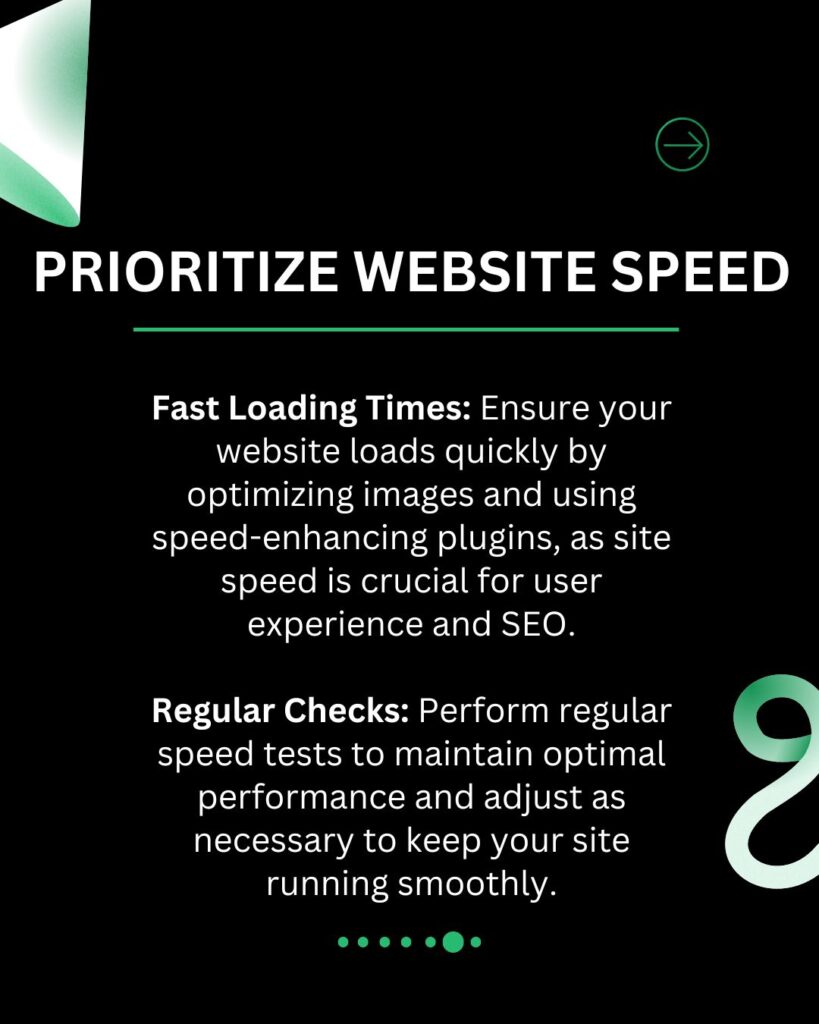
Reviewed By:

Arun Mehra

Arun Mehra

Samera Founder & CEO

Arun, founder and CEO of Samera, is an experienced accountant and dental practice owner. He specialises in accountancy, building businesses, financial directorship, squat practices and practice management.

Follow Arun on LinkedIn

Content Writing for Dentists

With millions of articles and blogs being written and published on the internet daily, you need yours to stand out. For your business to succeed, you need your written content to have these three key aspects. You need to write the type of copy that is readable, relatable, and shareable. 

Why is content writing so important? 

Content writing is an essential part of the web design process. Consistency with creating content is key to determine the growth as well as success of your business. Unfortunately, simply writing a few short blogs about foods that are bad for your teeth will not gain you the exposure or traffic you need for your business. 

Quality matters when it comes to content writing. With search engines like Google always only one click away from blacklisting your site for keyword stuffing, quality content is absolutely imperative. It isn’t as easy as stringing a few hundred words together, throwing a few keywords in there and hoping for the best. Coming up with SEO driven, insightful and riveting copy can often be quite a challenge. 

Content writing allows your brand to create cohesive pieces of information. It’s quite simple, if your content is not up to standards, then it will not bring in the patients you need through the door. The content you provide has to reflect your company as a brand. The more engaging, reliable and consistent your content is, the more likely it is that someone reading your blogs is likely to book an appointment at your dental practice. 

Here are five things that will make your content writing stand out:

Study other writers

If you are going to create good content you need to begin with being aware of what kind of content is already out there. The more you read, the better you will know what kind of content you should and should not write. Keep a special eye out on the type of articles that personally hook you. Doing this also works as a bonus as it may inspire your writing and will also help teach you even more about the topic at hand.

The best thing about doing this is that it will inspire you in more ways than you know, reading good writers will help you become a better one. What draws you in? Pay attention to the way the writer draws you in with their voice and style. 

Looking at someone else’s ideas and improving on it will help your website significantly. You should also keep an eye out for what websites rank highly on Google. These are the websites that pop up first after the ads, whatever they are doing, they are doing it right!

Optimising SEO

Search engine optimization is a very big topic and can be the absolute bane of many copywriters and content writers everywhere. The algorithms are always changing and this article will not be a deep dive into all the specifics you will need to know about SEO practices however, it does not have to be a mystery. The most important part of SEO is keywords. SEO best practices are something any content producer should study. Here are a few basics:

Fresh content is critical: Copying another website’s content that is already doing well will never work for you. Original, well written content is what will work best. Be sure to keep all your articles and blogs updated. This includes updating old blogs as well as writing new ones.

Structure is pivotal: The flood of information on the internet has retrained all of us into scanners rather than deep readers. You have probably noticed that yourself, the art of a well curated article is one that is skimmable. Not only that, but placement of subheadings are important for placing SEO-friendly keywords.

Titles will make you: The title of your article is key to attracting people and getting your article seen, read and shared. You want to aim to create a good title with competitive keywords.

You can find out more about SEO for dentists here.

Mix up your words and your jargon

Mixing up your words is hard for any content writer. You won’t realise it but every writer has words they like to use over and over. When we edit our own words, it’s hard to see what your overused words are, but when we use them too often, our writing sounds redundant and the words that you overuse, although you may not notice, Google does and it does not like it. 

Using the same words is a habit and is one that is really hard to break out of. We all have our habits, but when it comes to keeping visitors and you audiences interested, vocabulary variety is key! 

The web is for everyone, not just dental experts or adults, you don’t know who will come across your content, so make sure your information is easily understandable. Avoid insider language, spell out acronyms on first reference and be sure to explain complex or niche terms. Also provide hyperlinks to other articles to rank higher for SEO, Doing this will also allow readers to get more background information on the topic at hand.

Incorporate multimedia

As previously mentioned, your website visitors are unlikely to stay on your page and read the entirety of your article. So, it helps to throw in some pictures or videos that will help explain your article or give the audience more information. It is shown that 90 percent of the information transmitted to the human brain is visual and more people process this visual information 60,000 times faster than text. 

When it comes to online blogs and articles, heavy text is usually not what your audience is looking for. Images will help break up the text, making your page easier to read. It is also great for SEO, we recommend having at least one image on each page of your website.  

Leave them wanting more

For content writing, good websites tend to end each page with a strong call-to-action. It could be either a way for the reader to contact your business or subscribe. Maybe even an interesting video they should watch? A link to another related blog? This strategy is integral to direct readers to your business and other areas of your website. It also encourages readers to promote your content to their friends, family or social media.

Keep these calls to action succinct, they should all start with action verbs such as ‘share’, ‘sign up’, ‘join’, ‘download’ or ‘watch’. And do not forget to include a hyperlink that will actually allow readers to follow through the action you are asking them to take. 

Action Points

  • Study other writers: Read a variety of content to understand what works and what doesn’t. Pay attention to writers who captivate you and analyze their style and voice.
  • Optimize SEO: Focus on fresh, original content and proper structure with SEO-friendly keywords. Titles play a crucial role in attracting readers, so aim for compelling titles with competitive keywords.
  • Mix up your words and jargon: Avoid overusing certain words and vary your vocabulary to keep your writing engaging. Make sure your content is understandable to a broad audience by avoiding insider language and explaining complex terms.
  • Incorporate multimedia: Enhance your content with images and videos to make it more visually appealing and easier to digest. Multimedia also helps with SEO and keeps readers engaged.
  • Leave them wanting more: End your content with a strong call-to-action, directing readers to take further action such as contacting your business, subscribing, or exploring related content. Use action verbs and provide clear hyperlinks for easy navigation.

Our Expert Opinion

“I’ve heard a lot of digital marketers in the last couple of years saying content is dead, or that a blog is useless nowadays. Don’t listen to them. Blogs and articles are still just as useful for SEO as they have always been.

We’ve also heard Google saying they will not be penalising AI-generated content. That is true, but I wouldn’t expect it to last. Google don’t mind what is happening with ChatGPT and the other AI software, if it means more useful content then they will be happy. However, a few years from now I don’t see AI-generated content being of as much use to SEO anymore. I think Google are going to care much more about opinion pieces and content then analyses or interprets AI-generated content.

So, keep your blogs and articles coming but remember that users can get the same info from ChatGPT and the like. So, make sure you offer something extra. Expert opinion will become the best thing to have in content. Get your team to give their opinions, their insider knowledge and their experience and get it on the page!”

Chris O’Shea
Head of Digital Marketing

Learn more: Related Articles

What the Google Experience Update Means for Dentists

Google updated their SEO algorithm in 2021 to focus on user experience. This article looks at how those changes affect our SEO.

Learn more

How to keep your dental practice protected online

In this blog, we discuss how, without the right training, software, and contingency plans, your business records and patient or client data are at risk. 

Learn more

5 Reasons to use Facebook Ads for a dental practice

In this blog, we have discussed how Facebook Ads can really help a dental practice find and retain patients.

Learn more

5 Free Ways to Grow a Dental Practice

These 5 tips will help you find more patients online and expand your practice’s brand awareness.

Learn more

About the Author

Chris O’Shea

With nearly 10 years experience in marketing and communications, Chris is the Head of Marketing at the Samera Group.

Chris oversees all of our marketing efforts for Samera Global, Samera UK and our dental practices.

He specialises in search engine optimisation, getting to the top of Google and content marketing strategy.

Reviewed By:

Arun Mehra

Arun Mehra

Samera Founder & CEO

Arun, founder and CEO of Samera, is an experienced accountant and dental practice owner. He specialises in accountancy, building businesses, financial directorship, squat practices and practice management.

Follow Arun on LinkedIn

Marketing a Dental Practice: Further Information

For further information on how to effectively market a dental practice, check out our Learning Centre here, where you can find articles and webinars like our guide How to Market a Dental Practice.

Make sure you never miss any of our articles, webinars, videos or events by following us on Facebook, LinkedIn, YouTube and Instagram.
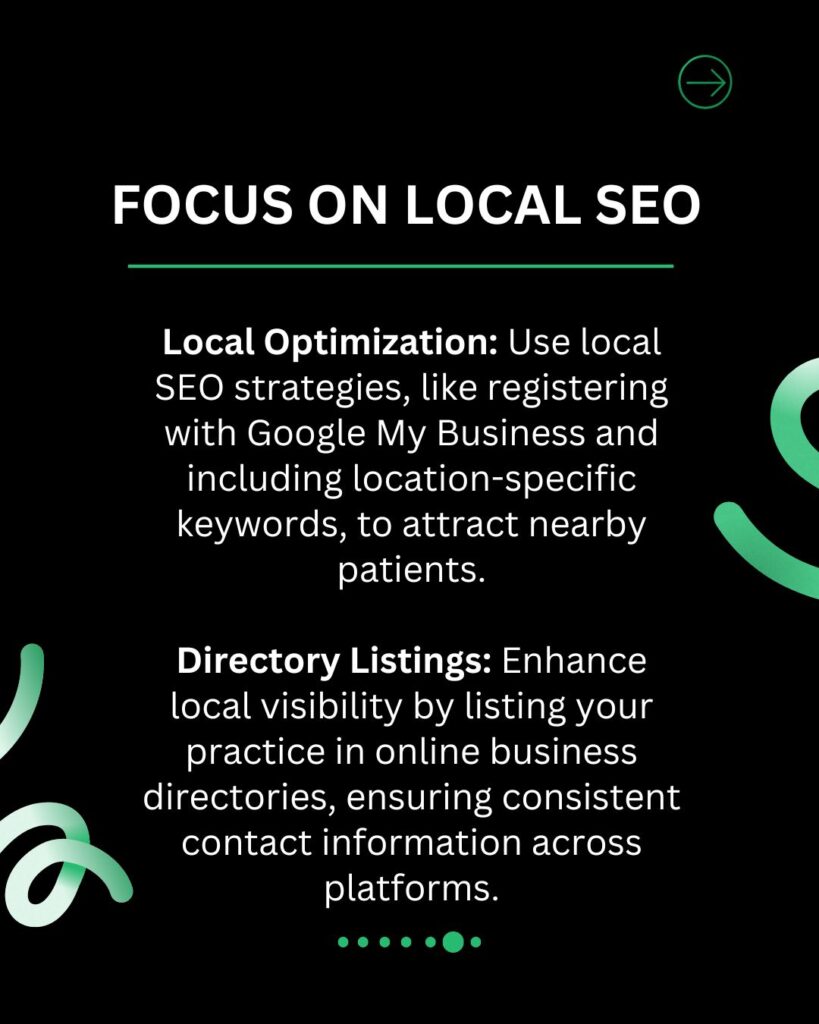
5 Free Ways to Grow a Dental Practice

Do You Want More Patients Through the Door?

Follow these steps to make that happen! 

Whether it’s growing your practice even further, gaining the clientele back or getting new patients in – the aims may be different but the rules are still the same. 

The pandemic has impacted all our businesses in one way or another. This is not the time to admit defeat. We as dental practice owners need to rethink and revamp our strategies to get more patients through the door. Remember, they are all out there and the need for oral care is now more important than ever, it’s just a matter of promoting your business in the right way to get the patients through your door.

Check out our other articles, webinars and podcasts in the Samera Learning Centre

Here are 5 FREE ways to grow a dental practice. 

1. Set up and improve your social media channels

Before your reputation around town or patient feedback gives your practice some clout, the biggest and most important aspect of your dental practice is your social media channels. Especially with most people staying at home with a lot of time on their hands browsing and scrolling, your social media channels need to speak for your business as a brand.

Most people look at a business’s social media account before making the decision to book an appointment. This doesn’t just mean simply updating your business’s Facebook status once a week. It is important to make yourself known on at least more than one social media platform.

Let’s be frank, a dentist’s Instagram page will not be as popular as an influencer, but continuously putting out good content such as educational facts, get to know the staff posts etc will help you gain a following. Making a first impression on your social media channel is integral to gaining more patients.

Actions: Improve your social media channel homepages right now. Make sure your about section is detailed and engaging, get your best behind the scenes videos and team pictures on there, make your contact details visible and give them options!

5 free ways to grow your dental practice

Click here to learn more about using social media in your dental practice.

2. Email your patient/client list

This is a great way to reach people. Going to the dentist if you are in pain or even for a regular routine check up is usually last on everyone’s list, especially now. Oral health seems to be less of a priority, many are unaware dental practices are even open.

Sending an email or two to remind people about getting their check ups or even updating patients about clinical events, opening times or any regular updates will help ease patients’ mind and their fear of coming to the dentist.

It all ties together, updating social media posts, emails, maybe even a newsletter once a month or two. It helps patients get to know you more than just a dentist they have to see once a year.

Emails work! It has proven to be a great way to reach people. Setting up a newsletter including incentives, offers or discounts can also prove to be very beneficial to getting more patients through the door, old and new- No one likes to miss a good offer! 

Action: Create a quick and easy form on your website’s homepage for patients and visitors to easily sign up for offers or newsletters by leaving their name and email address – that’s all you need to ask for. Now start contacting them! Give them updates, send them discounts, let them know about your new services.

5 free ways to grow your dental practice 2

Click here to read more about marketing a dental practice.

3. Optimise for SEO

Optimising your SEO does not have to be a huge ordeal. You can begin with downloading SEO plugins like Rank Math or Yoast for free. Both tools are very simple to use and will help you easily and effectively improve your websites SEO.

Remember, SEO begins with content that is well written. Keywords are also key! Placing them strategically around your content will help you a lot more than trying to add the keyword in every sentence.

For more help and advice on the best ways  to market your practice check out our Guide to Marketing a Dental Practice.

Action: Download Rank Math or Yoast and start following the programme’s instructions on each page. Improve the wording and use of keywords, make sure you have subtitles (H2,3,4 tags) with those keywords, improve your meta descriptions, use internal and external URL links, use images and videos on your pages.

5 free ways to grow your dental practice 3

Click here to read more about SEO for dentists here.

Contact us to find out more

4. Optimise for speed

Speed is one of those things that is often overlooked, however this step is extremely crucial. The speed of your website is a huge ranking factor as it is a sign of quality user experience. A site with fast speed will result in better user experience whilst a slower website will result in a poor user experience. Faster sites create happy users and happy users are more likely to visit your site again. Google is getting really big on speed, so this will become more and more important in the future!

Action: Use a free online tool to check the speed of your website. Use lower resolution, size or quality images to make your most important pages faster, download a programme like Lazy Loader to improve speed.

5 free ways to grow your dental practice 4

Click here to read more about creating a website for a dental practice.

5. Create content

Creating consistent and high quality content is an invaluable way to promote your brand and engage with your consumers. Quality content helps attract that right audience to your website and your business. Whether the content is written or content of a different media, starting to write content or making videos for social media is completely free and a great way to broaden the exposure your business gets.

Remember!

Writing about relevant content is an incredibly useful tool to organically increase traffic to your website and your services. 

When most people hear ‘content writing’, they think simply writing articles. However, content writing is not just for blog posts. In fact, content writing is important for all different types of content formats, including scripts, web page copy, Youtube video description, social media posts, email newsletters and keynote speakers amongst many others. Simply put, writing is the ultimate foundation for pretty much any type of content that you publish. 

Action: Start blogging right now. Create top 10 lists for your patients, give them your top tips for dental care, write articles about their different options for treatments like Invisalign vs traditional braces. Create videos of your team and your practice. Share this all on social media and your website – advertise yourself! The more active you are on your website with high-quality blogs, articles and videos, the better Google will rank you.

5 free ways to grow your dental practice 5
5 free ways to grow your dental practice 6

Click here to find out more about creating content for dentists.

Learn more: Related Articles

What the Google Experience Update Means for Dentists

Google updated their SEO algorithm in 2021 to focus on user experience. This article looks at how those changes affect our SEO.

Learn more

Marketing to Millennials for Dentists

In this blog, we discuss how to utilise the internet to showcase engaging ads, collaborate with popular individuals, and leverage modern technology.

Learn more

Using Marketing to Increase Profits in your Dental Practice

In this webinar we take a look at how marketing tactics can improve your profits.

Learn more

Content Writing for Dentists

Do you have a content strategy in your dental practice? This is why they’re so essential.

Learn more

About the Author

Chris O’Shea

With nearly 10 years experience in marketing and communications, Chris is the Head of Marketing at the Samera Group.

Chris oversees all of our marketing efforts for Samera Global, Samera UK and our dental practices.

He specialises in search engine optimisation, getting to the top of Google and content marketing strategy.

Reviewed By:

Arun Mehra

Arun Mehra

Samera Founder & CEO

Arun, founder and CEO of Samera, is an experienced accountant and dental practice owner. He specialises in accountancy, building businesses, financial directorship, squat practices and practice management.

Follow Arun on LinkedIn

Grow Your Dental Practice with Samera

Join the Samera Alliance buying group today for free to save money on your consumables and assets, increase your profits and grow your dental practice.

You’ll get access to exclusive discounts on the consumables, products and equipment you need to build and grow your dental practice. You’ll also get exclusive discounts from our Alliance Partners, covering everything from HR, IT and legal services to utilities, compliance and dental technology.

Join for free. Save money. Grow your dental practice.

More on Growing a Dental Practice

For more information on growing a dental practice, check out the articles and webinars in our Learning Centre, like our guide on How to Grow a Dental Practice.

Make sure you never miss any of our articles, webinars, videos or events by following us on Facebook, LinkedIn, YouTube and Instagram.
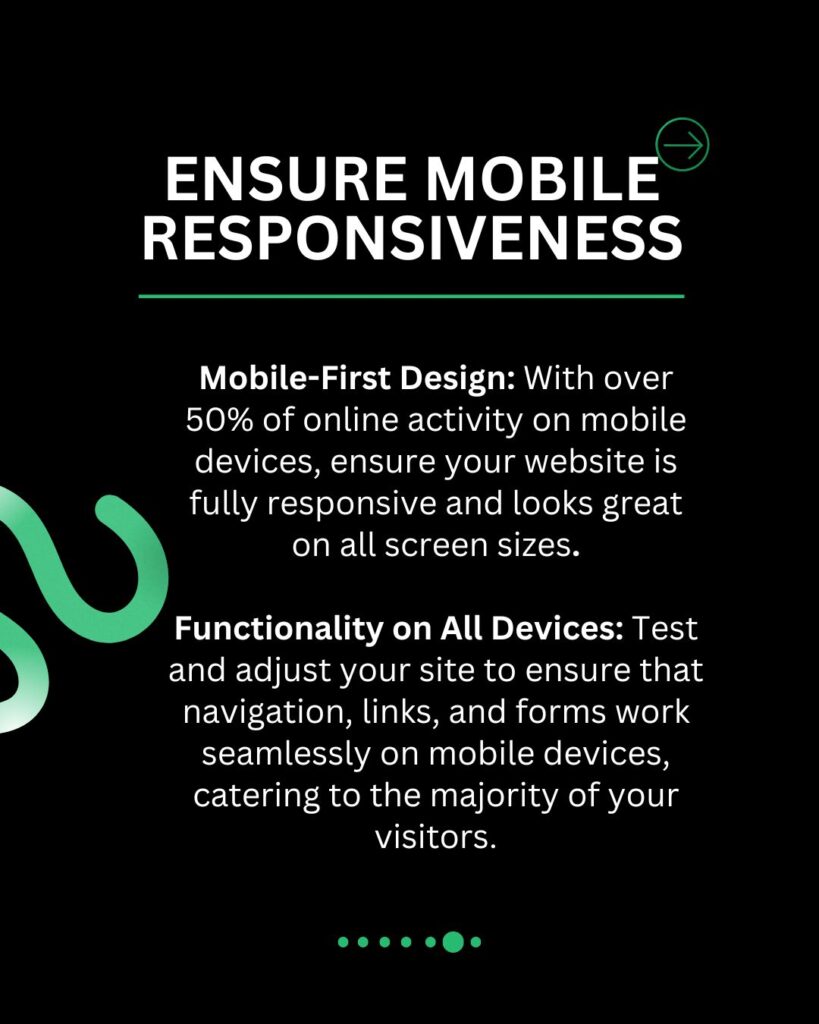
How to Grow Your Dental Practice with Social Media

Should You Use Social Media in a Dental Practice?

The internet, especially social media, is a great way for businesses worldwide to talk to their customers and make their brand more popular. But some dentists still aren’t sure if using social media is a good idea. Well, it is! Social media helps dentists spread their brand awareness, talk to their current patients and attract new ones. Dentists can use social media to show how good they are, give helpful dental advice, and even talk to patients online. Since many people (especially the younger generations) use social media, dentists can reach lots of people and get closer to them.

Like any business, if you are running a dental practice then you cannot afford to ignore the strength of social media marketing. Platforms like Facebook, Instagram, Twitter and LinkedIn provide you with the opportunity to connect with current patients, new patients and other dental professionals. This connection allows you to promote and help to grow your dental practice with social media.

In this post, we’ll explain why social media is good for dentists and give some tips on how to do it right.

The Power of Social Media in a Digital Age

In today’s digital world, social media has changed the way people connect and find information. Platforms like Facebook, Instagram, Twitter, and LinkedIn are a big part of our daily lives, connecting lots of people worldwide.

For dentists, using social media has many benefits. It lets them talk to their current patients, get new ones and show off their dental skills, which builds trust and spreads their practice’s brand. Social media can reach a huge audience, making it easy to share dental advice and updates with both current patients and people looking for dental care.

It also lets patients ask questions and share their experiences, making existing relationships stronger. Plus, it’s a cheap way to advertise and reach specific groups of people, getting more for your money. Social media also gives dentists info about how well their online presence is working. So, in short, social media is a must-have for dentists in the digital age. It helps them connect, engage, and look good online.

Benefits of Social Media for Dentists 

It’s important to note that you cannot just rely on social media. Using social media platforms should form a significant part of your marketing strategy, but not all of it. Having said this, you can get some impressive benefits from using channels such as Facebook, if you do so in the right way. These benefits include:

  • Making it easy for people to find your practice.
  • Telling people what you can help them with.
  • Targeting your presence at local people.
  • Maintaining relationships with current patients, to keep them engaged.
  • Allowing you to build positive relationships with other professionals.
  • Giving audiences the chance to contact you easily.

Which Platforms Can Grow Your Dental Practice 

In order to make sure that your practice benefits as much as possible, you need to plan your social media activity carefully. You need to think about who you are trying to reach. This list will usually include current patients, new patients and other dental professionals.

Once you have this information, it’s time to look at which platforms these people use and what type of content they are most likely to engage with. People are continuously scrolling on their phones for hours per day, with the right type of marketing, you’re going to get some people’s attention. There are some specific options you can consider, depending on which platforms you choose to use.

Facebook

Facebook is often first on the list when it comes to using social media for dentists. This is because more than 3 billion people use Facebook globally; in the UK around 78% of Internet users use Facebook. Quite simply, it’s a potential market place that you cannot ignore. If you are wondering what to post on Facebook; here are some tips:

  • Advice about oral hygiene routines.
  • Comments and advice about new dental techniques.
  • Community announcements, especially details of any community work you are doing.
  • Special offers; although this type of content should not be used too often as you do not want your Facebook page to look too sales orientated.
  • Videos and images that allow people to have a better connection with your practice.
  • Team videos and profiles – audiences want to know the people behind the business.

Aside from posting on your regular Facebook page, you may also want to consider Facebook PPC (paid advertising). You can target your Facebook ads at people in your local area or based on their interests, demographics or even simply by uploading your contacts’ emails addresses.

This means you are likely to get engagement from people who are actually looking for a dentist locally to you. Your Facebook Page will quite often be the first thing people find when they search for you. So make sure you keep it up-to-date and interesting!

Action Plan

  • Share oral hygiene tips.
  • Provide insights on new dental techniques.
  • Announce community involvement.
  • Offer limited-time promotions.
  • Use engaging videos and images.
  • Showcase your team.
  • Consider Facebook PPC advertising.
  • Keep your page updated.

Contact us to find out more

Instagram

Instagram is a hugely influential social media channel, with hundreds of millions of users worldwide. It’s a great way of helping people to see inside your business, using images and videos. Connecting with people in this way helps them to see your practice as friendly and reliable. These are positive attributes that are sought by people looking for a dentist.

Set up an Instagram account for your practice and post video clips and images regularly. Instagram has a much younger audience on average than Facebook so take this into account when you post. 

The best kind of posts for Instagram are your more fun behind-the-scenes clips, team videos and your best photos. Instagram is all about image and aesthetics! Show off your successes and make sure you tell the story of your practice through your videos and images.

Action Points

Set up an Instagram account for your dental practice and regularly share behind-the-scenes clips, team videos, and visually appealing images to engage with a younger audience and showcase your practice’s successes.

Twitter

You should think outside the box when you are using Twitter to help your practice to grow. It’s fine to tweet about the latest goings on at the practice and include the occasional promotion. However, using Twitter should be more about displaying your expertise. Tweet about the latest developments in the industry, or local charity events, and include your educated comments. You may also want to think about setting up a Twitter Q&A session, when you can communicate with people in real time.

Action Points

Use Twitter to showcase your practice’s expertise by tweeting about industry developments, local events, and hosting Q&A sessions to engage with your audience in real time.

LinkedIn

Social media for dentists is not just about communicating with patients and potential patients. You can use LinkedIn to publish articles and show your expertise. You can also use it to develop relationships with other dental practices which can be mutually beneficial. For instance, if you do not provide orthodontic services, you can find a local specialist to refer your patients to. This helps you to provide a better service and provides more patients for the orthodontist, for whom you may receive a referral fee. 

Action Points

Utilize LinkedIn to establish your practice’s expertise by publishing articles, connecting with other dental professionals, and fostering mutually beneficial relationships, such as referrals for specialized services, enhancing patient care, and expanding your network.

Building a Strong Online Presence Through Social Media

With the younger, tech-savvy generations beginning to make financial decisions, it is essential for dentists to have a good online presence through social media. Nowadays, when people need a dentist, they look for one online to read reviews and get recommendations, this is known as social proof. Social media sites like Facebook, Instagram, and Twitter help dentists connect with the people they want to reach, and it lets them create a professional and interesting online presence.

This means they can show how good they are, share useful information, and even offer virtual appointments, which makes them look trustworthy and builds a personal connection with patients. The best thing about social media is that it can reach a lot of people organically, and they can choose who sees their messages through targeted ads. So, it’s easier to get the right message to the right people. If patients sing your praises on social media, it adds credibility to your brand. Additionally, social media lets dentists keep up with what’s new in their field and connect with other professionals, adding to their trust, authority and expertise.

But to do well on social media, dentists need a plan, regular posts, interesting content, and a way to answer patient questions and feedback. Being consistent and responsive is vital to keep up a strong online presence.

In short, social media is a great tool for dentists to improve their online presence, talk to patients, and grow their practice. By using social media, dentists can show how good they are, get new patients, and be seen as experts in their field. So, the answer to whether social media is good for dentists is a big “yes!”.

Did You Know?


  • 70% of dentists in the UK use social media for professional purposes. [Source: Dental Economics]
  • 99.7% of patients stated that “Before and After” photos are very important when selecting a cosmetic dentist. [Source: American Academy of Cosmetic Dentistry]
  • The most popular social media platform for dentists in the UK is Facebook, with 80% of dentists having a professional Facebook page. [Source: Dental Economics]
  • Dentists who use social media are more likely to attract new patients and generate more leads. [Source: Social Media Examiner]

How to Get More Patients With Social Media

Using social media for marketing properly can transform your business. Social media is a place where billions of users spend hours a day scrolling and engaging with friends, brands and companies alike. These billions of users are not just users to your business, they are all potential customers.

If you haven’t done so already, get on every social media platform you can with a simple profile to start. It is then imperative to understand which platform is most likely to have your target audience. Social media is one of the most inexpensive ways of marketing a dental practice and can actually have a huge impact, if used correctly. Decide who your target audiences are (families, teenagers, people interested in health or cosmetics etc) and then figure out which platforms they are more likely to use and what they expect to see there.

Pick one platform to begin with 

It can be a lot to try to gain a following on so many platforms at once, try tackling one social media platform to start with, whether that be Facebook, Youtube, Twitter, Instagram or Linked in. Whichever one you choose, try to gain some momentum in that channel first before moving on to other ones.

In this day and age it often seems like all social media platforms are more or less all the same. They all differ though, which is why it is important to learn about the social media channels before choosing which one is best for you and your business. They all offer different features. Linked In is more popular in the business world but as the platforms are all evolving, Instagram has become a great way to promote businesses and also shop around on various different businesses on the app.

To begin your social media journey, our experts advise that you begin by making a business profile or a business account page on your chosen social media platform. Making this type of account will unlock many more features that will be useful when it comes to your business, ads, reach, engagement and most importantly, checking your audience insights, we highly recommend this especially if you are using Instagram.

Include as many options for contacting your practice as possible on your social media channels – website, email, phone numbers, WhatsApp, direct messaging (like Facebook messenger), your address.

You need to build your brand name, but the idea is not to plaster your name everywhere. You need to post consistently but you need posts with substance. People follow and like to engage with posts that they are genuinely interested in or keep them entertained. It is a great idea to place online ads on Google as well as social media platforms such as Facebook and Instagram, they get a lot of reach. 

Let’s take Facebook for example. A car mechanic will surely see more visits and clicks on a platform like Facebook where there are people from every walk of life and every age range. But doing the same on Instagram or Snapchat often won’t net you the same result as the majority of the users are young teens that either just don’t own a car or simply aren’t interested in seeing anything related to your business.

That’s why although it’s a good idea to be present on every platform, focusing the majority of your efforts on one or two platforms that are going to be most beneficial and responsive to your efforts might be the better option, at least to begin with. We focus mainly on Facebook and Instagram, but you might find a different combination works for you.

Action Plan

To effectively leverage social media for marketing your dental practice, start by creating profiles on relevant platforms, focusing on one to build momentum. Understand your target audience and tailor your content accordingly, providing valuable information and engaging posts. Include multiple contact options and consider online ads for wider reach, focusing efforts on platforms most responsive to your audience.

Start with a social media plan

Just like your business plan, your social media plan should bear the same importance. Like any good business strategy, using social media for business success needs to start with a well laid out plan. Without a plan you will have no clear goal for what you are trying to achieve, which means your team (if you have one) won’t have any specific goals either – which results in no way to measure your results and sometimes no results at all.

Take some time to create a social media plan. Social media may seem less pressing in the list of tasks that you need to do for your business, but it is more important and harder to master than you may think. Creating an effective plan will ensure that all your social efforts support your specific business goals. 

Your social media plan needs to include all of the content you intend to produce for your platforms. This means planning the blogs and articles you’ll write, what kind of photos you need to take and what videos you need to create. You also need to specify which team members will be in charge of producing this content.

Action Points

To maximize the impact of social media on your business, start with a comprehensive social media plan. Define clear goals, outline content strategies, and assign responsibilities to ensure consistency and effectiveness across platforms.

Contact us to find out more

Be authentic when you post

With social media being as overcrowded as it is, the need to stand out is exponential. It sounds overrated and overused but be yourself, that is who you are selling. Don’t try and be what you think others may want you to be, in the long run that will not work in favour for your company. Dont work too hard to make everything perfect or seem perfect; if you do, you will either never put up anything or worse you will break trust with your clientele. 

Whether it is Twitter, Facebook or Instagram, people on social media are bombarded with posts that seem to emit perfection, people really just want to follow pages that are ‘real’. Uploading posts and stories that are real and truthful that your audience can relate to and understand is what will get you those loyal followers that you aim to have. 

Remember that social media is all about trends. Keeping up with relevant trends, topics and hashtags to engage a wider audience is pivotal to growing your social media network. Make sure anything you post fits your brand.

Action Point

Maintain authenticity in your social media posts. Avoid striving for perfection and instead focus on being genuine and relatable to your audience. Embrace trends and share content that aligns with your brand while resonating with your followers.

ENGAGE, ENGAGE, ENGAGE with your audiences

The primary goal for any business on social media is to build relationships and add value. This is the part where most people fall in their social media triumphant attempts. They work so hard to create content and will continuously protrude said content, but they then fail to actually engage with their audience. 

It’s anywhere from 5 to 20 times more expensive to acquire new clients than it is to keep old ones. That’s why focusing efforts to retain clients by increasing customer engagement through any number of techniques is advised at every stage.

Knowing who your target audience is great even if your target audience is a very niche group of people and thanks to the extensive targeting selections on social media, you are able to target people based on purchasing behaviours, interests and demographics.

If you know exactly who and what type of people are going to see your ads, you can cater the ads to that specific audience. The key is to make ads that resonate with your audience, rather than throwing a general ad up hoping it appeals to someone who randomly comes across it. 

The more you start using social media for marketing, the more data you will gather about your target audience. It is important to collect and learn from this data in order to streamline your target audience and spend ad budget where it makes the most sense. Don’t just focus on that streamlined audience, you can use tools within social media advertising that allow you to expand that audience. 

Simply looking at the number of likes on your post is not as strong of an indicator of its performance as you think it is. Today, businesses need to look further into their performance metric. This includes tracking comments, amount to saves, shares and story views to understand how their content performs. Talk with people and really engage with your followers, it is what will keep them interested.

Respond to comments and reviews and jump into communities, especially ones that are in the same industry as your business. Share your perspectives and point of view, if anything, it will gain you a lot more attention than you may think, especially if you are slightly controversial or especially contemporary. 

With a shift in how we measure engagement, it’s only natural that we also change how we try to improve audience/ follower engagement on our feeds. Trust us it’s not as hard as you may think. 

Engaging honestly should be just for that aim, do not dominate the conversation or push for sales. Simply getting involved with the conversation, trends or your chosen community, you will get the following you need naturally and organically. Giving advice and offering suggestions will make you seem helpful, knowledgeable and trustworthy. No one wants false claims with the congested roads of pretending on social media, most people really engage when they see something they believe is genuine, use that aspect of yourself and your business to your advantage.

Action Points

Focus on engaging with your audience authentically on social media. Respond to comments, and reviews, and join relevant communities to share your perspective. Use data to understand your target audience and tailor your content to resonate with them, ultimately building trust and loyalty.

You need to commit and monitor 

Signing up to any social media platform is absolutely free. In a few minutes you can be up and running but to build your business as a brand on social media it is mandatory that you commit to staying active on that platform. In the beginning at least, spend a minimum of one hour per day during your launch of your page or business engaging with the community. Use this time to not only focus on your own page but to catch a glimpse of some businesses that are similar to yours and take inspiration for what they are doing and how you can do better. 

For some, it may be easy to spend hours a day on social media, but to run a business or build a brand on social media needs commitment and it is a lot easier said than done. Effective social media branding takes time and practice, in many cases it is worthwhile to hire someone who specialises in social media to help you. 

Writing down a strategy is a good place to start and having clear goals will set you a track to go on, but actually sticking to it is a whole different story. Your social media plans will always be changing. At the least you should have a good idea of the thing you would like to post daily. Strategy is key. If you are not committing to posting on a regular basis and creating new content then you will always struggle to hook your audience or build an engaged following. 

Contact us to find out more

During one hour a day, at no expense out of your pocket at all, you can build a community in no time. Committing to spending time on your social media accounts is step 1, step 2 is mentoring these accounts in the most effective way. Monitor other sites, feed and pages that discuss the industry your business is in, your products or services. Look for posts that mention your company, mentoring you growth will help you reach specific goals you have.

Your social media accounts are also the best place to respond to any comments or complaints, using them as opportunities to engage with your followers, grow your brand and collect market research. If you pay attention to the right aspects of your social media platform, you can get ahead of potential problems. 

Many may think that continuously pouring out content will get you more followers, unfortunately it is not that easy. Looking at social media and posting once a day should suffice enough to engage your audience, educate and potentially entertain you from other posts within your given industry and hopefully inspire you to make more content. 

You should definitely monitor your insights but what will help you a lot will be finding out what days and times most people visit to engage with your pages. This will help notify you when is the best time to post yourself to get the most engagement from your followers. Always check your insights!

Action Points

Commitment is key to building your brand on social media. Spend at least one hour daily engaging with your community, observing competitors, and refining your strategy. Monitor industry-related discussions and respond to comments and feedback promptly to grow your brand and gather valuable insights. Understanding your audience’s behavior through insights will help optimize your posting schedule for maximum engagement. Always stay proactive and attentive to maintain a strong social media presence.

Establish a team and get expert help 

Having a marketing team in place can prove invaluable, eleven if you own a small business. Having a small team can enable you to establish a strategy with the necessary specialities for social media management. Having a team can help you keep afloat all your media marketing. Keeping up with social media posts as well as website posts and blogs can be tiresome while you are also managing other important aspects of your business. This is where your team will prove to be beneficial. 

Hiring someone who will be able to manage your content for marketing will make it a lot easier for you and their expertise will allow you to rely on someone to do what they know will work and help you reach your goals. 

This isn’t an option for everyone, sometimes it’s employing the necessary help in only certain aspects. Samera has an expert marketing team from website developers, social media specialists to content writers. Employing third party specialists to help you when you need it can prove to be more helpful than you know. They are aware of what is necessary to get you recognition and can do it effectively without having to impose any stress onto you.

Action Plan

Establishing a dedicated marketing team, even for small businesses, can be invaluable for managing social media effectively. Having specialists in place can streamline content creation, ensuring consistency and expertise. Consider outsourcing certain aspects to third-party specialists when needed to alleviate stress and achieve your marketing goals more efficiently.

Tell them how to reach you 

This seems like such an easy one but it is often overlooked. Make sure your followers know how to get hold of you. Plaster your contact details such as your web address, email address, phone numbers and social media handles. If it is possible, have them hyperlinked on any web content such as emails or newsletters and everywhere on your captions, having those details at the bottom or in the corner of web pages so it is easy for people to find you and remind them that you are available on various platforms. 

Action Points

Make it easy for your followers to reach you by prominently displaying your contact details, including your website address, email, phone numbers, and social media handles. Hyperlink these details in emails, newsletters, and captions for easy access. Ensure they are easily visible on web pages, and remind your audience of your availability across various platforms.

Social media ideas for dentists to engage audiences

Contests

Online contests are a great way to boost your following without opting for paid advertisements. You will have to fork out a bit for the final prize but that’s still cheaper than buying clicks and views.

Use simple, cheap treatments such as a free tooth whitening session, a dental care kit or a treatment voucher as your prizes to encourage winners to have to come to your location. 

This not only directly promotes your own product/service but also saves you from spending on another item. It’s basically free publicity. As long as your customer service is handled well, you should be able to convert the prize winner into a long-term patient once they are in the practice.

Action Point

Host online contests to engage your audience without paid ads. Offer prizes like free tooth whitening sessions, dental care kits, or treatment vouchers to encourage participation and promote your services. Convert contest winners into long-term patients with excellent customer service and a welcoming practice environment.

Create Partnerships

No one can do everything by themselves. Sooner or later you will need help and teaming up with another business that is in the same field can help create a symbiotic relationship where both parties benefit greatly.

Creating strategic partnerships has many advantages while doesn’t require as much work on your part. Your business is able to receive twice as much notice and partnering with an industry-relevant business will also introduce you to an entirely new audience that is looking for something in your area of specialties.

Continuing from the previous example once again, a car mechanic can partner with a car dealership and have access to an exclusive audience that would usually be out of reach. And you can even go a step further and give discounts or offer special pricing to the customers that are referred to you by the partner.

Certain businesses in the dental industry, like equipment suppliers and dental tech companies, are always happy to team up with practitioners to help grow their patient base (as this often translates into more revenue for them too). Reach out, share posts and see what opportunities are out there.

Action Point

Forge partnerships with complementary businesses in your industry to expand your reach and gain access to new audiences. Offer exclusive deals or discounts to customers referred by your partners to incentivize collaboration and mutual growth. Reach out to equipment suppliers and dental tech companies to explore potential partnership opportunities that benefit both parties.

Referral Programs

Speaking of referral programs, they should not only be limited to your partnerships. Under normal circumstances even if customers like what you have to offer, they still often wouldn’t just refer to your services without a reason. So why not give them one?

You have a lot of freedom when it comes to designing referral programs, but the one thing that should be kept in mind is the reward. It has to be enticing enough for your customers to consider actively referring new clients. What you’re looking for is someone that will stick around, even after the initial purchase.

Studies have shown that referred customers have much higher brand loyalty from the get-go and larger profit margins without much work from your side. Not only this, but it would also increase the loyalty of your existing customers once they have a more vested interest in your brand.

Plus, with the dozens of different kinds of software out there that are designed for the sole purpose of setting up and maintaining such referral programs, there really is no reason for you to not at least try it out.

Action Point

Implement referral programs to encourage existing customers to refer new clients to your dental practice. Design enticing rewards that incentivize customers to actively participate in the referral process. Utilize referral program software to streamline the setup and maintenance of your program, maximizing its effectiveness with minimal effort.

Measuring the Success of Social Media Efforts for Dental Practices

It’s essential for dental practices to monitor their online efforts to figure out what works, and what doesn’t and to direct their efforts. You can do this by looking at a few important things:

  1. Growth of Your Online Community: See if more people are following or liking your pages on social media.
  2. Website Traffic from Social Media: Check if social media is sending more people to your website.
  3. Likes, Comments, and Shares: Look at how much people are liking, commenting, and sharing your posts.
  4. Follower Demographics: Find out what kind of people are following you and use that info to make content they like.
  5. Clicks and Conversions: See if people are clicking on your links and taking action, like making appointments.
  6. Inquiries and Appointments: Check if people are getting in touch or booking appointments because of what they see on social media.

By keeping an eye on these things, you can tailor your social media strategy to what works best for you. Remember, not all strategies will work the same for all practices, you need to figure out what works best for you.

Action Points

To measure the success of your social media efforts for your dental practice, track key metrics such as the growth of your online community, website traffic from social media, engagement metrics like likes, comments, and shares, follower demographics, clicks, and conversions, as well as inquiries and appointments generated from social media. Tailor your strategy based on these insights to optimize your results and effectively reach your target audience.

Tips on How to Effectively Manage Your Social Media Accounts

Here are some easy tips for dentists to handle their social media accounts well:

  1. Set Clear Goals: Decide what you want from social media, like getting more people to know your brand or bringing them to your website. This will help you plan what to post and how to interact.
  2. Choose the Right Platforms: Not all social media is the same. Pick the ones where your audience hangs out. Facebook and Instagram are good choices for dentists because you can share pictures and useful info.
  3. Share Helpful Stuff: People like content that teaches them something or makes them interested. Share tips for taking care of your teeth, facts about oral health, photos showing changes, what patients say about you, and sneak peeks of your practice. This helps you become a trusted expert.
  4. Be Regular: To stay active, post new things often. Make a schedule for what to post and when. This keeps you organized and seen by your audience.
  5. Talk to Your Audience: Social media isn’t just for talking at people. Answer comments, messages, and reviews quickly and nicely. This helps you connect with people and gain their trust.
  6. Reach Local People: Since most of your patients are probably local, use social media to talk to them. You can use features like location tags, local hashtags, or targeted ads to make sure your content reaches the right people in your area.
  7. Work with Influencers: Team up with important people in your community or field. Find local influencers or dental experts to work together on content or host events.

Action Points

To effectively manage your dental practice’s social media, set clear goals, choose the right platforms like Facebook and Instagram, and share valuable content such as oral health tips and patient testimonials. Maintain consistency in posting, engage with your audience promptly, target local communities, and consider collaborating with influencers to expand your reach and credibility.

How we use social media in our dental practices

“I’ll be honest, social media is not my strong suit, so we do not use it as much as we should. We don’t feel like we are missing out on that many leads as a result, however. Social media can absolutely be a great tool to get leads in, but it can be very labour intensive. With SEO (our main tool), we can produce content fairly easily and quickly without too much reliance on anyone else.

Our SEO is good enough that we produce more than enough leads purely through organic searches. However, this approach won’t work for everyone.

With Social Media, you need multimedia content to make it work, you need engagement and you need a strong strategy. We have found it can be quite difficult getting enough images and videos to make posting effective. Dentists are focused (as they should be) on the day-to-day of delivering their services. They’re not thinking “how can I make a fun, engaging video out of this procedure.” They’re thinking about the patient, and the next patient.

You need someone in-house regularly producing visual content (photos and videos). Content production is the key to this.

If you have someone on the team who is social media savvy and is willing to put the work in then great! Otherwise, you’re probably going to find it difficult to produce enough engaging content to really get the leads you want in.

If you can, get someone dedicated to producing this content. Or, you can hire a photographer or videographer to come in for a couple of sessions and produce a mass of images and videos that you can then drip-feed into your social media.

If you know your audience is mostly made up of the younger generations, social media is going to be a lot more effective for you. At the very least, you need some sort of presence. Have a look at what your competition is doing and, if possible, you just need to at least match them.

However, with the social media generation now aging up to become the financial decision makers in the household, social media is going to become more and more important to get leads in. To be honest, it probably all depends on what Google are going to do in terms of search. If AI makes search as effective and useful as they hope, you probably won’t need any other medium. However, if it doesn’t revolutionise searching online, the rise of social media as a search tool may just snowball.”

Chris O’Shea
Head of Digital Marketing

Learn more: Related Articles

Email marketing for dentists

In this article, we look at how dentists can use email marketing you increase their brand and grow their patient list.

Learn more

Content Writing for Dentists

In this blog, we will discuss the three key aspects you need in your content for business to succeed

Learn more

5 Free Ways to Grow a Dental Practice

In this blog, we will discuss how these 5 tips will help you find more patients online and expand your practice’s brand awareness.

Learn more

5 Reasons to use Facebook Ads for a dental practice

In this guide, we take a look at how Facebook Ads can really help a dental practice find and retain patients. These are the 5 top reasons you need to be using them.

Learn more

About the Author

Neha Jain Author

Neha Jain

Neha Jain is a skilled content writer with a rich background in business and financial knowledge. With a bachelor’s degree in English Literature and Psychology, Neha has honed her writing skills, furthering her expertise with the Content Writing Master Course (CWMC) at IIM SKILLS and a Content Marketing Certification from HubSpot Academy.

Working alongside our business development experts, Neha specialises in helping accountants, dentists and other healthcare professionals start, scale and sell their businesses.

Reviewed By:

Arun Mehra

Arun Mehra

Samera Founder & CEO

Arun, founder and CEO of Samera, is an experienced accountant and dental practice owner. He specialises in accountancy, building businesses, financial directorship, squat practices and practice management.

Follow Arun on LinkedIn

Marketing a Dental Practice: Further Information

For further information on how to effectively market a dental practice, check out our Learning Centre here, where you can find articles and webinars like our guide How to Market a Dental Practice.

Make sure you never miss any of our articles, webinars, videos or events by following us on Facebook, LinkedIn, YouTube and Instagram.
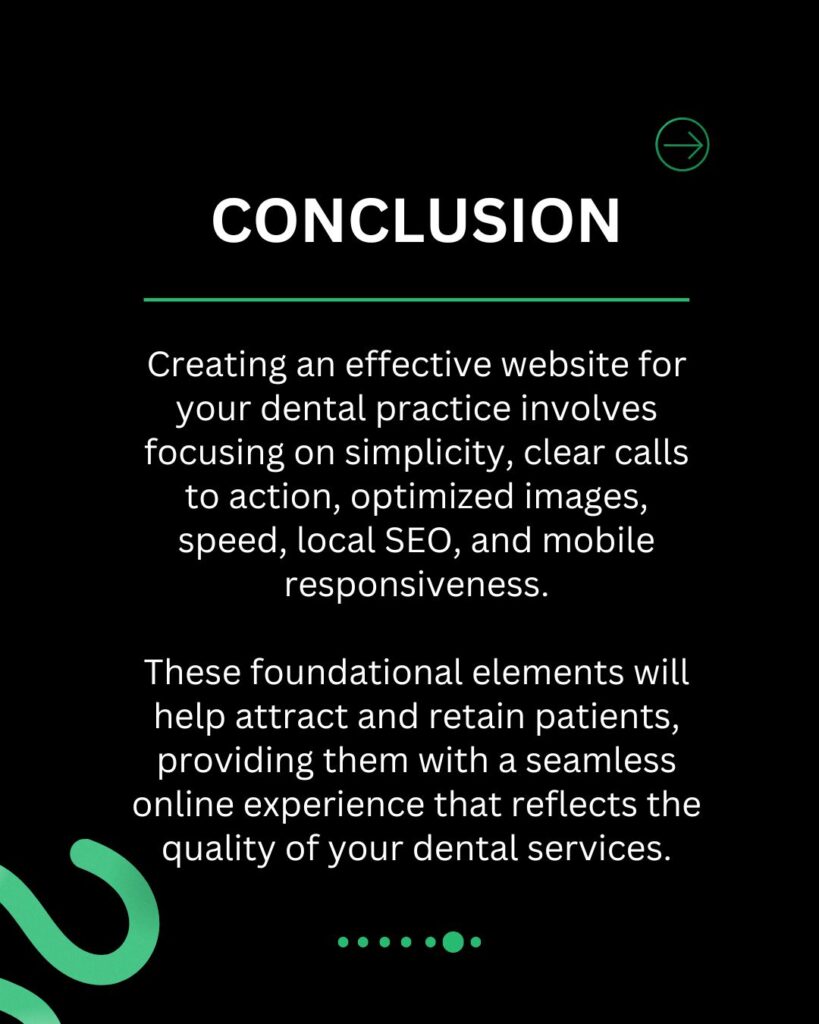
SEO for Dental Websites in 5 Steps

Search Engine Optimisation (SEO) for dental websites is the process of improving your website’s ability to be found online via a search engine such as Google or Yahoo. If you improve your SEO, you improve your rankings in search engines, you increase the traffic driven to your website and you increase awareness of your practice and your brand.  

SEO is one of the most important aspects of digital marketing, however, it is also one of the least understood marketing strategies by many businesses. Dentistry is no exception!

Search engines use various metrics to determine how high your website or online content will rank in their search results. These metrics are used to decide how relevant your website is to any given searched term or phrase; search engines then match up the web pages they deem the most relevant or related to the search term or phrase.

The key to SEO for dental websites is to make sure your website and web pages are deemed as relevant as possible to the search terms most associated with your industry. Or, at least, more relevant than your competitors!

Your website doesn’t just need to be easily read by audiences, search engines need to be able to read them easily too. From user experience, such as header tags, page structure and layout to how many websites link back to your website, there are multiple tactics we can use to boost SEO for dental websites.

Action Plan

SEO for dental websites is crucial for improving online visibility and driving traffic. By enhancing your website’s relevance to search terms, you can increase your rankings on search engines like Google. This involves optimizing various aspects of your website, such as user experience, page structure, and backlinks. With effective SEO strategies, you can enhance awareness of your dental practice and attract more patients.

Keywords

One of the key metrics search engines use is known as Keywords. Keywords are specific words or phrases that act as tags, letting search engines know what topic, industry or niche any given web page relates to and linking them to the relevant search.

For instance, a typical dental website will have pages on topics such as implants, fillings and veneers. Each of these is a keyword. When these keywords are searched online, it is the search engine’s job to determine which of the millions of web pages online are most relevant to the search. It is your job to ensure your website is the one the search engines pick.

Keywords need to be optimised throughout your website to ensure the highest online rankings possible. This means targeting both the specific keyword and also all possible variations of that term or phrase. Of course, you can’t just make a page repeating the keyword over and over again. You need to be tactical with your use. You need to consider your page titles, your subtitles, the body of the text, the metadescription, the URL, the list goes on and on!

Use dedicated software, such as Ahrefs, to research both you and your competitors’ keyword rankings. This allows you to see which keywords search engines, such as Google, tag alongside your website and its pages, as well as your competitors. You can then examine how much traffic each keyword gets on average a month, which of your pages are linked to the keyword and how difficult it would be for you to rank highly for that keyword.

You could also perform a ‘keyword gap analysis’. This allows you to compare keywords for which your competitors are ranking highly, but for which you rank below them, or possibly not at all! Using this information, you can plan which keywords you need to create content for.

Action Plan

Keywords are essential for dental website SEO, acting as tags that signal the topics covered on each page. Optimizing keywords across the site helps search engines understand their relevance to specific searches. Strategic keyword placement in titles, subtitles, text, meta descriptions, and URLs is crucial. Tools like Ahrefs aid in researching keyword rankings and analyzing competitors’ strategies. Conducting a keyword gap analysis identifies opportunities to improve rankings by targeting keywords where competitors rank higher.

Keyword Pro-tips:

Make Use Of Long-Tail Keywords.

These keywords are more specific to you. They are more niche and less general, meaning that there should be less competition when it comes to ranking for them. Instead of just using ‘implants’ as a keyword, why not try to rank for long-tail variations such as; ‘costs of dental implants’ or ‘how to look after dental implants’ or ‘dental implants in Nottingham’.

Use Keywords In Headings And Subheadings

You should normally aim to use your main keyword in the page heading and at least once in a sub heading (h2/h3/h4 tags), in order to optimise its effectiveness. You should also make sure that the keyword appears in the URL of the page.

Use Location Keywords

If you want to feature highly in a search for dentists in your area, make sure that you include your location as part of your keyword strategy; for instance, “children’s dentist Clapham”. You probably won’t rank number 1 on Google for ‘Invisalign’, but you might rank in the top 10 for ‘Invisalign in Bristol’ if your page is good enough.

Make Sure That Content Is Fresh

It’s possible that your page ranking will improve if you simply post to your blog regularly. Regular posting means that Google reindexes your site more often. This could lead to an improvement in your ranking. However, never post content just for the sake of it. Anything that you publish should be relevant, engaging and informative.

Action Plan

  • Long-Tail Keywords: Opt for specific, niche terms with less competition.
  • Use Keywords in Headings: Incorporate your main keyword in page headings and subheadings.
  • Include Location Keywords: Integrate location into your keyword strategy.
  • Maintain Fresh Content: Update your blog regularly for improved indexing.

Backlinks are the SEO equivalent of referring a friend. If someone recommends a product, service or company to you then you are more likely to use that product, service or company. The more you trust the opinion of the person who made the recommendation, the better that recommendation seems. The more reputable the source, the more you’ll trust the recommendation. Search engines work in exactly the same way.

Websites regularly contain links on their pages to other, external websites. Whether it is a further information link, a promotional link or a link to an affiliate website, most websites link through to another in at least one place. Whether it is for the BDA website, a sponsor’s page or an NHS page, your website most likely already has links to external websites. These are acting as backlinks for that external site (because you are linking back to their website). If such external websites have a link to your site, then they are acting as backlinks for your website.

To improve SEO for dental websites in terms of backlinks, you need to have as many backlinks as possible to your website from reputable external websites. The key here is reputable. Just like with referring a friend, the more you trust that friend or the better their reputation, the more you will trust that recommendation.

In exactly the same way, search engines will judge your backlinks by how reputable or trustworthy they deem the external website to be. In other words, if the BDA, Gov.uk or NHS websites link back to your website, search engines will rank those backlinks higher than a website like obviouslyfake.co.uk or just4backlinks.net.

Action Plan

Backlinks are like referrals in SEO. Just as you trust recommendations from reputable sources, search engines prioritize backlinks from trusted websites. Aim to secure backlinks from credible sites like the BDA or NHS to enhance your dental website’s SEO.

On-Page SEO for Dental Websites

SEO for dental websites isn’t just a question of making Google happy, it’s also about making the patient happy. If your website is formatted poorly, if it is hard to read or navigate, if it takes too long to load or if your audience doesn’t find what they need quickly then your audiences are more likely to leave the website after a short span of time. Search engines know this.

If your audiences are spending no more than a few seconds on your website, this tells the search engine that your website is not fit for purpose. Maybe your website is not relevant to the searched terms, maybe it is relevant but presents the information ineffectively. Either way, search engines will conclude that your website is not what the audience wants to see. Even if it is!

On-page SEO is the process of building web pages in such a way as to optimise your online rankings and improve the user experience. Remember how Keywords affect your online ranking? On-page SEO is how you make sure your Keywords are targeting or referring to the most relevant content and how you let search engines know that you have the content they are looking for.

On-page SEO for dental websites is effected by dozens of criteria. How many keywords you use on each page, whether those keywords are in the body of the text or contained in Header tags, how many variations of those keywords are referenced, these all effect your SEO. Everything from the length of sentences to how many transition words you use can impact the readability of a web-page.

Action Plan

On-page SEO for dental websites is crucial for both search engine rankings and user satisfaction. By optimizing page layout, content structure, and keyword usage, you enhance your website’s relevance and readability. This not only boosts your search engine visibility but also ensures a positive user experience, increasing the likelihood of visitors staying on your site.

Local SEO

Local SEO for dental websites is the process of optimising your website for online searches by location. It is essentially helping audiences in close proximity to your business to find you online. There are several ways to improve your local SEO and make sure prospects in your area hear about you. Once upon a time you registered your business in the Yellow Pages and maybe the local newspaper.

Phone showing google maps and local seo

Nowadays, you need to get your business cited in as many local online directories as possible. From the big names such as yell.com and yelp.co.uk, to your local business directories, the more the merrier! We can source the best online directories for your business and ensure that you are cited in each and every one. The more local citations you have, the more visible search engines will make you to audiences in that area.

Your business’s Name, Address and Phone Number (NAP) also has an effect on your online rankings. When you input your business details into Google My Business (GMB), it is this information that Google uses to match up your website to a given search. If your NAP does not match up across all your online citations, search engines will notice this. From incorrect addresses, varying business names to differently formatted phone numbers, there can be no difference between the information you have listed on Google My Business and the rest of the internet.

Action Plan

Local SEO for dental websites focuses on optimizing your online presence to attract local customers. This involves listing your business in online directories and ensuring consistent Name, Address, and Phone Number (NAP) information across all platforms, particularly Google My Business. Consistent NAP details enhance your credibility and visibility in local search results, increasing the likelihood of local customers finding and contacting your dental practice.

The Importance of a Mobile Responsive Website

More people now access online content using a mobile device rather than using a desktop or laptop. This means that any dental surgery which is looking to grow its patient base needs to have a website that is designed with mobile users in mind. Using responsive web design helps with this as it means that content fits to the size of the screen that is being used to view it. There are also other factors to consider including:

  • Flash should not be used.
  • Links should be easily accessible by clicking.
  • Pages should be easy to read without a significant amount of scrolling.
  • Page load speed should ideally be 3 seconds or less. According to Google, the bounce rate for a mobile website starts to increase dramatically as the load time goes above this level.

It’s a good idea to get professional help with creating a website for a dental practice. I know from experience that trying to do the work in house can be time consuming, and the end result may not be as effective as it needs to be. 

Action Plan

A mobile-responsive website is essential for dental practices to cater to the growing number of mobile users accessing online content. It ensures seamless browsing by adapting to various screen sizes and optimizing factors like link accessibility and page load speed. Professional help in website creation ensures effectiveness and saves time compared to in-house efforts.

Our Expert Opinion

“SEO is what I know most about, it’s constantly evolving and the rules change. However, the main idea remains the same – make your website and content as accessible, readable and engaging as possible.

There is too much go into here in any real detail so here is my practical advice. Download the Website SEO Checker extension on Google Chrome, as well as Google Lighthouse. Use these tools to analyse your website page by page and do what it tells you to do. That may seem simplistic but if you do what those tools tell you, you’ll be ahead of your competition in terms of SEO.

Some of the issues it throws up will need a developer to fix – if you don’t have one then you really will not regret paying for an audit or consult to get the technical problems solved. Otherwise, just go through everything those tools tell you to do.

Lastly, but probably most importantly, it is 100% worth paying for the fastest server and quickest website you can get.”

Chris O’Shea
Head of Digital Marketing

Marketing a Dental Practice: Further Information

For further information on how to effectively market a dental practice, check out our Learning Centre here, where you can find articles and webinars like our guide How to Market a Dental Practice.

Make sure you never miss any of our articles, webinars, videos or events by following us on Facebook, LinkedIn, YouTube and Instagram.

Reviewed By:

Arun Mehra

Arun Mehra

Samera Founder & CEO

Arun, founder and CEO of Samera, is an experienced accountant and dental practice owner. He specialises in accountancy, building businesses, financial directorship, squat practices and practice management.

Follow Arun on LinkedIn

Marketing and Patient Care in your Practice

Marketing a Dental Practice: Further Information

For further information on how to effectively market a dental practice, check out our Learning Centre here, where you can find articles and webinars like our guide How to Market a Dental Practice.

Make sure you never miss any of our articles, webinars, videos or events by following us on Facebook, LinkedIn, YouTube and Instagram.
Using Marketing to Increase Profits in your Dental Practice

Marketing a Dental Practice: Further Information

For further information on how to effectively market a dental practice, check out our Learning Centre here, where you can find articles and webinars like our guide How to Market a Dental Practice.

Make sure you never miss any of our articles, webinars, videos or events by following us on Facebook, LinkedIn, YouTube and Instagram.
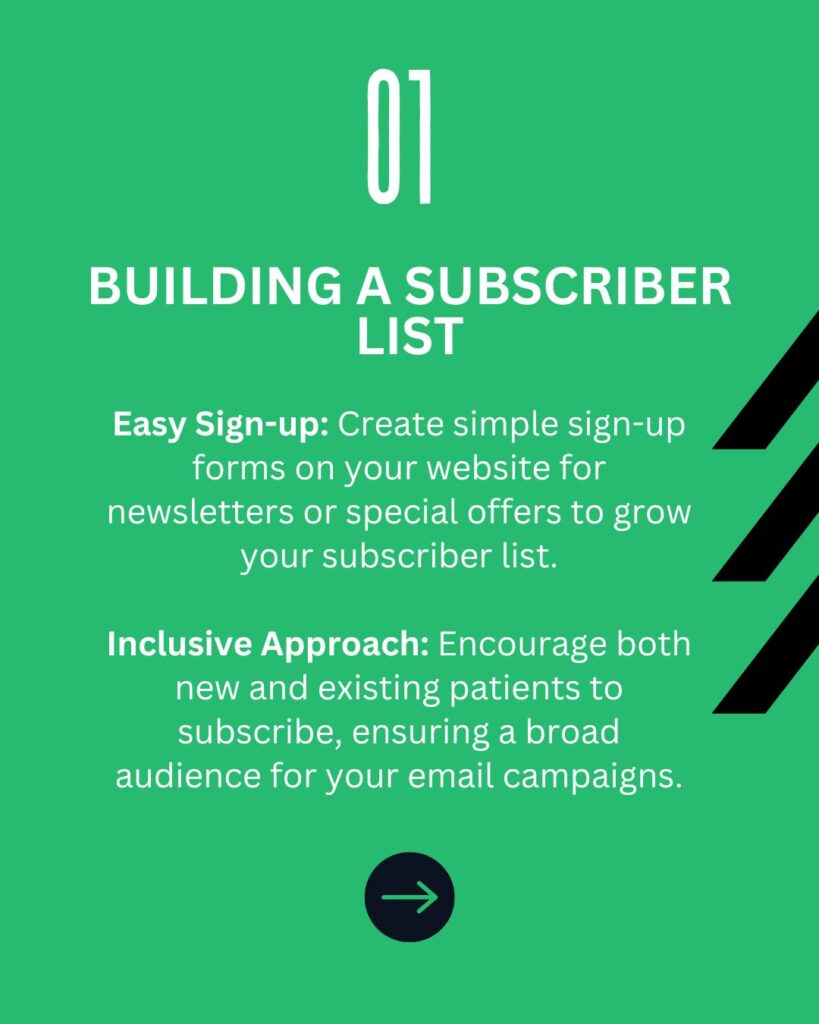
Instagram and Facebook Ads for Dentists

Marketing a Dental Practice: Further Information

For further information on how to effectively market a dental practice, check out our Learning Centre here, where you can find articles and webinars like our guide How to Market a Dental Practice.

Make sure you never miss any of our articles, webinars, videos or events by following us on Facebook, LinkedIn, YouTube and Instagram.
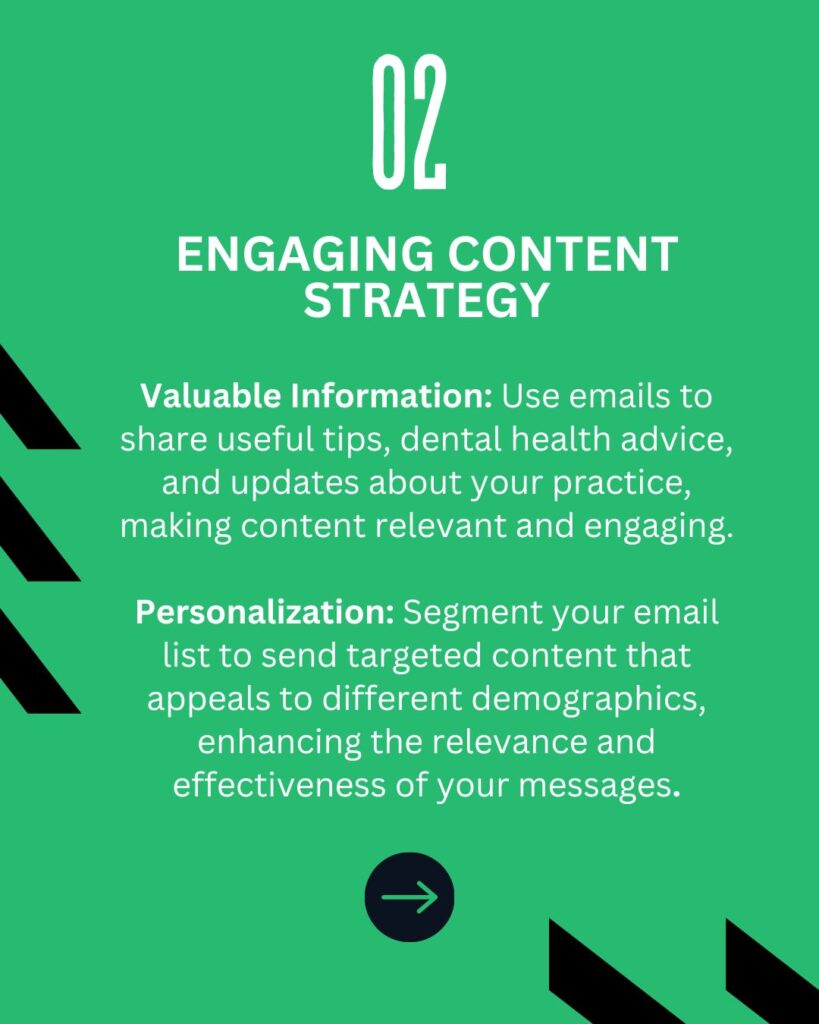
5 Reasons to use Facebook Ads for a dental practice

Why should you use Facebook ads for a dental practice?

Facebook is, by far, the most widely used social media platform in the world. At the end of 2018, Facebook saw over 2.3 billion monthly active users! Advertisers are spending more time and money on their Facebook advertisements. You should too! If you run both Facebook and Google advertisements, you cover 2 of the most widely used social and search platforms on the internet. The potential to reach far wider audiences is huge. If you can effectively reach these audiences, you will see your conversions grow.  

Done correctly, using Facebook Ads for a dental practice can really help your marketing take off.

It’s the Biggest Online Hangout

The average person spends 28% of their time online using social media platforms. With 2.3 billion people spending 28% of their time online on Facebook, the potential audiences you can reach are enormous! Online advertising is all about finding out where your intended audience spends their time online. For certain businesses, this can be quite difficult.

If you need to attract audiences from certain industries, with certain likes or values, you need to do some research into their online habits. For dentists, the intended audiences tend to be far broader. Often, they are defined primarily by their proximity to the practice. Facebook adverts give you the opportunity to easily reach multiple defined audiences in one central hub.

Action Plan

Using Facebook ads for a dental practice is essential due to Facebook’s massive user base, with over 2.3 billion monthly active users. By leveraging Facebook ads, you can reach a vast audience and effectively target potential patients based on their demographics, interests, and location. With the majority of people spending a significant amount of their online time on social media platforms like Facebook, it’s the perfect place to promote your dental services and increase conversions.

Maximising-facebook-ads-for-dental-practice-1

Targeting Exact Audiences

One of Facebook’s most advantageous features is its ability to target exact audiences. Facebook holds thousands of data points about each of its users. These include location, employment and relationship status, likes and dislikes and far more! These data points can be used in your advertising strategy to narrowly define the exact kind of audience you want to see your adverts.

If you offer luxury cosmetic dentistry in London, you can tell Facebook to show your adverts only to people with high-paying careers, who live close to your practice and who like the finer things in life. If you offer paediatric dentistry, you can tell Facebook to only show your advert to new parents or children and teenagers close to your practice. This means you don’t need to waste time and money showing your adverts to audiences who have no intention of ever converting!

Action Plan

Facebook’s precise audience targeting feature allows dental practices to tailor their ads to specific demographics, interests, and locations. This ensures that ads are shown only to relevant individuals, maximizing the chances of conversion. Whether promoting luxury cosmetic dentistry or pediatric services, Facebook’s data-rich platform enables practices to reach their ideal audience effectively and efficiently, saving both time and resources.

Maximising-facebook-ads-for-dental-practice-2

Contact us to find out more

Remarketing to Warm Audiences

Remarketing is another of Facebook’s most useful features for advertisers. Remarketing is the process of showing adverts to what are known as warm audiences.

Cold audiences are those who have never heard of your business before, who are not aware of your brand or your services and products. Hot audiences are those who have subscribed, engaged regularly with your business or have even made a purchase. Warm audiences are those who are aware of your business, perhaps they have watched one of your videos, seen an advert or visited the website briefly.

Remarketing to warm audiences allows you to show adverts to audiences that you know are already interested. They may need a product or service similar to yours and are shopping around, they may have developed an interest in your brand in particular. You can tell Facebook to only show an advert on orthodontics to audiences who have already visited your orthodontics page, read one of your blogs on braces, watched a video, browsed your website and read up on the treatments you offer etc.

Coupled with Facebook’s ability to target narrowly defined audiences such as teenagers and their parents within a certain radius, you can make sure only the exact people to whom you want to re-market will see your adverts.

Action Point

Facebook’s remarketing feature enables dental practices to reconnect with warm audiences who have previously interacted with their brand. By targeting these audiences with tailored ads, such as orthodontic services for those who have shown interest in braces, practices can nurture leads and increase conversion rates. Leveraging remarketing on Facebook ensures that ad spend is allocated efficiently, focusing on audiences already primed for engagement and conversion.

Maximising-facebook-ads-for-dental-practice-4

The Decline of Organic Traffic.

Once upon a time, businesses could reach a decent-sized audience simply through organic reach. Simply put, organic reach is how far your social media posts can reach without you paying for them to be shown to specific audiences. You rely solely on the quality of the content and the engagement rate of your followers to make sure it is shared and seen as widely as possible.

Unfortunately, Facebook has been taking steps in recent years to reduce the ability of businesses to reach audiences this way. Facebook is a business, and they want you to pay for that privilege. Facebook’s algorithms have made it far harder than 10 years ago for your organic posts to reach much further than your immediate followers. And even then, most of your followers might not see the post on their wall either!

The most efficient way to reach audiences, therefore, is to pay for adverts. This ensures that your posts not only get the widest reach possible, but that they reach only the audiences you want them to.

Maximising-facebook-ads-for-dental-practice-5

Analytics

Facebook’s bread and butter is analysing their users’ data. In the same way that Facebook has countless data points on each user, they also have in-depth analytics for their own platform. Facebook’s analytics (or Insights) allow advertisers to examine just how well (or poorly) their adverts are performing.

More importantly, it allows you to determine what features of your advert are performing well or poorly. The analytics portal allows you to investigate things such as audience engagement rates, click-through rates, cost per click, conversions and much more! By using this portal, it becomes far easier to amend your adverts so as to truly maximise their impact and, in so doing, minimise their cost.

Action Point

With the decline of organic traffic on social media platforms like Facebook, businesses must rely more on paid advertising to reach their desired audience. Facebook’s algorithms prioritize paid content, making it harder for organic posts to gain significant visibility. Utilizing analytics provided by Facebook allows businesses to optimize their ad campaigns, track performance metrics, and adjust strategies to maximize impact and minimize costs. Paid advertising ensures wider reach and targeted audience engagement, essential for effective marketing in the digital age.

Maximising-facebook-ads-for-dental-practice-6

Facebook Ads for a dental practice: Conclusion

In summary, Facebook offers one of the (if not the) best platforms online to advertise your business. Facebook’s ability to target the exact audience you want, coupled with its remarketing functionality, allows advertisers full control over where their adverts are shown. Being able to stop your adverts being shown to irrelevant or uninterested audiences keeps the cost per click down and conversions high. Facebook’s relatively simple user-interface, its low cost and ability to analyse the performance of your adverts makes it a perfect platform to effectively market your practice.

Maximising-facebook-ads-for-dental-practice-7

Check out our other articles, webinars and podcasts in the Samera Learning Centre

Our Expert Opinion

“Apple changed everything with Facebook Ads when they introduced their update in 2021 that meant you can opt out of being tracked. Although that was great for users, it wasn’t great for marketing. It meant that you could no longer track who accesses your site on an Apple device and target them on Facebook.

Since then we at Samera have pretty much stopped all Facebook ads, both for Samera and for The Neem Tree Dental Practices. There can still be a place for Facebook ads in your strategy. And if they still work for you then keep at it! But I wouldn’t suggest it really.”

Chris O’Shea
Head of Digital Marketing

Learn more: Related Articles

How AI will Change Running a Dental Practice

 In this post, we’ll explore how AI is used to manage dental practices and how it can improve patient outcomes, increase efficiency, and generate more revenue.

Learn more

5 Reasons to use Google Ads for a Dental Practice

In this blog, we discuss how Google Ads are one of the most effective ways to advertise online. These are the top 5 reasons you need to be using them.

Learn more

Instagram and Facebook Ads for Dentists

In this webinar, learn how to use Facebook and Instagram ads to build your brand, find new patients and retain your current patients online.

Learn more

5 Free Ways to Grow a Dental Practice

These 5 tips will help you find more patients online and expand your practice’s brand awareness.

Learn more

About the Author

Chris O’Shea

With nearly 10 years experience in marketing and communications, Chris is the Head of Marketing at the Samera Group.

Chris oversees all of our marketing efforts for Samera Global, Samera UK and our dental practices.

He specialises in search engine optimisation, getting to the top of Google and content marketing strategy.

Reviewed By:

Arun Mehra

Arun Mehra

Samera Founder & CEO

Arun, founder and CEO of Samera, is an experienced accountant and dental practice owner. He specialises in accountancy, building businesses, financial directorship, squat practices and practice management.

Follow Arun on LinkedIn

Marketing a Dental Practice: Further Information

For further information on how to effectively market a dental practice, check out our Learning Centre here, where you can find articles and webinars like our guide How to Market a Dental Practice.

Make sure you never miss any of our articles, webinars, videos or events by following us on Facebook, LinkedIn, YouTube and Instagram.
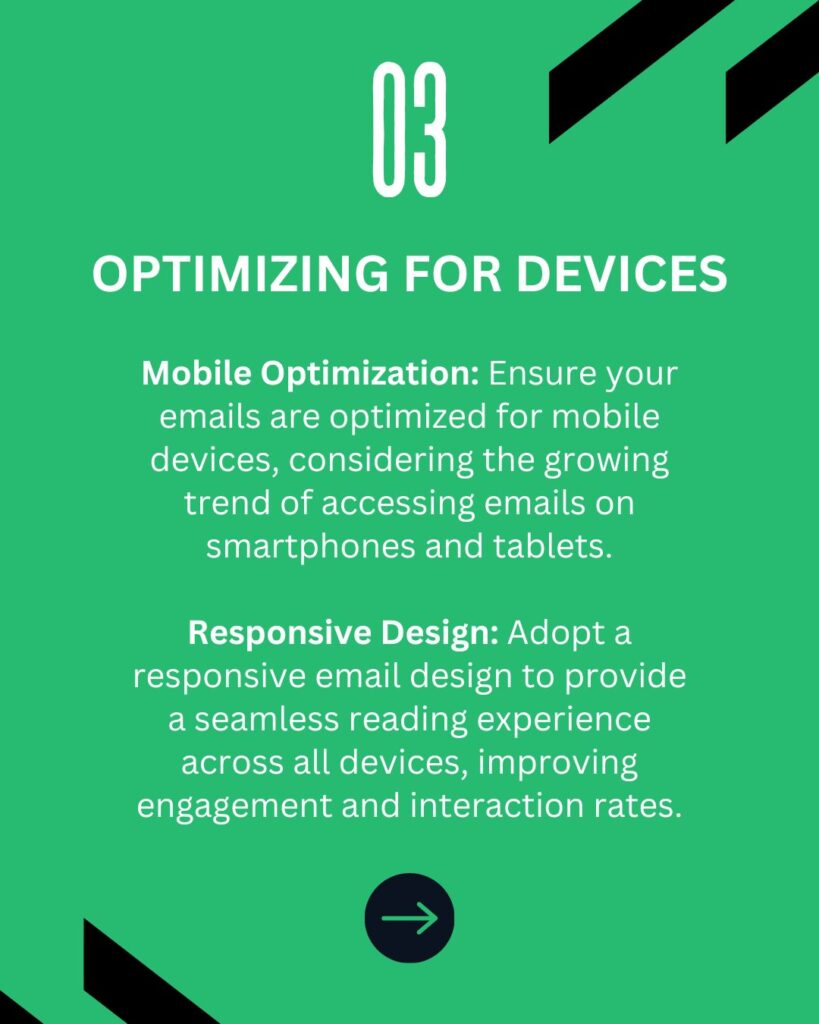
5 Reasons to use Google Ads for a Dental Practice

Google is the biggest search engine in the world by far. In November 2018, an incredible 73% of online searches occurred through Google, as opposed to 7.91% on Bing. Most people don’t even think about it anymore, using Google as your first port-of-call has become second nature for most people.

In many ways, to ‘Google’ something has become synonymous with using the internet at all. Simply put, audiences are far more likely to use Google to find their dentist than any other online platform. Therefore, Google is where you need to direct your efforts.  Done correctly, using Google Ads for a dental practice can really help your marketing take off.

Google’s reach is huge

As we have already said, Google is the largest search engine in the world, and this doesn’t look like it is going to change any time soon. Each day there are 3.5 billion searches made on Google, that is 40,000 a second! ​ Compare that to the year 2000 when Google saw a measly 33 million searches per day! Imagine how far Google’s reach will be in 5, 10 or 20 years!

Using Google AdWords is an easy, simple and relatively cheap way of getting your name directly in front of those audiences. Google doesn’t just let you show your adverts to the entire world, it allows you to define exactly which audiences, which types of people, you wish to see your advert.

Action Point

Google’s immense reach as the largest search engine globally, with 73% of online searches, makes it crucial for dental practices to focus their marketing efforts there. With 3.5 billion daily searches, Google Ads offers a targeted and cost-effective way to reach potential patients, ensuring visibility to the right audience at the right time.

Google-Ads-for-Dentist

Target Specific Audiences

With so many users on Google each day, it is important to let Google know exactly who you wish to advertise to. There is no use showing your advert to someone on the other side of the world; if there isn’t a good possibility a user will find your advert relevant, you’re wasting your money. Google allows you to decide who should be shown the advert based on a large number of data points. Some of the criteria by which you can filter your audiences are:

  • Location
  • Age
  • Sex
  • Interests
  • Online behaviour
  • Previous online activity

You can tell Facebook to only show your ads to audiences who have visited a certain page on your website, who have searched for products and services similar to yours, you can even define audiences based on their lifestyles and milestone events, such as those recently married, or new parents. The ability to target only the people to whom you want to advertise doesn’t just make your adverts for efficient and effective, it keeps the cost down! Google has masses of data on each user’s habits, use it!

Action Point

With Google Ads, you can precisely target specific audiences based on criteria like location, age, interests, and online behavior. This ensures your ads reach the most relevant users, maximizing efficiency and keeping costs down by avoiding irrelevant clicks. Utilize Google’s vast data on user habits to tailor your advertising strategy effectively.

Google-Ads-for-Dentist-2

Using Keywords

In PPC marketing, keywords, as they do with SEO, act as tags that allow search engines to match up your advert with a user’s searched term on Google.  If the keywords you have associated with your advert appear in a user’s search, they will see your advert.

When choosing your keywords, it is important to understand that you are trying to guess what your intended audiences are searching for. You can’t tell them what to search to find you. You need to get inside their minds, figure out how they behave online and understand what they are searching for. Then you can mimic their searches in your keywords and ensure that yours is the advert they see. 

A good tip with keywords is to group them together by category. Instead of using separate keywords such as “London”, “Orthodontics” and “emergency”, group them together as “London Emergency Orthodontics”. This helps to further narrow down the audience and really target the most likely leads.

It is also possible to tag your adverts with negative keywords. Negative keywords are the keywords with which you DO NOT want your advert to be associated. For instance, imagine your practice is in York and one of your adverts has the keywords “Emergency Dentist”. You may see some of your adverts being shown to, and being engaged with, audiences who have searched something like “Emergency Dentist Portsmouth”.

Obviously, you do not want audiences 200 miles away seeing your advert, it’s a waste of their time and your money! Google gives you the option of adding this as a negative keyword, meaning anyone who performs the same search in the future will NOT see your advert.

Action Point

In PPC marketing, keywords play a crucial role in ensuring your ads appear when users search on Google. To effectively target your audience, choose keywords based on their likely search terms and group them by category. Utilize negative keywords to exclude irrelevant searches and optimize your ad budget. This strategy helps ensure your ads reach the most relevant users, maximizing their effectiveness and minimizing wasted clicks.

Google-Ads-for-Dentist-3

Fast results

There are 2 main ways of getting yourself to the front page of Google; SEO and PPC. SEO is great; it’s organic, it’s free and it works. However, you could build the perfect website for SEO, but it will still take Google time to index your website as first-page material. The process is not instantaneous, sometimes it’s not even quick! You could make endless improvements to your website and only see it creep up slowly.

There are so many factors governing Google’s ranking algorithms, and Google do their best to keep them secret! The good news is, there is a quick and easy fix. With PPC, you can pay to have your advert appear immediately, within seconds, at the very top of the very front page of Google.

Action Point

When aiming for immediate visibility on Google’s front page, PPC (Pay-Per-Click) advertising offers a swift solution compared to the gradual process of SEO. With PPC, your ad can appear instantly at the top of search results, ensuring immediate exposure to potential customers. This speed and efficiency make PPC an ideal option for those seeking fast results in their online marketing efforts.

Google-Ads-for-Dentist-4

Contact us to find out more

Google wants you to succeed. 

As a marketing platform, your success is in Google’s best interest. Google has made advertising on its platform easier and cheaper in recent years. Of course there is lots of data you can work through, lots of small changes and tweaks you can make, but for the most part the user interface is simple, straightforward and easy to use for even the average business owner. You don’t need a degree in computer analytics or a lifetime’s worth of marketing experience to make it work or to see results. 

Furthermore, the user interface is straightforward. More importantly, the user interface you see is exactly the same as the interface that mega-corporations see and use as well. There are no hidden features that only the big hitters can access. You have access to the same features as companies such as BMW, Calvin Klein, or Apple.

Also, there are mountains of blogs, videos, and articles out there explaining how to get good results from Google Ads. Many of them were written by Google themselves! 

Action Point

Google has simplified its advertising platform, making it accessible to businesses of all sizes. With a user-friendly interface and abundant resources available, even novice marketers can navigate Google Ads effectively. Whether you’re a small business owner or a corporate giant, you have access to the same features and tools, ensuring a level playing field. Plus, Google offers ample guidance through various educational materials, including resources authored by Google experts themselves.

Google-Ads-for-Dentist-5

Google Ads for a Dental Practice: Conclusion

Google is, without question, the largest search engine in the world. This makes advertising on Google a no-brainer. If the vast majority of your potential patients are hanging out online in one place, and that place just so happens to be where they will be going to look for you, why wouldn’t you advertise there? In terms of reach and demographics, Google is absolutely your best option. Furthermore, Google’s platform is relatively cheap and easy to use. You do not have to be a technical or marketing wizard to use the software! Advertising on Google can bring you quick, easy results at a fairly low cost per click.

Google-Ads-for-Dentist-6

Our Expert Opinion

“Google ads are the best way to advertise your dental practice, hands down. Whether you’re starting out or trying to get more patients for an established practice, get some Google Ads running. They can be cheap, they can be narrowly targeted, they can work really well without too much input on your end.

Google try to make it as easy as possible for you to make them work. If you think you can attract customers from further afield, it’s the easiest way to get yourself to the top of the search. Even if you’re only targeting your immediate area, they work really well.

Remember that you’re competing against your local competitors and it’s an auction. It’s not just about how good your ads are, it’s about how much you spend. But even a modest budget can reap dividends in the long run!”

Chris O’Shea
Head of Digital Marketing

Learn more: Related Articles

5 Reasons to use Facebook Ads for a dental practice

Facebook Ads can really help a dental practice find and retain patients. These are the 5 top reasons you need to be using them.

Learn more

Instagram and Facebook Ads for Dentists

In this blog, we discuss how to use Facebook and Instagram ads to build your brand, find new patients and retain your current patients online.

Learn more

How to use Video to Effectively Market your Dental Practice

In this episode, Nikita and George take a look at how you should be using video content to market your practice.

Learn more

Should You Use Social Media in a Dental Practice?

In this episode George and Nikita discuss how sociasl media can be used to grow a dental practice.

Learn more

About the Author

Chris O’Shea

With nearly 10 years experience in marketing and communications, Chris is the Head of Marketing at the Samera Group.

Chris oversees all of our marketing efforts for Samera Global, Samera UK and our dental practices.

He specialises in search engine optimisation, getting to the top of Google and content marketing strategy.

Reviewed By:

Arun Mehra

Arun Mehra

Samera Founder & CEO

Arun, founder and CEO of Samera, is an experienced accountant and dental practice owner. He specialises in accountancy, building businesses, financial directorship, squat practices and practice management.

Follow Arun on LinkedIn

Marketing a Dental Practice: Further Information

For further information on how to effectively market a dental practice, check out our Learning Centre here, where you can find articles and webinars like our guide How to Market a Dental Practice.

Make sure you never miss any of our articles, webinars, videos or events by following us on Facebook, LinkedIn, YouTube and Instagram.
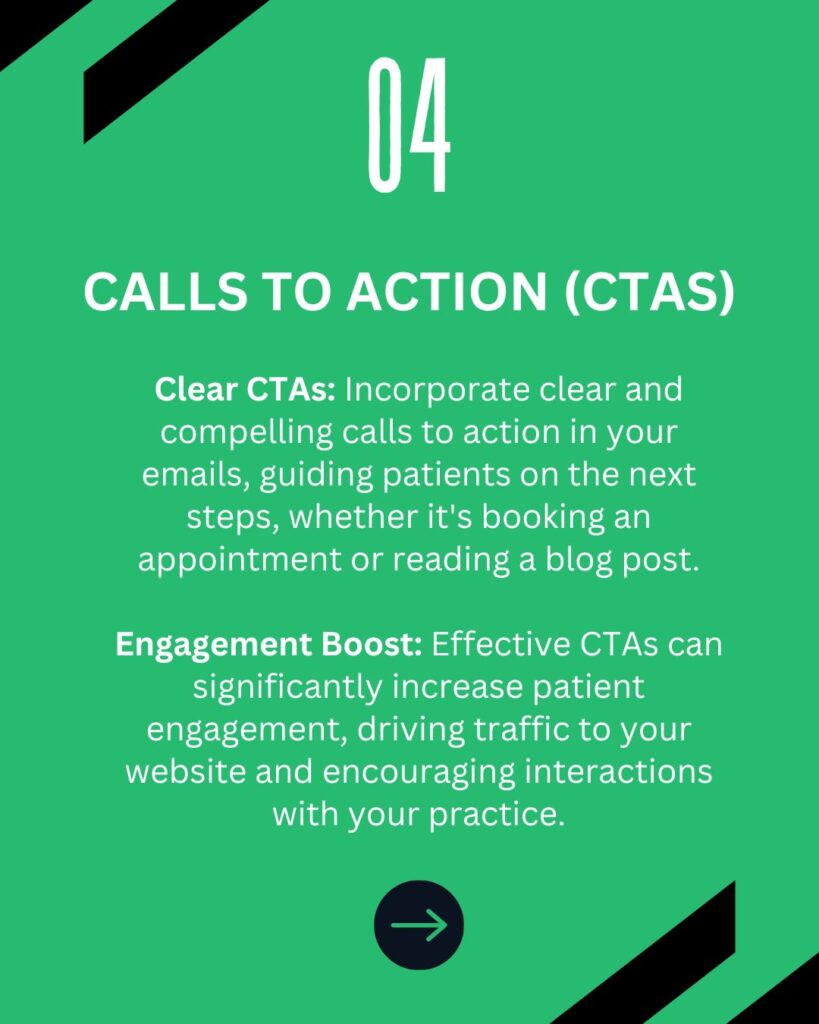
Video Marketing for Dentists

If you own a dental practice, great marketing is essential to your survival and growth, just like it is for any business. You need people to know what you can provide for them. One of the best ways to make this happen is to use video marketing. Video is definitely king, when it comes to online content in the world today. Globally, we watch as many as 1 billion hours of video each day on YouTube alone.

You can begin to see why video marketing for dentists is so important. It should form a big part of any digital marketing strategy. There are several ways in which video content can be useful for helping to grow your business.

The benefits of video marketing

According to this article posted on Entrepreneur.com, “Videos are processed by the brain 60,000 times faster than text.” This is why people love to watch videos. It takes less time and effort than it does to read text online.

Video is also an excellent means of providing an accurate picture without having to use a lot of words to explain what is going on. Put simply, it’s an entertaining and informative way of connecting with people that is more likely to gain their attention and encourage them to engage with your business. It’s also a means of you competing for online viewers with your competitors. There are several ways in which video marketing makes these things happen.

Informing the viewer.

There is so much competition out there that it’s no longer good enough for you to simply pitch your services to potential patients. You need to inform them about how certain services work and about how the treatments that you offer can help them. It’s all about adding something valuable to the viewer experience, rather than going for the hard sell.

Helping with Search Engine Optimisation (SEO).

Good quality video content is regarded highly when it comes to getting that high search engine ranking that you want for your business. Video marketing should be used in conjunction with high quality text content, for the best results. Do not forget to provide a solid meta description and a good heading for each video.

Not getting left behind from the crowd.

According to Hubspot, 87% of businesses use video marketing as a tool. This means that if you do not use good quality video content as part of your digital marketing strategy, you risk getting left behind. You cannot afford for this to happen, as the dental market in the UK is currently a very competitive one.

Connecting with patients on a personal level.

One of the biggest benefits of video marketing is that it allows patients, and prospective patients, to see you and your practice in a more personal way. Seeing members of the practice on video enables this to happen in a way that text does not.

Bearing these benefits in mind, there are several different types of video that you can use, to make sure that you get the best return on your investment.

Action Point

  • Fast Processing: Videos are processed by the brain 60,000 times faster than text, making them a preferred medium for consuming information online.
  • Effective Communication: Videos provide an accurate and engaging way to convey information, making it easier for viewers to understand complex concepts and treatments.
  • Enhanced SEO: High-quality video content can contribute to improved search engine rankings when combined with well-optimized text content, meta descriptions, and headings.
  • Market Expectations: With 87% of businesses using video marketing, integrating video into your digital strategy is essential to avoid falling behind in a competitive market.
  • Personal Connection: Video marketing allows you to connect with patients on a personal level, enabling them to see you and your practice in a more relatable and engaging manner.

Types of video that you can use

You may be thinking that one video is pretty much the same as the next, but that is not true. Videos are made for different reasons, and with various aims in mind. You need to think about this carefully when you are creating video content for your business. Here are some of the different types of video that you may want to consider using.

Explainer videos

Make a great explainer video to educate people about your services and you can gain a lot of new fans. This type of video can also help people who are nervous of dentists to get a better understanding, making them more likely to register at your practice.

Interviews

Using interviews as part of your video marketing is an excellent way to connect with potential patients as they can see various members of the practice team answering questions, and get to know them.

Reviews by brand ambassadors.

If you can get people to provide a review of your businesses and services on camera, this can be an excellent way of encouraging people to engage with your business. They can see how you have helped others which gives them a better understanding of how you can help them.

You can see why video is such a vital part of any digital marketing strategy. It can help your business to better communicate with people and also means that they are more likely to engage with your marketing and your business.

Action Point

  • Explainer Videos: Educate viewers about your dental services, helping them understand procedures and alleviating fears associated with dental visits.
  • Interviews: Connect with potential patients by showcasing interviews with various members of your dental team, allowing viewers to get to know the people behind the practice.
  • Brand Ambassador Reviews: Feature testimonials from satisfied patients or brand ambassadors to showcase the positive experiences others have had with your practice, building trust and credibility.

Learn more: Related Articles

Grow Your Dental Practice With Clever Marketing

In this webinar, Arun and Chris discuss the ways in which you can grow your dental practice with digital marketing.

Learn more

Using Marketing to Increase Profits in your Dental Practice

In this webinar we take a look at how marketing tactics can improve your profits.

Learn more

How to use Video to Effectively Market your Dental Practice

In this episode, Nikita and George take a look at how you should be using video content to market your practice.

Learn more

How AI will Change Running a Dental Practice

In this post, we’ll explore how AI is used to manage dental practices and how it can improve patient outcomes, increase efficiency, and generate more revenue.

Learn more

About the Author

Neha Jain Author

Neha Jain

Neha Jain is a skilled content writer with a rich background in business and financial knowledge. With a bachelor’s degree in English Literature and Psychology, Neha has honed her writing skills, furthering her expertise with the Content Writing Master Course (CWMC) at IIM SKILLS and a Content Marketing Certification from HubSpot Academy.

Working alongside our business development experts, Neha specialises in helping accountants, dentists and other healthcare professionals start, scale and sell their businesses.

Reviewed By:

Arun Mehra

Arun Mehra

Samera Founder & CEO

Arun, founder and CEO of Samera, is an experienced accountant and dental practice owner. He specialises in accountancy, building businesses, financial directorship, squat practices and practice management.

Follow Arun on LinkedIn

Chris O’Shea

Head of Marketing

Chris is Head of Marketing at Samera. With his wealth of knowledge in SEO, PPC, user experience and lead generation, he is an expert at helping private dental practices and accountants increase their brand awareness and grow their customer list.

Marketing a Dental Practice: Further Information

For further information on how to effectively market a dental practice, check out our Learning Centre here, where you can find articles and webinars like our guide How to Market a Dental Practice.

Make sure you never miss any of our articles, webinars, videos or events by following us on Facebook, LinkedIn, YouTube and Instagram.
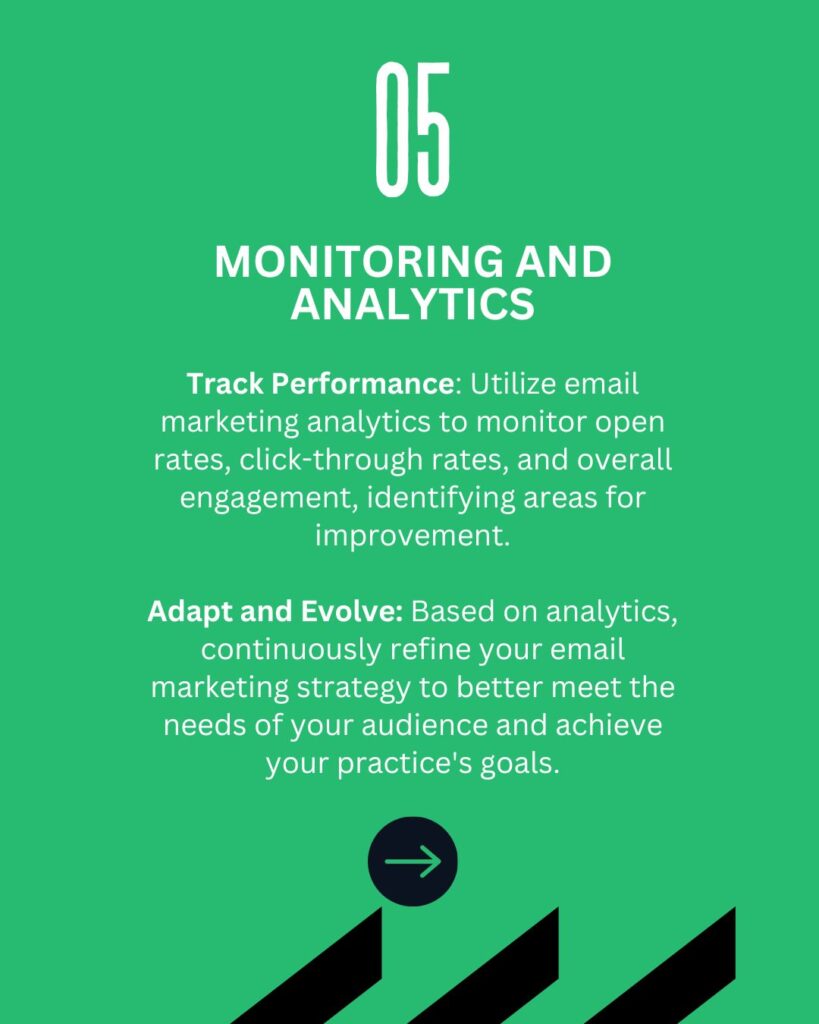
How to Grow Your Dental Practice with Google PPC

Establishing a dental practice is just the beginning of the story. The practice needs to grow in order for you to achieve the success and rewards that you are looking for. In today’s competitive market, you need to make sure that prospective patients know what your practice has to offer. One of the easiest ways to do this is to use pay-per-click (PPC) advertising.

If you get it right, PPC advertising can provide significant benefits. It does require the investment of time and patience up-front, but the results make the effort worthwhile. As a guide, there are some factors to consider when looking at PPC for dentists.

Use categories for keywords

The aim of PPC for dentists is to attract patients by using the keywords that they are searching for online. The best way to do this is to categorize your keywords, so that the advertising, and content, you provide is relevant. This always helps with Google ratings; the more relevant the content, the better.

For instance, you may want to attract people who are looking to straighten their teeth, so grouping keywords and phrases like “braces for adults” and “adult teeth straightening” is appropriate. Grouping keywords makes sense because you want people to get what they are looking for from the search they are making. If this happens, they are more likely to use your services.

Action Points

Implementing pay-per-click (PPC) advertising is essential for the growth of a dental practice, ensuring prospective patients are aware of the services offered. Categorizing keywords facilitates targeted advertising, improving relevance and Google ratings, ultimately increasing the likelihood of attracting potential patients seeking specific treatments such as adult teeth straightening.

Use Google Ads effectively

Google Ads is an important aspect of PPC for dentists. This is because using Google ads gives you a way of attracting people to your practice, without having to pay for clicks. Including the phone number of your practice, prominently, in all of your ads means that people are more likely to pick up the phone and call. This advertising practice can be used in conjunction with paying for clicks, making your campaigns more cost effective. Always make sure that people can clearly see if someone is available to take their call.

Action Point

Maximizing Google Ads is pivotal for dental practices’ PPC success. Emphasizing the practice’s phone number in ads enhances direct inquiries, optimizing cost-effectiveness and responsiveness.

You can learn more about Google Ads for dentists here.

Make use of extensions in your ad campaigns

There is no charge for using extensions in your PPC ad campaigns. This means that it makes sense for you to use extensions, such as a map of your location or a download button, to generate clicks. It’s worth mentioning that although you do not pay extra for including extensions, you do still have to pay for the clicks that they generate.

Contact us to find out more

Test your PPC for effectiveness

Creating a campaign, using PPC for dentists, is just the start. You cannot just sit back and relax once the campaign has been set up. You need to test the effectiveness of your PPC campaigns. It’s a case of seeing what works and what does not. Use three separate ad groups for each campaign, with three ads in each one. Each group should contain eight separate keywords. Having this range of content means that you can accurately test which keywords are performing the best.

Having this information means that you can make slight changes along the way, so that you improve the effectiveness of your campaign. If you do not do this, you are unlikely to get the clicks that you are looking for. PPC for dentists evolves and is not something that you use once and then forget about.

Action Plan

Continuous testing is crucial in PPC for dentists to gauge effectiveness. Utilizing multiple ad groups with various ads and keywords allows for accurate performance assessment. This iterative approach enables adjustments for enhanced campaign efficiency and desired click rates.

You can find out more about PPC here.

Use Geo-Targeting for your PPC campaigns

You do not want to waste your efforts on advertising to people who are never likely to visit your dental practice. Your ads should be aimed at people who live, or work, in your area and want to register with a local dentist. This means that you need to use geo-targeting when creating your PPC campaigns. You can use maps of your location and include the postal code of your practice. Remember to use keywords that also show where you practice is located.

You can also restrict the appearance of your ads, so that they only appear to people for whom they have relevance. This means that you advertise directly to people who are looking for a dentist in the area where your practice is located. Making sure that you target the location of your practice in this way means that you should generate more clicks from your PPC campaigns. It also means that the clicks you get should have a better conversion rate, as people should find just what they are looking for.

As you can see, PPC for dentists is an excellent tool to use, to help grow your dental practice, by attracting more patients to your services.

Action Plan

Geo-targeting is essential in PPC campaigns for dental practices to maximize relevance and minimize wasted resources. By focusing ads on individuals in the vicinity of your practice, using maps and postal codes, you ensure optimal targeting. This approach enhances click-through rates and conversions, as potential patients find precisely what they seek, driving practice growth effectively.

Our Expert Opinion

“Google Ads are still 100% the easiest and quickest way to get yourself to the top of Google. I always recommend every dental practice uses Google Ads in at least a small way in their marketing strategy. They don’t have to be expensive, they don’t have to be constantly running. You can run a simple, cheap brand awareness campaign to get your name out there. You can also run expensive, perfectly-optimised adverts that act as your main lead magnet.

One thing I would absolutely recommend is that you use Google Ads if your SEO is not getting you to the front page of Google. If you’re not on the front page (the top 10 results) of Google then how are people going to find you? Google Ads will solve this pretty swiftly.

Remember, Google Ads are an auction. You need to adjust your budget so that you are beating your main competitors and muscling them out of the top spots.”

Chris O’Shea
Head of Digital Marketing

Marketing a Dental Practice: Further Information

For further information on how to effectively market a dental practice, check out our Learning Centre here, where you can find articles and webinars like our guide How to Market a Dental Practice.

Make sure you never miss any of our articles, webinars, videos or events by following us on Facebook, LinkedIn, YouTube and Instagram.