There is a pattern I have watched repeat itself across 25 years in the dental sector.
A problem emerges – associate pay reconciliation, acquisition due diligence, offshore staffing, cash flow forecasting, compliance reporting. Someone builds a solution. The solution is technically competent. And yet, six months later, the problem persists in a slightly different form. The practice owner is still frustrated. The finance director is still doing manual work. The PE investor is still finding surprises in the numbers after close.
I used to think this was a failure of execution but I no longer believe that.
I think it is a failure of perspective.
The Specialist Trap
The dental sector has attracted a lot of very good specialists. Excellent accountants who understand the tax treatment of goodwill. Sophisticated software companies that have mapped every clinical workflow. Capable offshore providers who can staff a bookkeeping function at a fraction of UK cost. Experienced brokers who know how to structure a practice acquisition.
Each of these specialists is genuinely skilled within their domain. The problem is that dental business problems do not live within domains. They live at the boundaries between them.
Take associate pay – the most operationally painful process in any multi-site dental group. On the surface it looks like a payroll problem. Build a payroll tool, problem solved. But anyone who has actually run a dental practice knows that associate pay sits at the intersection of clinical data (UDA completions, patient charges, plan mix), contractual logic (split percentages, recall fees, lab deductions), accounting treatment (self-employed versus employed, IR35 implications), and software integration (PMS, payroll, Xero). A payroll specialist sees the output. They do not see the four upstream systems feeding it. So the tool they build handles the final calculation and breaks on everything that precedes it.
This is not an isolated example. It is the structural condition of the entire sector.
What I Learned from Investment Banking
Before founding Samera in 2002, I trained at PwC and worked as a VP at Bank of America. Investment banking is, at its core, a discipline about seeing the whole system – understanding how capital, operations, risk and human behaviour interact, and where the real value and the real danger actually sit.
When I moved into the dental sector, I carried that lens with me. And what I saw was an industry being served by people who understood their own corner of it extremely well, but who had never been forced to see how the corners connected.
The dentist who became a practice owner had no framework for reading a balance sheet. The accountant managing that practice had never sat in a clinical meeting and understood why UDA targets were missed. The software company building the PMS had never tried to reconcile an associate’s pay at month end. The offshore team processing the bookkeeping had never understood the specific regulatory context of NHS versus private versus mixed practice.
Everyone was competent. Nobody had the full picture. And so the problems persisted.
The Medici Effect – and Why It Explains What We Built
There is a concept in innovation theory called the Medici Effect. The Medici family of Renaissance Florence funded artists, scientists, architects and philosophers to work in the same city. When these disciplines collided – when a sculptor talked to a mathematician, when an architect borrowed from a botanist – something extraordinary happened. The intersections produced the Renaissance.
Frans Johansson, who named the effect, made a distinction that has stayed with me. He separated directional innovation – going deeper within a single field, incremental improvement, diminishing returns – from intersectional innovation, where ideas from unrelated disciplines collide to create something genuinely new. Directional innovation gets commoditised. Intersectional innovation builds moats.
The dental sector is full of directional innovation. Better PMS software. Faster bookkeeping. Cheaper offshore staff. Each improvement is real. None of them solve the underlying problem, because the underlying problem is not a single-domain problem.
What I have spent 25 years building – sometimes consciously, sometimes by necessity – is an organisation that lives permanently at the intersection. Not deeper in one domain, but wider across all of them simultaneously.
Building the Ecosystem Deliberately
Samera started as an accounting firm focused exclusively on dentistry. That sector depth meant we understood the numbers better than any generalist accountant. But over time it became clear that the accounting problems we were solving were symptoms of upstream operational problems. So we built the capability to address those too.
The offshore delivery centre in India was not a cost play. It was a recognition that the talent required to support growing dental groups at scale did not exist in sufficient quantity in the UK – and that building a genuinely high-quality remote team required both the operational knowledge to train them in dental-specific processes and the cultural fluency to manage across geographies effectively. Twenty-five years of relationships and context made that possible. A GCC provider with no sector history cannot replicate it.
Samera.ai – our intelligence platform integrating directly with Dentally and Xero (more integrations are coming) – did not emerge from a product roadmap. It emerged from watching the same reconciliation problem cause the same disputes and inefficiencies across hundreds of client practices, and realising that no existing software was solving it because no existing software company had lived inside the problem long enough to understand it fully. Associate pay is where it starts. The intelligence layer – M&A valuation, CFO intelligence, cash flow, KPI reporting, daily actions – is where it leads.
Samera Finance, our FCA-regulated commercial finance brokerage, exists because we kept watching clients navigate acquisitions without access to the right capital structure. Understanding the deal from the accounting side and the operational side meant we could see financing gaps that a standalone broker would never identify.
Each piece was built because the intersection demanded it. The ecosystem was not designed. It was grown from 25 years of being forced to see the connections that specialists miss.
The Intersection Is the Proof
I own a dental group – The Neem Tree Dental Group, with practices in Wandsworth and Esher, co-founded with my wife Smita. This matters not as a footnote but as a proof point. Every piece of software we build, every process we automate, every offshore hire we make – we test it first in our own business. We are not advisors standing outside the system describing it. We are operators inside it, building tools we use ourselves.
Recently, we have secured a partnership with a leading Indian Technical University, Bannari Amman Institute of Technology in Tamil Nadu, to train AI engineering students in finance and accounting. The offshore delivery centre and the AI platform are not separate businesses – they are the same business, viewed from different angles. The engineers who build Samera.ai are trained in the domain context that makes the software actually work. That combination does not exist anywhere else in this sector.
We are now expanding into Europe – entering PE-backed dental groups bringing the same offshore delivery, intelligence software and financial advisory capability that we built for the UK market. The intersection travels. The problems are the same. The solutions require the same breadth of perspective.
What This Means in Practice
I am not arguing that specialists have no value. They have enormous value within their domains. What I am arguing is that the integrator – the person or firm that can hold the full system in mind, that can translate between the clinical and the financial and the operational and the technological – is the rarest and most valuable asset a scaling dental business can access.
For PE investors conducting due diligence on a dental platform, the questions that matter are not just about EBITDA multiples and site-level profitability. They are about whether the operational infrastructure can support the growth thesis – whether the associate pay processes scale, whether the offshore capability is genuinely built or just outsourced, whether the technology layer creates margin expansion or just replicates manual processes digitally. Samera can sit alongside a PE firm across all of those questions simultaneously. No single-discipline adviser can.
For DSO finance directors managing groups of 20, 50 or 100 sites, the question is not just whether the books are accurate. It is whether the firm managing those books understands the clinical and operational context well enough to flag what the numbers are actually telling you – and whether the software they use was built by people who understand dental workflows or by engineers who have never met a dental nurse.
For independent dentists preparing to scale, the question is whether the advisors around the table understand not just the transaction but the business they are building – the culture, the staffing model, the associate relationships, the patient mix – and can structure a deal that serves the long-term vision, not just the immediate tax position.
The answers to all of these questions require someone who has sat in enough of the seats to understand how they connect. That is what 25 years at the intersection produces.
The 25-Year View
I have run 30 Setting Up in Practice events. I have advised on hundreds of acquisitions. I have watched practices that were financially well-structured fail because of operational decisions that an accountant would never have flagged. I have watched software solve the wrong problem with extraordinary technical precision. I have watched offshore teams process numbers they did not understand, because nobody trained them in the context behind the figures.
The sector has matured significantly. The problems have become more complex. The capital involved has grown. The stakes are higher.
What has not kept pace is the quality of integrated thinking available to the people building dental businesses. There are more specialists than ever. There are fewer genuine integrators.
That is the gap Samera was built to fill.
Not by being the best accountant, or the best software company, or the best offshore provider – but by being the only firm in the sector that has built genuine capability across all of these domains simultaneously, held together by 25 years of accumulated context about how they actually connect.
The Medici family created the conditions for the Renaissance by putting the right disciplines in the same room. We have spent 25 years putting the right disciplines in the same firm.
The intersection is where the real problems live.
It is also where the real solutions come from.
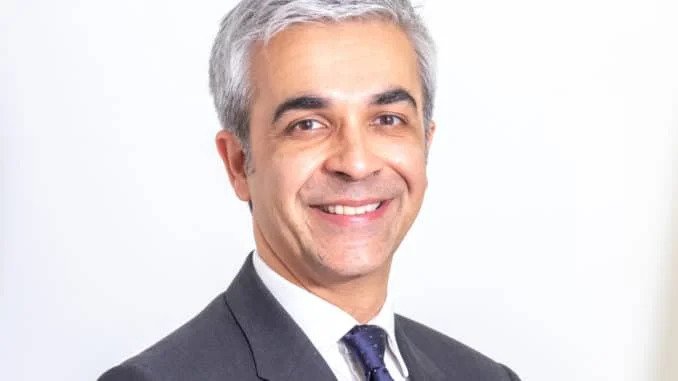
Arun Mehra is the founder of Samera – a group spanning dental accounting, AI software, offshore delivery, commercial finance and European market entry – and co-founder of The Neem Tree Dental Group. He trained at PwC, worked as a VP at Bank of America, and has advised dental businesses across the UK for over two decades. Samera.ai is the intelligence layer connecting it all.
About the Author
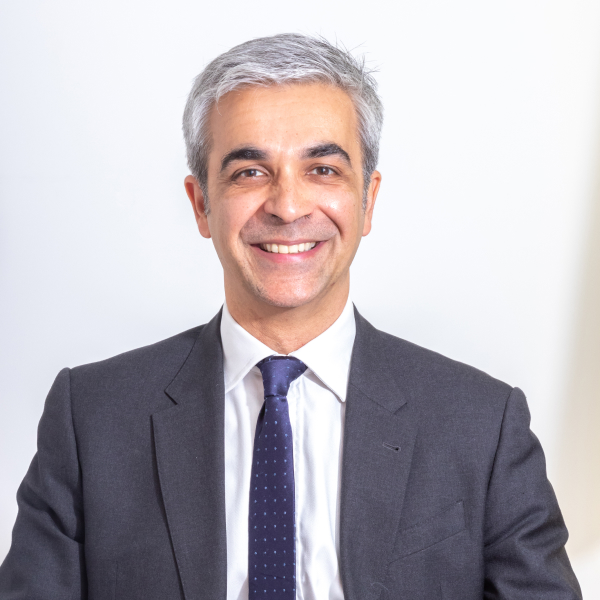
Arun Mehra
With almost twenty years of commercial experience and knowledge in Dentistry, Arun’s expertise is valued by hundreds of businesses across the UK. His financial acumen and know-how, along with his hands-on commercial expertise have helped clients, large and small, new and established to achieve great things.
Arun is the founder of the Samera Group, starting the business with just one client sitting at his father’s dining table. Fifteen years on, Team Samera now service hundreds of Dental clients, run exciting events, help clients raise finance, and are very active in helping clients buy or sell Dental practices.